Dallas County Property Tax Rate
Opening your mailbox in April to find a notice from the Dallas Central Appraisal District can feel like a punch to the gut, especially when you see your home’s value has skyrocketed while your paycheck remains the same. This guide is designed to peel back the layers of the Dallas County property tax rate, helping you understand who is taking what, why your bill keeps climbing, and exactly how you can fight back to keep more of your hard-earned money.
Breaking Down the Dallas County Property Tax Structure
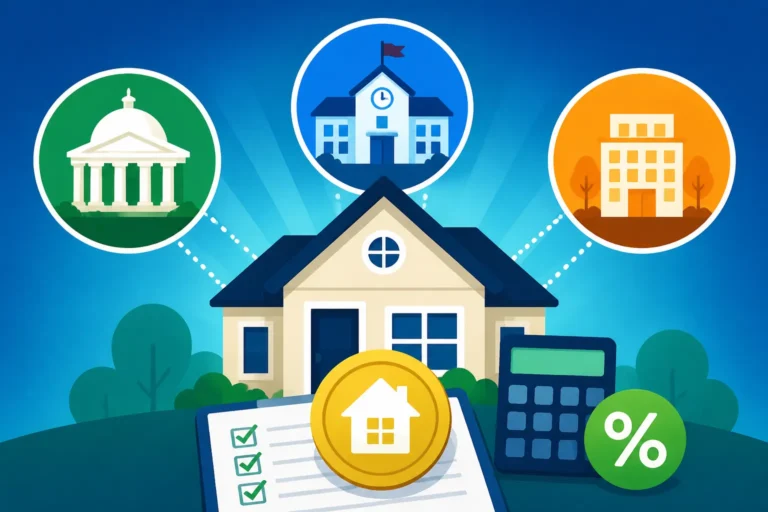
When you look at your tax statement in Dallas County, it is rarely just one number. Instead, it is a cumulative total of several different taxing jurisdictions that all have a hand in your pocket. As a homeowner in North Texas, you are essentially paying for the infrastructure, safety, and education systems of your specific corner of the metroplex. The total rate you pay is the sum of the rates from the county, your specific city, your school district, and several special districts.
Understanding How Are Property Taxes Calculated? is the first step in demystifying this process. In Dallas County, the "rate" is expressed as a dollar amount per $100 of property value. For example, if your total consolidated tax rate is $2.20, you are paying $2.20 for every $100 of your home’s taxable value. While that sounds small, when applied to a $400,000 or $500,000 home, the numbers become significant very quickly.
The Role of the Dallas Central Appraisal District
It is a common misconception that the Dallas Central Appraisal District (DCAD) sets your tax rate. In reality, DCAD’s only job is to determine the "fair market value" of your property as of January 1st of each year. They are the ones who send out the appraisal notices that cause so much stress every spring. Once DCAD sets the value, the various taxing entities—like the City of Dallas or Dallas ISD—apply their specific tax rates to that value.
If you feel your value is too high, you aren't actually arguing against the tax rate; you are arguing against the appraisal. This is a critical distinction because even if a city council votes to lower the tax rate slightly, your bill could still go up if DCAD increased your home’s valuation by a larger percentage. This is one of the primary reasons Why Do Property Taxes Increase? even when local politicians claim they aren't raising taxes.
Taxable Value vs Market Value
Another layer of frustration for Dallas homeowners is the gap between what their house could sell for and what they are actually taxed on. DCAD will list a "Market Value" on your notice, which is their estimate of what a buyer would pay today. However, your "Taxable Value" is the number that actually determines your bill.
Thanks to various protections in Texas law, these two numbers can stay far apart. For instance, the Assessed Value vs Market Value vs Taxable Value distinction is vital for those who have lived in their homes for a long time. If you have a homestead exemption, your assessed value cannot increase by more than 10% in a single year, regardless of how much the market has surged. This "cap" is a lifesaver in neighborhoods like Bishop Arts or East Dallas, where gentrification has caused market values to double or triple in a decade.
The Math Behind the Bill: How Dallas Rates are Set
The total property tax rate in Dallas County typically hovers between 2.0% and 2.7%, depending on your specific location. This might seem high compared to states like California or Florida, but remember that Texas has no state income tax. The state relies heavily on property owners to fund almost everything. In Dallas, the biggest chunk of your bill almost always goes to the school district.
School districts like Dallas ISD, Richardson ISD, or Irving ISD usually account for more than half of your total tax liability. These districts set their own "maintenance and operations" (M&O) rates and "interest and sinking" (I&S) rates, the latter of which pays for voter-approved bonds used to build new schools or stadiums. When you vote "yes" on a school bond, you are often directly voting to increase your property tax rate for the next several decades.
City and County Levies
The City of Dallas or other municipalities like Mesquite or Garland also set their own rates to pay for police, fire departments, road repairs, and libraries. In recent years, city councils in Dallas County have faced intense pressure to provide tax relief as home values have climbed. You may see a "no-new-revenue" tax rate discussed in city council meetings; this is the rate that would produce the same amount of revenue as the previous year, accounting for value increases. If the city adopts a rate higher than this, they are effectively raising your taxes.
The Dallas County government itself, along with the Parkland Hospital District and the Dallas County Community College District (now Dallas College), also adds smaller percentages to your bill. While these rates are lower than the school or city portions, they add up. Parkland Hospital, in particular, relies heavily on property taxes to provide indigent care for the county's most vulnerable residents.
Special Districts and PID Charges
Depending on where you live in Dallas County, you might also be subject to Public Improvement Districts (PIDs) or Municipal Management Districts (MMDs). These are extra layers of taxation often found in newer developments or specific urban zones like Downtown Dallas or Uptown. These funds are used for hyper-local improvements like extra security, landscaping, or special lighting. While they improve property values, they also represent a direct increase in your annual tax burden that your neighbors a few blocks away might not have to pay.
Comparing Rates Across Dallas County
One of the most frustrating aspects of living in Dallas County is realizing that your tax bill might be significantly higher than someone living just across a municipal boundary. For example, a homeowner in the City of Dallas but within the Richardson ISD boundaries will pay a different total rate than someone in the City of Dallas within Dallas ISD.
The following table provides a snapshot of how rates can vary across different combinations of jurisdictions within the county (rates are approximate and subject to annual changes by local boards):
| City | School District | Estimated Total Rate (per $100) |
|---|---|---|
| Dallas | Dallas ISD | $2.45 – $2.55 |
| Irving | Irving ISD | $2.35 – $2.45 |
| Garland | Garland ISD | $2.25 – $2.35 |
| Richardson | Richardson ISD | $2.30 – $2.40 |
| Mesquite | Mesquite ISD | $2.50 – $2.60 |
| Grand Prairie | Grand Prairie ISD | $2.40 – $2.50 |
These variations highlight why it is so important to look at the "consolidated" rate when buying a home. A lower purchase price in one suburb might be offset by a much higher tax rate, making your monthly mortgage payment (which usually includes taxes in escrow) much higher than anticipated. If you are struggling with these payments, you should look into how to Pay Dallas County Property Tax Online to stay on top of deadlines and avoid heavy penalties.
How to Manage and Lower Your Dallas Tax Liability
While you cannot change the tax rates set by the city council or school board, you have a significant amount of control over the "taxable value" part of the equation. Most homeowners in Dallas are overpaying simply because they haven't taken the time to file the correct paperwork or protest their appraisals.
The single most effective tool for a Dallas homeowner is the Homestead Exemption in Texas. If the home is your primary residence, you must file this exemption. It provides a mandatory reduction in the taxable value for school taxes and, perhaps more importantly, triggers the Texas Homestead 10% Cap Explained. This cap ensures that even if the Dallas real estate market goes crazy, your taxed value can only creep up by 10% per year. Without this, a sudden boom in your neighborhood could result in a 30% or 40% jump in your bill in a single year.
Protections for Seniors and Veterans
If you are 65 or older, or if you are a disabled veteran, Dallas County offers even more aggressive protections. Seniors can qualify for the Texas Over-65 Property Tax Exemption & School Tax Freeze. This "freeze" is exactly what it sounds like: it locks in the dollar amount you pay to the school district for the rest of your life, provided you stay in that home. Even if the school district raises its rates or your home value continues to climb, your school tax bill stays the same.
Disabled veterans may also be eligible for significant exemptions, ranging from a few thousand dollars off their valuation to a 100% exemption if they are considered totally disabled due to service-connected injuries. For families on a fixed income, these programs are the difference between staying in their lifelong home and being forced to sell.
The Power of the Protest
Every May, Dallas homeowners have the right to file a protest with the Appraisal Review Board (ARB). You should almost always protest your value, even if you think it’s close to fair. The protest process is your opportunity to point out that your roof is leaking, your foundation is cracked, or that your neighbor’s identical house sold for much less than DCAD thinks yours is worth.
Many people find the process intimidating, but you can handle a Dallas County (DCAD) Property Tax Protest yourself or hire a professional firm to do it for a percentage of the savings. The key is to gather evidence—photos of damage, independent appraisals, or a list of "comparable" properties that are taxed lower than yours. Even a small reduction in value can lead to thousands of dollars in savings over several years, especially when you consider that a lower value this year sets a lower "base" for future increases.
Future Outlook for Dallas Property Taxes
As we look ahead and beyond, the conversation around property taxes in Dallas is shifting toward state-level intervention. The Texas Legislature has recently passed significant "compression" bills designed to use state surplus funds to buy down local school tax rates. This has provided some temporary relief, but as the population of Dallas County continues to swell, the demand for services, new schools, and better roads will keep the pressure on local budgets.
Navigating the Dallas County property tax landscape requires a mix of vigilance and proactiveness. By understanding the components of your rate, ensuring your exemptions are filed, and participating in the protest process, you can manage the "sticker shock" that comes with living in one of the most vibrant, yet tax-heavy, counties in the United States.
Disclaimer
The information provided in this guide is for educational and informational purposes only and does not constitute legal, financial, or professional tax advice. Property tax rates, exemption amounts, and deadlines in Dallas County are subject to change by local and state authorities. Homeowners should verify all data with the Dallas Central Appraisal District (DCAD) or the Dallas County Tax Office and consult with a qualified tax professional before making financial decisions or filing legal protests.