At What Age Do You Stop Paying Property Taxes in New York?
Navigating property taxes can be one of the most stressful aspects of homeownership, especially as we get older and our income situations change. Many seniors often wonder if there's a magical age when property taxes simply disappear in New York, a time when that significant annual bill no longer arrives. While it's a common and completely understandable hope, the reality is a bit more nuanced. This guide will walk you through how property taxes work for seniors in the Empire State, focusing on the powerful relief programs designed to lighten the load, rather than an outright cessation of payments.
Understanding Property Taxes in New York for Seniors
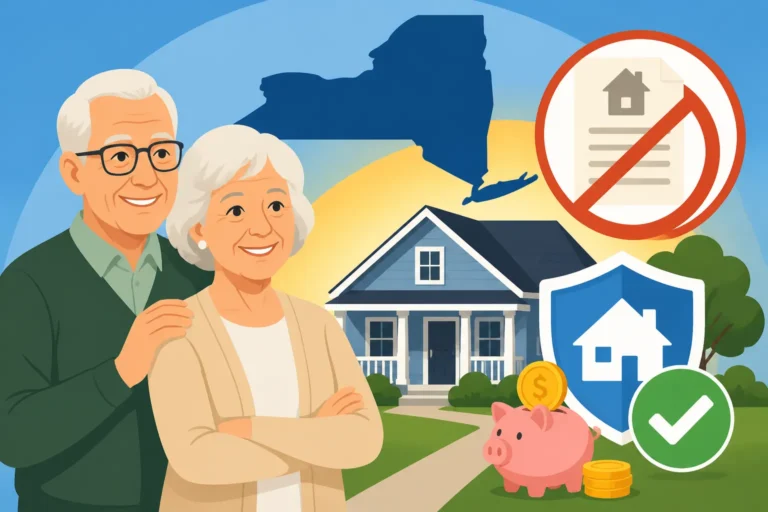
Let's address the big question right upfront: do you ever completely stop paying property taxes in New York? The short answer, for most homeowners, is no. Property taxes are a fundamental part of funding local services, from schools to fire departments, and they typically continue as long as you own your home. However, that doesn't mean seniors are left without options. New York State, recognizing the challenges many older residents face on fixed incomes, has established several robust programs designed to significantly reduce the amount seniors owe. These aren't about stopping payments altogether, but rather about making them far more manageable.
The Reality: No Automatic "Stop" Date
It's a dream many of us share: reaching a certain age, blowing out the candles, and suddenly, the property tax bill vanishes. Unfortunately, in New York, that's generally not how it works. Property taxes are an ongoing obligation for homeowners, regardless of their age. The funds collected are absolutely crucial for maintaining the services that make our communities livable, safe, and vibrant. Think about your local schools, police, fire departments, sanitation, and even library services – they all depend heavily on property tax revenue.
For seniors, this can feel like an ever-increasing burden, especially if you're on a fixed income, like Social Security or a pension that doesn't keep pace with inflation or rising assessments. The house you've lived in for decades, perhaps even paid off, can still incur a substantial annual tax bill that suddenly feels much heavier than it did during your working years. This situation leads many to believe there must be an age limit for these taxes, or at least a significant reduction, and thankfully, there are indeed mechanisms for relief, even if they don't mean a complete cessation of payments.
How New York Property Taxes Work (Briefly)
Before diving into relief programs, it helps to understand the basics of how property taxes are calculated in New York. Your property tax bill is primarily determined by two factors: your home's assessed value and the tax rate (often expressed as a "mill rate") set by various local taxing jurisdictions. In New York, these can include your county, city or town, village, and most significantly, your local school district. Each of these entities sets its own budget and then determines a tax rate necessary to raise the required funds from property owners within its boundaries.
The assessed value is the dollar amount your local assessor's office assigns to your property for tax purposes. This value is supposed to represent a percentage (or sometimes 100%) of your home's market value. The tax rate is then applied to this assessed value (minus any exemptions) to determine your final tax bill. For instance, if your home has an assessed value of $200,000 and the combined tax rate for all jurisdictions is $30 per $1,000 of assessed value (which would be a mill rate of 30), your gross tax bill would be $6,000. Understanding these components is crucial because most senior relief programs work by reducing your assessed value or providing a credit against your tax liability. Knowing How Are Property Taxes Calculated? can provide even deeper insight into this process.
Key Property Tax Relief Programs for Seniors in New York
While you don't typically stop paying property taxes in New York, the state offers several critical programs designed to significantly reduce the property tax burden for eligible seniors. These programs are not automatic and require active application, but they can provide substantial savings.
Senior Citizens Homeowner Exemption (SCHE)
The Senior Citizens Homeowner Exemption, or SCHE (pronounced "Skee"), is one of the most impactful forms of property tax relief available to older New Yorkers. This program is truly a game-changer for many, as it reduces the assessed value of your home, thereby lowering your overall tax bill. It's a local option program, meaning while the state sets the general framework, individual cities, towns, villages, and even school districts must choose to adopt it and can set their own specific income limits within state guidelines.
To be eligible for SCHE, generally:
- Age: You, or one of the owners (if it's a couple or multiple owners), must be 65 years of age or older.
- Income Limit: Your income must not exceed the maximum set by your local municipality. The state allows localities to set this limit anywhere from $3,000 to $29,000. It's important to check with your specific local assessor's office for the exact income cap in your area. This income includes most sources, like Social Security, pensions, and interest.
- Residency: The property must be your primary residence, and you must have owned it for at least 12 consecutive months prior to the application date, though there are exceptions for certain situations like a spouse's death or property acquisition through inheritance.
How it works is straightforward: if you qualify, a portion of your home's assessed value is exempted from taxation. The percentage of the exemption varies based on your income relative to the local maximum. For instance, if your income is below the lowest threshold (e.g., $29,000 or less), you might qualify for a 50% exemption on your assessed value. If your income is slightly higher but still within a certain range, you might get a 45% exemption, and so on, in increments, down to a 5% exemption for those at the top of the income range. This means a substantial reduction in the taxable portion of your home, directly translating to a lower property tax bill. Many states offer similar programs, which you can explore in our comprehensive guide on Senior & Over-65 Property Tax Exemptions and Freezes.
Enhanced STAR Program
The STAR (School Tax Relief) program is a cornerstone of property tax relief in New York, primarily aimed at reducing school property taxes. For seniors, there's an even better version: the Enhanced STAR program. This is different from the Basic STAR program available to all eligible homeowners, as it provides a significantly larger exemption specifically for seniors who meet certain age and income criteria.
Eligibility for Enhanced STAR requires:
- Age: All owners of the property (if married, only one spouse needs to be 65 or older) must be 65 years of age or older by December 31st of the year of the exemption.
- Income Limit: Your combined adjusted gross income (AGI) for all owners, as reported on your federal income tax return, must be at or below a specific statewide limit. For 2024, this income limit for Enhanced STAR is $98,700. This is a crucial difference from SCHE, which uses a lower, locally-set income threshold.
- Residency: The property must be your primary residence.
Enhanced STAR provides an exemption on the assessed value of your home, reducing the portion subject to school taxes. For the 2023-2024 school year, the statewide Enhanced STAR exemption amount was $84,900. This means that if you qualify, $84,900 of your home's assessed value is removed before your school tax bill is calculated, leading to considerable savings.
It's important to note the shift in how STAR benefits are delivered. For most new applicants (since 2016), STAR benefits are provided as a credit in the form of a check directly from the state, rather than an upfront exemption on your tax bill. However, if you've been receiving STAR benefits as an exemption since before 2015 and have continually renewed it, you likely still receive it as an exemption. The state's Department of Taxation and Finance website has clear guidance on this, and you can learn more about the specifics by checking out our article on New York STAR vs Enhanced STAR.
Low-Income Senior Citizens Exemption (LISCE)
While less common and not as universally adopted as SCHE or Enhanced STAR, some municipalities and school districts in New York offer an additional Low-Income Senior Citizens Exemption (LISCE). This program is specifically designed to assist seniors with very low incomes who might still struggle even with other exemptions. It typically provides a further reduction in assessed value.
The criteria for LISCE are often stricter, with income thresholds significantly lower than those for SCHE. It’s typically aimed at seniors whose incomes are at or near federal poverty levels. Eligibility and the exact benefit amount are entirely dependent on whether your local taxing authority has opted to offer this program and what their specific parameters are.
If you are a senior with a very limited income, it is always worth inquiring with your local assessor's office about any additional programs like LISCE that might be available. Combining this with SCHE or Enhanced STAR can provide a powerful stacked reduction in your overall property tax burden, making a significant difference in your monthly budget. Remember, the goal of these programs is to ensure that long-time homeowners, especially those on fixed incomes, aren't priced out of their homes due to rising property taxes.
Applying for Senior Property Tax Relief in New York
It's a common misconception that property tax relief for seniors automatically kicks in once you reach a certain age. The reality is that these programs, while incredibly helpful, require you to take action. You need to apply for them, and often reapply, to ensure you continue receiving the benefits. Ignoring this step could mean missing out on thousands of dollars in potential savings.
Application Process and Deadlines
The application process for New York's senior property tax exemptions, while not overly complicated, does require attention to detail and adherence to specific timelines. The most critical takeaway is that you must apply. These exemptions are not granted automatically, even if you meet all the eligibility criteria.
Here's a general overview of the process:
- Obtain Application Forms: You'll need to get the specific application forms for SCHE and Enhanced STAR from your local assessor's office. Many offices also make these forms available online on their municipal websites.
- Gather Required Documentation: This is where many people get tripped up. You'll need to provide proof of your eligibility, which typically includes:
- Proof of Age: A birth certificate, passport, driver's license, or other official document showing your date of birth.
- Proof of Income: This is usually your federal income tax return from the previous year. For SCHE, you might need to provide additional documentation like Social Security statements (Form SSA-1099), pension statements, interest statements, and any other income sources as defined by your local municipality. For Enhanced STAR, your Adjusted Gross Income (AGI) from your federal tax return is generally sufficient.
- Proof of Residency: Documents like a driver's license or utility bills can confirm the property is your primary residence.
- Proof of Ownership: Your property deed will suffice.
- Submit the Application: Once you've completed the forms and gathered all necessary documents, submit them to your local assessor's office. It's often a good idea to submit them in person if possible, or send them via certified mail, so you have a record of submission.
- Adhere to Deadlines: This is absolutely crucial. Most property tax exemption applications in New York have strict deadlines, which often align with the local "taxable status date." This date varies by municipality but is commonly March 1st or May 1st in many areas. For example, if you live in a town where the taxable status date is March 1st, you would need to have your application submitted by that date to receive the exemption for the upcoming tax year. Missing the deadline, even by a day, typically means you lose out on the exemption for that entire year. You can find more generalized information about these processes in our article How to Apply for Property Tax Exemptions.
It's a proactive step, but the savings are well worth the effort.
Reapplying and Staying Compliant
The process doesn't always end with a single application. While the Enhanced STAR credit generally becomes relatively automatic after your initial application (the state matches your income with tax records), some programs, especially SCHE, may require annual reapplication or at least annual income verification.
Here's what to keep in mind:
- Annual Verification for SCHE: For the Senior Citizens Homeowner Exemption (SCHE), many localities require you to reapply or submit an annual income affidavit to verify continued eligibility. This is because income thresholds are often lower and more dynamic. Your income might fluctuate year-to-year, and the locality needs to ensure you still qualify.
- Income Changes: If your income changes significantly (e.g., due to a new pension, a part-time job, or a large capital gain), it could impact your eligibility for income-based exemptions. It’s important to understand what constitutes "income" for each program, as definitions can vary.
- Maintaining Primary Residence: The property must remain your primary residence. If you move or spend significant portions of the year elsewhere, your eligibility could be affected.
- Keep Records: Always keep copies of your applications, submitted documents, and any correspondence with the assessor's office. This can be invaluable if there's ever a question about your exemption status.
Staying on top of these requirements ensures uninterrupted relief. It might feel like a bit of paperwork, but consistent application and compliance are key to long-term savings on your property taxes as a senior in New York.
Local Nuances and Finding Specific Information
While the state sets the framework for many property tax relief programs, New York's system allows for significant local control. This means that the exact benefits, eligibility thresholds, and even program availability can differ dramatically from one town, city, or school district to another. This local variation is a critical factor for seniors seeking property tax relief.
Varying Program Availability and Rules
It's easy to assume that if a program exists at the state level, it automatically applies uniformly everywhere. However, this isn't always the case, especially with programs like the Senior Citizens Homeowner Exemption (SCHE). As mentioned, SCHE is a local option, meaning a municipality or school district must actively vote to adopt it and then decide on its specific income limitations within the state's established range ($3,000 to $29,000). So, while one town in Westchester County might offer a 50% SCHE exemption for incomes up to $29,000, a neighboring town might only offer it up to $20,000, or perhaps not offer it at all.
This localized approach also extends to other potential relief programs. Some school districts might have additional exemptions or deferral programs that others do not. This makes the property tax landscape in New York highly localized. For example, residents in Nassau County might find different rules or income thresholds for SCHE than those in Erie County or Suffolk County. Even within the same county, a city's programs might differ from a village's. Understanding Who Sets Property Tax Rates? can further clarify why these local differences exist. This variability highlights why generalized advice needs to be tempered with specific local research.
Where to Get Help
Given the localized nature of property tax exemptions and relief programs in New York, the absolute best resource for accurate, up-to-date information is your local assessor's office. They are the experts on the specific programs, eligibility criteria, application forms, and deadlines for your property.
Here's how to effectively seek assistance:
- Contact Your Assessor's Office: Don't hesitate to call or visit. They are there to help property owners understand their assessments and available exemptions. Ask specifically about SCHE, Enhanced STAR, and any other senior-specific relief programs. They can provide the necessary forms and walk you through the process.
- Check Local Government Websites: Most city, town, and village websites have dedicated sections for the assessor's office, where they list available exemptions, eligibility requirements, and downloadable forms.
- Utilize Senior Centers and Community Resources: Many local senior centers offer assistance with navigating paperwork and understanding benefits. They often have staff or volunteers familiar with local and state programs for seniors. Organizations like AARP or local legal aid societies may also offer guidance.
- New York State Department of Taxation and Finance: While your local assessor is your primary contact for application, the NYS Department of Taxation and Finance website (tax.ny.gov) provides comprehensive information on state-level programs like STAR, including income limits and how to apply for the credit version.
Being proactive and asking specific questions about your situation is key to unlocking the property tax relief you're entitled to as a senior in New York. It can significantly impact your financial well-being and allow you to stay comfortably in your home for years to come.
Here's a handy table summarizing the main New York property tax relief programs for seniors:
| Program | Primary Benefit | Key Eligibility (General) | Income Limit (Annual) | Administered By |
|---|---|---|---|---|
| Senior Citizens Homeowner Exemption (SCHE) | Reduces a percentage of assessed value for all local taxes. | Owner(s) aged 65+. Primary residence. | Varies by locality, typically $3,000 – $29,000 total income (check local assessor). | Local Assessor |
| Enhanced STAR Program | Provides a larger school tax exemption or credit. | All owners aged 65+. Primary residence. | $98,700 Adjusted Gross Income (AGI) (statewide for 2024). | NYS Tax & Finance / Local Assessor |
| Low-Income Senior Citizens Exemption (LISCE) | Further reduces assessed value for very low-income seniors (if adopted). | Owner(s) aged 65+. Primary residence. Very low income. | Varies by locality, significantly lower than SCHE. | Local Assessor |
Disclaimer
Please remember that property tax laws and exemption programs can change. The information provided in this guide is for general informational purposes only and does not constitute legal or financial advice. Always consult with your local tax assessor's office, a qualified financial advisor, or a tax professional to discuss your specific situation and ensure you receive the most accurate and up-to-date information regarding property tax exemptions and relief programs in New York.