Can I Get Homestead Exemption on a Second Home?
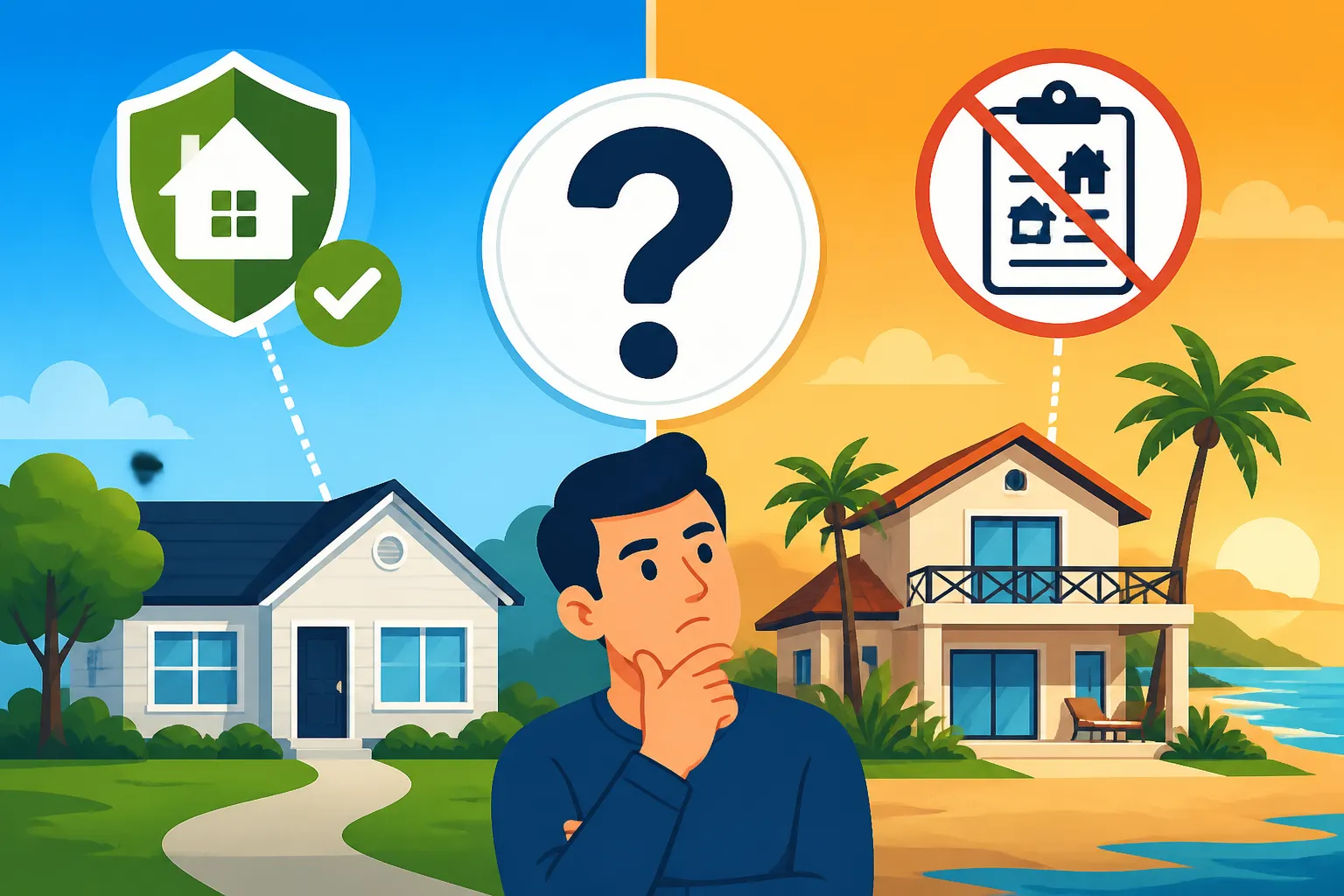
It’s a common dream, isn't it? Owning that cozy cabin in the mountains, a beach house by the shore, or a quiet retreat upstate. But then the reality of property taxes hits, and you start wondering: "Can I get a homestead exemption on a second home?" It’s a frustrating question because the answer, for most people, is usually a firm no. This guide will clarify why homestead exemptions are almost exclusively tied to your primary residence and explore any rare exceptions or alternative ways to find some property tax relief on your other properties.
Understanding the "Primary Residence" Rule for Homestead Exemptions
Let's cut right to the chase: the core purpose of a homestead exemption is to provide tax relief for the home you live in most of the time – your principal dwelling. This isn't just a suggestion; it's the fundamental premise behind nearly all homestead exemption laws across the United States. Local and state governments implement these exemptions to ease the tax burden on homeowners and protect them from losing their main residence due to rising property values and the corresponding tax hikes. They want to keep people in their homes, not necessarily to make owning multiple properties cheaper.
What Exactly Qualifies as a Primary Residence?
Defining a primary residence might seem straightforward, but it actually involves a few key criteria that tax authorities look at very closely. It's not just about where you say you live; it's about where you actually live the majority of the time. Typically, your primary residence is where you spend more than six months out of the year. This is the address where you receive your mail, where your vehicle is registered, where you're registered to vote, and often where your children attend school.
Think of it this way: your primary residence is the hub of your life. It's where your legal documents point, where your utility bills pile up, and where you genuinely establish your deepest roots. For a deep dive into these rules, check out our comprehensive guide on the Homestead Exemption: Complete State-by-State Guide. Understanding these nuances is crucial because a casual declaration won't cut it when the tax assessor comes knocking, or when you're filing an application for a significant tax break.
Common Misconceptions and Why Second Homes Don't Fit
One of the biggest misconceptions homeowners have is that if they spend some significant time at a second property, or if it's their preferred place to relax, it should qualify for a homestead exemption. Unfortunately, that's almost never the case. A "second home" or "vacation home" by its very definition implies it's not your primary dwelling. It's a place you visit, not the place you primarily reside.
For instance, if you have a primary residence in Dallas, Texas, where you work and your kids go to school, and a lake house in the Texas Hill Country that you visit every weekend, the lake house is a second home. Even if you love spending time there, and even if you eventually plan to retire there, it doesn't currently meet the criteria for a homestead exemption. The legal and practical definitions of "primary residence" simply exclude these types of properties, no matter how much you might wish they didn't. This strict interpretation prevents homeowners from claiming multiple tax breaks and ensures the program benefits its intended recipients – those establishing their main home.
State-Specific Definitions and Requirements
While the general principle of a primary residence applies nationwide, the specific definitions and evidence required to prove that residency can vary quite a bit from state to state, and even county to county. This means that what flies in Florida might not even get a second look in California or New York. It’s a patchwork system, and it's why doing your homework on your specific location is so vital.
Proof of Residency: What Tax Assessors Look For
When you apply for a homestead exemption, the tax assessor's office isn't just going to take your word for it. They're looking for tangible, undeniable proof that the property is indeed your primary residence. This is where documentation becomes your best friend. Common forms of proof include:
- Driver's License or State ID: This should show the address of the home you're claiming as primary.
- Voter Registration Card: Your voting address should match your primary residence.
- Vehicle Registration: The address for your car, truck, or motorcycle.
- Income Tax Returns: Both federal and state tax returns often ask for your primary residence.
- Utility Bills: Bills for water, electricity, gas, and internet service addressed to you at that property.
- Bank Statements: While less direct, these can help establish where you conduct your daily financial life.
- Affidavit or Sworn Statement: Some states require you to sign a legal document affirming the property is your homestead.
If you're ever questioned about your primary residence, you'll need to be able to provide a consistent story across these different documents. Trying to claim a homestead exemption in two different states or counties simultaneously is a surefire way to run into legal trouble and potential penalties.
How States Enforce the Primary Residence Rule
States are getting increasingly sophisticated in how they enforce these rules. With data matching capabilities, they can often cross-reference various public records to flag inconsistencies. For example, if you claim a homestead exemption in Florida, but your driver's license and vehicle registration are still showing a New York address, you're likely going to raise a red flag. Some states also have specific laws regarding how long you must continuously reside in a property before it qualifies.
Let's consider specific states. In Florida, for example, the homestead exemption has a March 1st deadline, and they are quite particular about the primary residence requirement, checking things like voter registration and utility usage. Similarly, the Texas Homestead Exemption Explained emphasizes that you can only claim one homestead exemption for your primary residence. These strict rules are in place to prevent abuse of the system, which is designed to help permanent residents, not property investors or those seeking to reduce taxes on multiple homes. While the specifics differ, the common thread is a strong commitment to verifying primary residency.
Are There Any Exceptions or Loopholes for "Second Homes"?
It's natural to hope for a silver lining, and while true homestead exemptions for properties genuinely classified as "second homes" are incredibly rare, there are a few scenarios where a property that feels like a second home might still qualify, or where other tax benefits could apply. These usually involve a change in your living situation or the specific use of the property.
When a Second Home Becomes a Primary Residence
The most obvious "exception" is when your second home actually becomes your primary residence. This often happens when people retire, relocate for work, or simply decide to make a lifestyle change. If you sell your original primary residence and move permanently into what was once your vacation home, that property then qualifies for the homestead exemption (assuming you meet all other state requirements).
For instance, if you've been living in a bustling city apartment for years and enjoying your quiet country cottage on weekends, but then you retire and move into the cottage full-time, making it your new legal address, registering your car there, and changing your voter registration, then that cottage is no longer a "second home." It's your new primary residence, and you can apply for the homestead exemption. Just remember the clock starts ticking from the date you establish primary residency, and you'll still need to meet the filing deadlines for your new homestead. Understanding these deadlines is crucial; our guide on Homestead Exemption Deadlines by State can provide more specific information for your location.
Situations Where Related Exemptions Might Apply
Even if your second home doesn't qualify for a traditional homestead exemption, other property tax relief programs might be available depending on the property's use or your personal circumstances. These aren't homestead exemptions, but they can still provide significant savings.
For example, if your "second home" is actually a working farm or has a substantial acreage dedicated to agricultural use, you might qualify for an Agricultural & Farm Property Tax Exemptions. These programs, often called "greenbelt" laws, reduce the assessed value of the land based on its agricultural productivity rather than its potential market value, leading to lower taxes. This is common in states like Texas with its "1-d-1 Open Space" exemption or Florida's Greenbelt Law.
Another scenario could involve historical properties. Some states offer tax abatements or reductions for properties that are historically designated and maintained, regardless of whether they are a primary or secondary residence. These are specific and often come with strict conditions about preservation and public access, but they are worth investigating if your second home falls into that category. Always remember these are distinct from homestead exemptions.
Exploring Alternatives to Lower Property Taxes on Your Second Home
Since a traditional homestead exemption is likely off the table for your second home, it's time to explore other avenues to manage your property tax burden. There are legitimate strategies you can employ to potentially lower your bill, but they require diligence and understanding of the local tax system.
Reviewing Your Assessment for Accuracy
One of the most powerful tools homeowners have, whether for a primary or second home, is challenging an unfair property tax assessment. Just because it's not your primary residence doesn't mean the county tax assessor can overvalue it. Errors happen, and assessments are often mass appraisals that don't always capture the unique characteristics or condition of your specific property.
You should always review your annual notice of appraised value. Look for discrepancies in square footage, number of bedrooms/bathrooms, lot size, or even incorrect descriptions of property features (e.g., being taxed for a swimming pool you don't have). Compare your property's assessed value with similar homes in your area. If comparable properties—those of similar size, age, and condition—are assessed significantly lower, you might have a strong case for an appeal. Our comprehensive guide on How to Appeal Property Taxes: Complete Guide offers a step-by-step process, and you can also learn about Evidence & Comps for a Property Tax Appeal to strengthen your case. This is a vital process, as the property's Assessed Value vs Market Value vs Taxable Value can significantly impact your annual bill.
Other Potential Exemptions or Deferrals
While traditional homestead exemptions are for primary residences, there are other types of property tax relief that might apply to you, even for a second home, depending on your personal circumstances:
- Senior or Over-65 Exemptions: Many states offer property tax breaks or freezes for seniors. While some of these are tied to primary residences, others might apply more broadly or offer different types of relief. For example, some states have income-based relief that considers all properties owned. Check out our guide on Senior & Over-65 Property Tax Exemptions and Freezes to see if your state offers any applicable programs that are not strictly tied to primary residency, or if the income criteria are broad enough.
- Disabled Veteran Exemptions: Veterans with disabilities often receive significant property tax exemptions. Many states extend these to any property owned, not just the primary residence, depending on the disability rating. It's definitely worth investigating the Veteran & Disabled Veteran Property Tax Exemptions in your state.
- Property Tax Deferral Programs: Some states offer programs that allow certain homeowners (often seniors, disabled individuals, or those with low income) to defer paying property taxes until the property is sold or transferred. This isn't an exemption, but it pushes the payment into the future. Our resource on Property Tax Deferral Programs by State details these options and their eligibility requirements, which occasionally extend beyond primary residences or have specific criteria where a second home might fit.
It's critical to note that these programs have strict eligibility requirements and application processes. You'll need to proactively seek them out and apply, as they are not automatically granted.
The Impact of Property Use on Tax Rates
The way your second home is used can also sometimes influence its tax rate or assessment. If your "second home" is genuinely vacant land that you're not building on, or an agricultural property, its taxation might be different from a developed residential property.
- Vacant Land: Raw, undeveloped land is often assessed at a lower rate than land with a residence built on it. If your "second home" is actually just a parcel of land you own for future plans, make sure it's being assessed appropriately as Property Tax on Vacant Land.
- Rental Property: If you rent out your second home for part of the year, it might be classified as an investment property. While this typically doesn't lead to exemptions, the expenses associated with maintaining and renting the property might be deductible on your federal income taxes, effectively reducing your overall tax burden. However, property tax itself on rental properties is generally treated differently than for primary residences. Our resource on Rental & Investment Property Tax Guide can help clarify these differences.
Understanding how your state calculates property taxes is key, whether it's for a primary residence or a second home. The variables can be complex, from What Is a Mill Rate? (Millage Explained) to how Property Tax Assessment & Reassessment Explained works. While a homestead exemption is a specific benefit for your primary home, staying informed about all aspects of property tax can help you manage costs on all your properties.
Property Tax Exemptions for Different Property Types & Situations
| Exemption Type | Typical Application | Does it Apply to a Second Home? | Common Eligibility Criteria |
|---|---|---|---|
| Homestead Exemption | Primary Residence | Rarely/Almost Never | Must be principal dwelling, owner-occupied. |
| Senior/Over-65 | Primary Residence (often) | Potentially, with caveats | Age, residency, sometimes income limits. Check state rules carefully. |
| Disabled Veteran | Primary Residence (often) | Potentially, often broader | Service-connected disability rating, residency. Varies by state. |
| Agricultural/Farm | Working farms/land | Yes, if property qualifies | Land used for commercial agriculture. Strict acreage/income rules. |
| Historical Property | Designated historic site | Yes, if property qualifies | Property must be officially designated and maintained to standards. |
| Property Tax Deferral | Primary Residence (often) | Potentially, with caveats | Age/disability, income limits. Defers payment, not an exemption. |
Ultimately, securing a homestead exemption for a true "second home" is generally not an option. The intent of these laws is very clear: to provide relief on the place you call home the majority of the time. However, by thoroughly understanding your state's tax laws, carefully reviewing your property's assessment, and exploring other available tax relief programs, you might still find ways to lighten the property tax load on your additional properties.
Disclaimer
The information provided in this article is for general informational purposes only and does not constitute tax or legal advice. Property tax laws are complex and vary significantly by state and local jurisdiction. You should consult with a qualified tax professional or legal advisor for advice tailored to your specific situation. Tax laws are subject to change, and it is your responsibility to verify current regulations with your local appraisal district or tax assessor's office.