Homestead Exemption Deadlines by State
There's nothing quite as frustrating as realizing you've missed a critical deadline, especially when it comes to something as impactful as your property taxes. We all juggle so many responsibilities, and remembering specific dates for various government programs can feel like a full-time job in itself. Missing the homestead exemption deadline means you could be leaving significant savings on the table for an entire year, leading to a higher tax bill than you truly deserve. This comprehensive guide is here to walk you through the ins and outs of homestead exemption deadlines across different states, helping you understand when and how to apply so you can secure the tax relief you're entitled to.
Understanding the Homestead Exemption
Before we dive into those all-important dates, let's make sure we're on the same page about what a homestead exemption actually is and why it matters so much. It's one of the most common and beneficial property tax relief programs out there, designed to ease the financial burden on homeowners who use a property as their primary residence.
What is a Homestead Exemption?
Simply put, a homestead exemption allows you to reduce the taxable value of your home, which in turn lowers your property tax bill. It's not a complete exemption from property taxes, but rather a deduction that states, counties, and sometimes even cities apply to your assessed value. Think of it as a discount on the portion of your home's value that local authorities use to calculate your taxes. For example, if your home is assessed at $300,000 and your state offers a $25,000 homestead exemption, you would only be taxed on $275,000. That reduction can translate into hundreds or even thousands of dollars in savings each year, making a real difference to your household budget. The specific amount of the exemption varies wildly from state to state and even within different jurisdictions in the same state. You can find a complete overview in our guide on the Homestead Exemption: Complete State-by-State Guide.
The primary purpose behind these exemptions is to protect homeowners from excessive taxation and to encourage homeownership. They're often seen as a way to help families stay in their homes, especially during times of rising property values or economic hardship. It's a recognition that your primary residence isn't just an asset; it's a home, a sanctuary, and a vital part of your community.
The "Why" Behind the Deadline
So, why do these exemptions have such strict deadlines? It's not just to make our lives harder, I promise! These deadlines are primarily driven by administrative necessity and the annual property tax assessment cycle. Local tax authorities, like your county appraisal district or assessor's office, need time to process applications, verify eligibility, and update their records before they finalize the tax rolls for the upcoming year.
Imagine thousands of homeowners applying for exemptions. Each application needs to be reviewed, cross-referenced with property records, and often involves verifying residency through utility bills, driver's licenses, or other documentation. This entire process is incredibly labor-intensive. If there were no deadlines, these offices would be overwhelmed, and it would be impossible to accurately set and collect property taxes on time. The deadlines ensure fairness and consistency, allowing for an organized and predictable system for everyone involved – from the homeowner to the school districts and municipalities that rely on property tax revenue. Missing the deadline often means your application simply won't be processed for the current tax year, forcing you to wait until the next cycle.
Common Eligibility Criteria
While the specifics vary, most homestead exemptions share a few common eligibility criteria. Understanding these can help you determine if you might qualify. First and foremost, the property must be your primary residence. This means it's the home where you live most of the time, where you receive your mail, and where you're registered to vote. You usually can't claim a homestead exemption on a second home, a rental property you don't occupy, or an investment property.
Secondly, you typically need to own the property, either solely or jointly with another individual. Renters, unfortunately, do not qualify for homestead exemptions. There might also be specific residency requirements, such as needing to have owned and occupied the home as of January 1st of the tax year for which you're applying. Some states may also have limitations based on property size, value, or even specific deed types. For example, some jurisdictions might require the homeowner to be a natural person, not a trust or corporation, although there are often exceptions for certain trusts. Always check your specific state and local requirements, as these can be quite nuanced.
Navigating State-Specific Homestead Exemption Deadlines
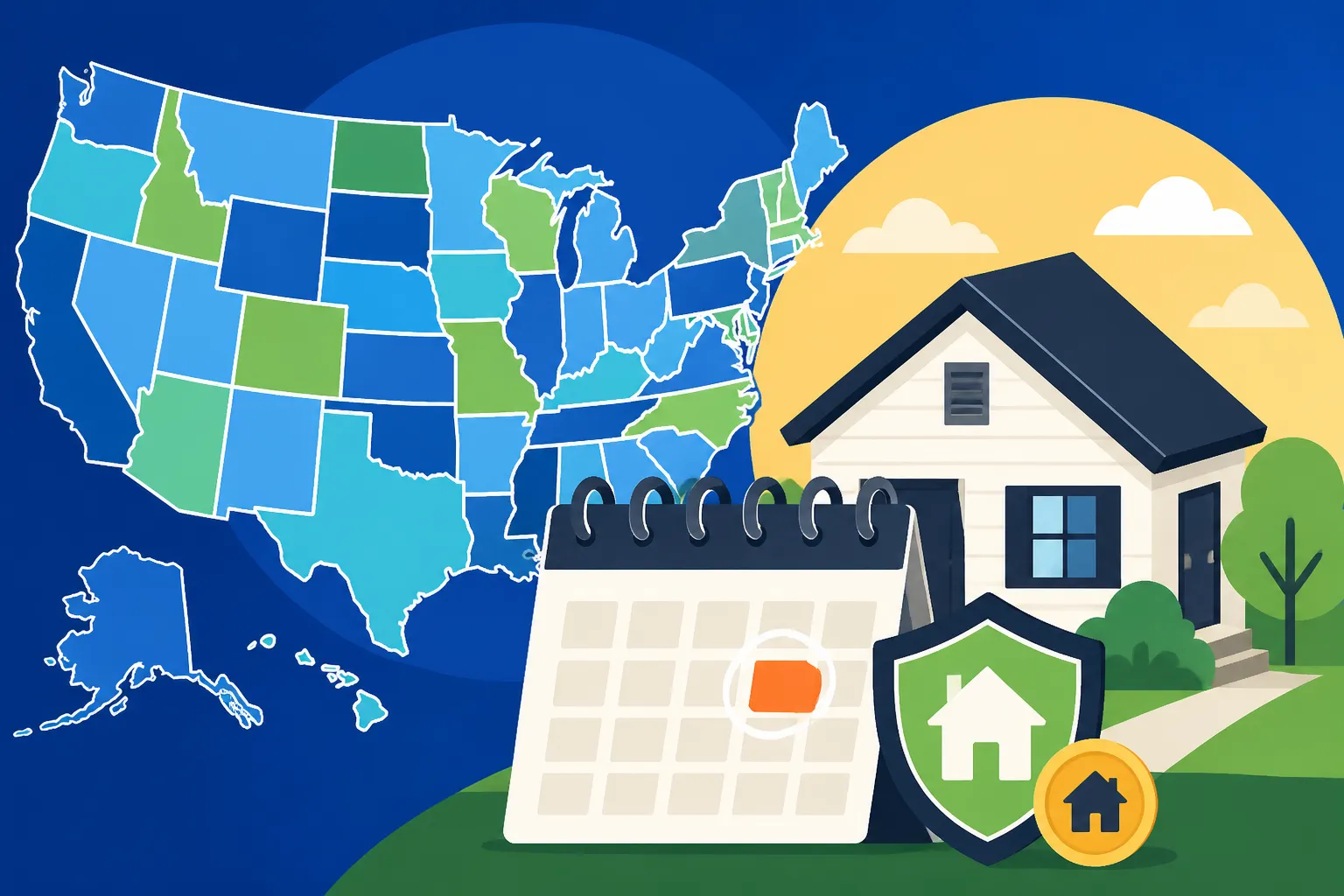
The biggest challenge with homestead exemptions is that there isn't a universal deadline across all 50 states. Each state, and sometimes even local jurisdictions, sets its own schedule, which can be incredibly confusing. It's like trying to keep track of different time zones, but for tax forms!
States with Annual Deadlines
Many states operate on an annual application cycle, meaning you need to submit your homestead exemption application by a specific date each year, or sometimes by a certain date after purchasing a new home. These deadlines are often tied to the start of the tax year or the assessment period.
For example, Florida famously has a March 1st deadline for its homestead exemption. If you bought a home in Florida in, say, November 2023, you would need to apply for the exemption by March 1st, 2024, to receive it for the 2024 tax year. If you apply after that date, you'll likely have to wait until the following year for the exemption to take effect. Texas generally has a May 1st deadline, although it's worth noting that recent legislative changes now allow you to file up to two years retroactively for certain exemptions. Illinois also typically has an annual application, often due in the spring or early summer, though exact dates can vary by county. These annual deadlines require homeowners to be diligent and mark their calendars every single year, even if they've had the exemption in place for years. It's not uncommon for folks to forget amidst the busyness of life, only to realize their mistake when a higher-than-expected tax bill arrives.
States with One-Time Application
In contrast to the annual rush, some states offer a one-time application process for their homestead exemption. This can be a huge relief, as you only need to go through the paperwork once, and the exemption remains in effect as long as you continue to meet the eligibility criteria for that property. California is a prime example of this system. Once you file for the Homestead Exemption in California, it generally stays on your record until you sell the property or no longer occupy it as your primary residence. This is largely tied into California's unique property tax system established by Proposition 13, which caps annual increases in assessed value.
This one-time application approach simplifies things significantly for long-term homeowners, removing the stress of remembering to reapply every single year. However, it's still crucial to ensure you file that initial application correctly and by any initial deadlines set for new homeowners. If you move, you would need to apply again for your new primary residence. Even in these "one-and-done" states, there's always an initial filing period after you purchase your home, so don't assume you can wait forever.
States with Rolling Deadlines or Other Considerations
Beyond the strict annual or one-time models, some states or local jurisdictions might have slightly more flexible or nuanced approaches. For instance, some areas might allow applications to be filed at any time, with the exemption taking effect for the next available tax cycle. Others might have different deadlines for specific types of exemptions, like those for seniors or disabled veterans, which often have separate application processes and deadlines from the general homestead exemption.
For example, while New York offers the STAR exemption (School Tax Relief), which is technically a property tax exemption, its enrollment period usually runs through the end of the year for the following year's taxes, or has specific dates determined by the assessing unit for homeowners to apply. There are even cases where local governments might extend deadlines in the wake of natural disasters or other emergencies. However, these are typically exceptions rather than the norm. It's vital to remember that these alternative structures are less common, and it's always safest to assume there's a specific, firm deadline for your area. Always confirm with your local assessor's office.
Key States and Their Specific Deadlines
Let's zoom in on a few major states to give you a concrete idea of what these deadlines look like in practice. This isn't an exhaustive list for every state, but it covers some of the most populated areas where property tax savings are a significant concern.
Florida's March 1st Hurdle
If you're a homeowner in the Sunshine State, the phrase "March 1st" should be etched into your memory. Florida has one of the most well-known and consistently enforced homestead exemption deadlines. To receive the homestead exemption for the current tax year, you must file your application with your county property appraiser's office by March 1st of that year. This means if you purchased your home and established it as your primary residence in 2023, you need to apply by March 1st, 2024, to get the exemption for your 2024 tax bill.
Missing this deadline means you'll pay taxes based on the full assessed value for that year, without the benefit of the exemption. For many Floridians, who often qualify for a $25,000 basic exemption and sometimes an additional $25,000 for non-school taxes, this can be a substantial amount of money. The good news is that once you file and are approved, you generally don't need to reapply annually unless there are changes in ownership or residency. However, it's always a good idea to confirm with your local property appraiser's office if you have any doubts. Our detailed guide on the Florida Homestead Exemption (March 1 Deadline) offers even more specifics.
Texas's May 1st Window
In Texas, the general deadline for applying for a homestead exemption is May 1st. This date applies to the standard residential homestead exemption. So, if you purchased your home in 2023 and established it as your primary residence, you'd want to file your application by May 1st, 2024, for the 2024 tax year. Unlike some states, Texas law generally requires you to be living in the home as your primary residence on January 1st of the tax year for which you are applying.
A significant update in Texas law now allows homeowners to apply for a homestead exemption up to two years after the delinquency date for the taxes. This retroactive application can be a lifesaver for those who missed previous deadlines. For instance, if you establish your homestead on January 1, 2024, the deadline to apply for the 2024 tax year is May 1, 2025, but you could still file as late as early 2027 for the 2024 tax year. This flexibility is a huge benefit compared to many other states. Texas also offers additional exemptions like the Texas Over-65 Property Tax Exemption & School Tax Freeze and for disabled individuals, which may have slightly different application windows or requirements. Learn more about the specifics in our comprehensive article, Texas Homestead Exemption Explained.
California's Unique Application
California stands out because its primary homestead exemption, while not a specific annual dollar amount like in other states, provides a significant tax benefit through its property tax assessment caps. The state's homeowners' exemption reduces the assessed value of a primary residence by $7,000, which translates to a savings of roughly $70 to $100 annually, depending on your local tax rate. While this amount might seem modest compared to some other states' exemptions, California's property tax system, largely governed by California Prop 13 Explained (2% Cap), means the real long-term savings often come from the cap on how much your assessed value can increase each year.
The important point regarding the deadline in California is that it's generally a one-time application. You file for the exemption after you purchase and occupy your primary residence, and it remains in effect until you move or sell the property. There's usually a specific window after you take ownership to file, often by February 15th to get the full exemption for the upcoming year, or by December 10th for a partial exemption on the current year's taxes. If you bought your home recently, you'll want to get that initial filing done. Once approved, you typically don't need to worry about annual reapplications, which is a big relief for many long-term homeowners.
Other Notable State Deadlines
Beyond these examples, many other states have their own important dates.
- New York: While New York doesn't have a traditional homestead exemption in the same vein as Texas or Florida, it offers the STAR (School Tax Relief) program. The New York STAR vs Enhanced STAR program provides partial exemptions from school property taxes. For new homeowners or those new to STAR, the deadline to apply is generally March 1st in most communities, though it can be May 1st or June 1st in some others. Once you're enrolled and meet eligibility, it often automatically renews, but it's always wise to confirm.
- Illinois: Property tax exemptions in Illinois, including the general homestead exemption, typically require an annual application, though some counties may automatically renew for eligible homeowners. The deadline often falls in the spring or early summer, around March, April, or May, varying by county. For example, Cook County, Illinois, often has deadlines in the spring.
- Georgia: Georgia offers several types of homestead exemptions, with the general application deadline typically being April 1st. Similar to other states, you must own and occupy the property as your primary residence on January 1st of the year you're applying for the exemption.
This patchwork of deadlines means that proactive research is absolutely essential. To ensure you're getting all the benefits you deserve, check out our comprehensive guide on How to Apply for Property Tax Exemptions.
What Happens If You Miss the Deadline?
It's a sinking feeling, isn't it? That moment you realize you've missed a crucial deadline. When it comes to homestead exemptions, missing the application window can have tangible and often costly consequences.
Consequences of a Late Application
The most immediate and obvious consequence of missing your homestead exemption deadline is that you will likely lose out on the tax savings for that entire tax year. Your property will be assessed at its full value, and your tax bill will reflect that higher amount. This isn't just a small oversight; depending on your state's exemption amount and your property value, this could mean hundreds or even thousands of extra dollars you'll owe.
Let's imagine you're in Florida, and you forget to file your homestead exemption by March 1st. For the rest of that year, you won't get the $25,000 (or more) reduction in your assessed value. Your tax bill will simply be higher. Crucially, most states do not allow for retroactive application if you simply forgot or missed the deadline. The opportunity for that tax year is typically gone, and you'll have to wait until the next filing period to apply for the following tax year. This means you might end up paying higher taxes for over a year simply because of a missed date. It's a tough lesson to learn, which is why stressing these deadlines is so important.
Are There Any Exceptions or Extensions?
While "life happens," and we all wish for a little grace, property tax deadlines are generally very strict. Exceptions are rare and typically reserved for specific, unavoidable circumstances, not just a simple oversight. Common reasons for potential extensions or late filing allowances might include:
- Natural Disasters: If a major natural disaster impacts a region, local authorities might issue blanket extensions for various filings, including homestead exemptions, to give affected residents time to recover.
- Military Service: Active military personnel who are deployed or serving out of state might sometimes qualify for special considerations or extended deadlines, especially if their ability to file was directly impacted by their service.
- Administrative Error: In very limited cases, if the property appraiser's office or assessor's office made an administrative error that prevented you from filing, there might be a pathway to remedy the situation. This is not about your error, but theirs.
- Legal Incapacity: If a homeowner becomes legally incapacitated, a designated representative might be able to file on their behalf or request an extension.
It's absolutely critical to understand that these are exceptions, not guarantees. You generally cannot simply call up and ask for an extension because you were busy or forgot. Always contact your local property appraiser or assessor's office immediately if you believe you have a legitimate, extenuating circumstance. They can advise you on any specific local policies or forms for requesting reconsideration.
Planning Ahead for the Next Cycle
If you've missed the deadline, don't despair for too long. Instead, pivot your energy to ensuring it doesn't happen again. The best strategy is always proactive planning. First, mark your calendar for the next filing period the moment you realize you've missed the current one. Set multiple reminders: on your phone, in your physical planner, on a sticky note on your fridge.
Next, start gathering your documentation early. This typically includes proof of ownership (like your deed), proof of residency (like a driver's license with your homestead address, utility bills, or voter registration), and sometimes other forms depending on your state and specific exemption (like proof of age for senior exemptions, or disability documentation). Having these ready to go well in advance of the deadline will make the application process much smoother. Many states allow you to file online, which can simplify the process once you have your documents in order. Thinking about questions like Do I Have to Reapply for Homestead Exemption Every Year? and What Documents Do I Need for Homestead Exemption? can help you prepare.
Strategies for Staying on Top of Property Tax Exemptions
Keeping track of deadlines and ensuring you apply for all eligible property tax exemptions can feel like a chore, but the savings are well worth the effort. Here are some actionable strategies to help you stay ahead of the game.
Proactive Research and Local Resources
The internet is a powerful tool, but when it comes to property taxes, local information is king. Your county's property appraiser or assessor's office website is your absolute best friend. This is where you'll find the most accurate and up-to-date information regarding deadlines, eligibility, and application forms. Don't rely solely on general state information; drill down to your specific county or municipality, as local rules can sometimes add another layer of complexity.
- Bookmark Key Websites: Keep the direct links to your county's property appraiser or assessor's office, and any state department of revenue pages, easily accessible.
- Sign Up for Alerts: Many local government offices offer email or text alert services for important dates, including property tax deadlines. This is a hands-off way to get automatic reminders.
- Attend Local Workshops: Some counties or community centers host free workshops to help homeowners understand property taxes and apply for exemptions. These can be invaluable for personalized advice.
- Don't Be Afraid to Call: If you have questions, pick up the phone and call your local tax office. They are there to help, and getting clarification directly from the source can prevent costly errors.
Remember, understanding how property taxes are assessed, as discussed in Property Tax Assessment & Reassessment Explained, can also help you understand how exemptions fit into the bigger picture.
Document Preparation and Record Keeping
When it comes to applying for exemptions, organization is key. You'll almost always need to provide documentation to prove your eligibility. This isn't just a formality; it's how the tax authorities verify that you meet the criteria for the tax relief.
- Proof of Residency: This is paramount. It can include your driver's license or state ID showing your homestead address, voter registration card, vehicle registration, and recent utility bills (electricity, water, gas) in your name at that address.
- Proof of Ownership: Your property deed or a recent mortgage statement will serve as evidence that you own the property.
- Income Verification: For some income-based exemptions, like senior or disabled homeowner programs, you might need to provide income tax returns or other financial statements.
- Other Specifics: Depending on the type of exemption, you might need marriage certificates, death certificates (for surviving spouses), or disability documentation from a medical professional.
Create a dedicated "Property Tax" folder, either physical or digital, where you keep all these documents. This makes it simple to pull everything together when it's time to apply or if the office requests additional information. Keeping good records also helps if you ever need to understand Why Do Property Taxes Increase? or challenge an assessment.
The Benefits of Applying Early
While meeting the deadline is the goal, applying early offers its own distinct advantages. It provides a buffer against unforeseen issues and reduces stress.
- Time to Correct Errors: If there's an issue with your application, missing documentation, or a clerical error, applying early gives you ample time to fix it before the final deadline. Imagine submitting an incomplete application the day before the deadline – you'd likely miss out for the year.
- Reduced Stress: Nobody likes last-minute scrambling. Getting your application in well ahead of time means one less thing to worry about as the deadline approaches.
- Faster Processing (Sometimes): While not guaranteed, early applications might sometimes be processed sooner, giving you peace of mind that your exemption is secured.
- Avoid System Overload: Near the deadline, local tax office websites and phone lines can become incredibly busy. Filing early means you avoid this rush.
Don't wait until the last minute, even if you’re confident in your application. Give yourself the gift of time and peace of mind. By consistently applying for your homestead exemption, you can ensure you're minimizing your tax burden and keeping more of your hard-earned money where it belongs: in your pocket. Knowing the potential Homestead Exemption Savings: How Much? can be a great motivator!
Comparative Table of Key State Homestead Exemption Deadlines
To help you keep track, here's a quick reference for some of the common homestead exemption deadlines in major states. Always verify with your local county appraisal district or assessor's office for the most current and specific information for your property.
| State | Common Deadline (Approx.) | Type of Application | Key Requirement | What Happens if Missed |
|---|---|---|---|---|
| Florida | March 1st | Initial/One-time* | Primary residence as of Jan 1st of tax year | No exemption for current year's taxes |
| Texas | May 1st | Initial/Retroactive | Primary residence as of Jan 1st of tax year | Higher tax bill; can file up to 2 years retroactively |
| California | Feb 15th / Dec 10th | One-time | Primary residence, date of purchase/occupancy | Reduced or no exemption for current year |
| New York (STAR) | March 1st / Varies | Initial/One-time* | Primary residence, income limits (Enhanced STAR) | No STAR benefit for current year |
| Illinois | Varies by County (Mar-May) | Annual (some auto-renew) | Primary residence as of Jan 1st of tax year | No exemption for current year's taxes |
| Georgia | April 1st | Initial/One-time* | Primary residence as of Jan 1st of tax year | No exemption for current year's taxes |
Note: While many states listed have an "initial/one-time" application, it's crucial to confirm if local ordinances or specific exemption types require annual reapplication or if conditions (like income) change.
Disclaimer
Please note that this article provides general information and is not intended as financial, legal, or tax advice. Property tax laws and deadlines are subject to change and vary significantly by state and local jurisdiction. Always consult with your local property appraiser, tax assessor's office, or a qualified tax professional for advice tailored to your specific situation.