Does Buying Land Increase Your Property Taxes?
The dream of owning a piece of land, whether it’s for future development, a personal retreat, or an investment, often comes with an exciting vision of possibilities. But lurking just beneath the surface of that excitement is often a nagging question: "Does buying land increase your property taxes, and if so, by how much?" It's a valid concern, as unexpected tax hikes can quickly turn a dream into a financial burden. This guide is here to demystify the property tax implications of buying land, helping you understand what to expect and how to plan for it.
The Basics of Property Tax on Land
Before we dive into how buying land might change your tax bill, it’s crucial to understand how land itself is typically assessed for property tax purposes. It's not always as straightforward as you might think, especially when comparing it to an already developed property.
Understanding Assessed Value and Raw Land
When you purchase a piece of raw land – meaning land without any permanent structures like houses, barns, or even paved driveways – its value for property tax purposes is primarily based on what's known as its "highest and best use." This isn't necessarily what you plan to use it for, but rather what the local assessor believes its most profitable use could be, given its zoning and market conditions. For raw land, assessors look at several key factors.
First, they consider the property's location. Is it in a rapidly developing area, near a growing city, or out in a rural expanse? Proximity to amenities, major roads, and desirable neighborhoods can significantly increase the assessed value of even undeveloped parcels. Second, they examine zoning regulations. Land zoned for commercial or multi-family residential development will typically have a much higher assessed value than land zoned for single-family residential or agricultural use, even if both parcels are currently vacant. Finally, assessors rely heavily on comparable sales. They'll look at recent transactions of similar undeveloped lots in the same area to gauge the market value. Unlike developed properties where the value includes buildings, the assessment for raw land focuses solely on the dirt and its inherent potential. This means that while a 5-acre parcel might sit empty, its assessed value could be substantial if it's surrounded by new housing developments and zoned for further growth.
How Zoning and Usage Impact Initial Assessment
The zoning classification assigned to a parcel of land by the local government is one of the most significant determinants of its property tax assessment. Zoning dictates what can and cannot be built on the land, and therefore, its potential value. A piece of land zoned for high-density residential housing or commercial development in a bustling area will inherently be valued much higher than an identical-sized parcel zoned for agricultural use in a quiet, rural township. The potential for higher income generation or more intensive development drives up the assessed value, and consequently, the property taxes.
Beyond general zoning, the actual usage of the land can also play a critical role, especially when it comes to specific tax relief programs. Many states offer special valuation programs to encourage certain land uses, such as farming or conservation. For example, in Texas, the 1-d-1 Open Space valuation allows eligible agricultural land to be assessed based on its productivity value rather than its market value, resulting in significantly lower property taxes. Similarly, Florida has a "Greenbelt Law" that provides favorable tax treatment for land used for bona fide agricultural purposes. Other states like Georgia offer programs like the Georgia CUVA Agricultural Covenant. These programs are designed to protect farmers and preserve green spaces, but they come with strict requirements and often "rollback taxes" if the land use changes. Understanding these local nuances is essential when considering any land purchase, as they can dramatically alter your ongoing property tax obligations.
Triggers for Property Tax Reassessment After Land Purchase
Buying land isn't a one-and-done deal when it comes to property taxes. The act of purchasing the land itself, and especially any future changes you make to it, can directly trigger a reassessment that impacts your tax bill.
The Purchase Itself as a Reassessment Trigger
In most jurisdictions across the United States, the sale of a property, including raw land, is a common trigger for a property tax reassessment. When a piece of land changes hands, the new sale price is often considered the most up-to-date indicator of its market value. The local assessor's office will typically use this recent transaction as a primary factor in recalculating the property's assessed value. This means that if you buy a parcel of land for $100,000, and the previous owner's assessment was based on a much lower value from years ago, your new tax bill will likely reflect the higher purchase price.
States handle this in different ways. In many areas, like parts of Ohio or Pennsylvania, the county auditor or assessor will process the sale, and a new assessed value will be established, usually effective for the next tax year. However, some states have assessment caps or unique systems. For instance, in California, Proposition 13 limits annual increases in assessed value to 2% but allows for a full reassessment to the sales price when the property changes ownership. This can lead to a significant jump in property taxes for the new owner, especially if the property hasn't been sold in many years. It’s crucial to research the specific rules in the county and state where you plan to buy, as the immediate impact on your property taxes after closing can vary widely. Don't just assume the previous owner's tax bill will be yours; it almost certainly won't be if the market value has increased. This is a key component of understanding Property Tax Reassessment After Buying a Home, even if it's currently just raw land.
The Role of Improvements and Development
While buying raw land might lead to an initial reassessment, the most significant increases in property taxes typically come when you start making improvements or developing the land. Any permanent addition that enhances the value of the property will usually trigger a reassessment, sometimes even before the construction is fully complete. This isn't just about building a brand-new house; it includes a wide range of changes.
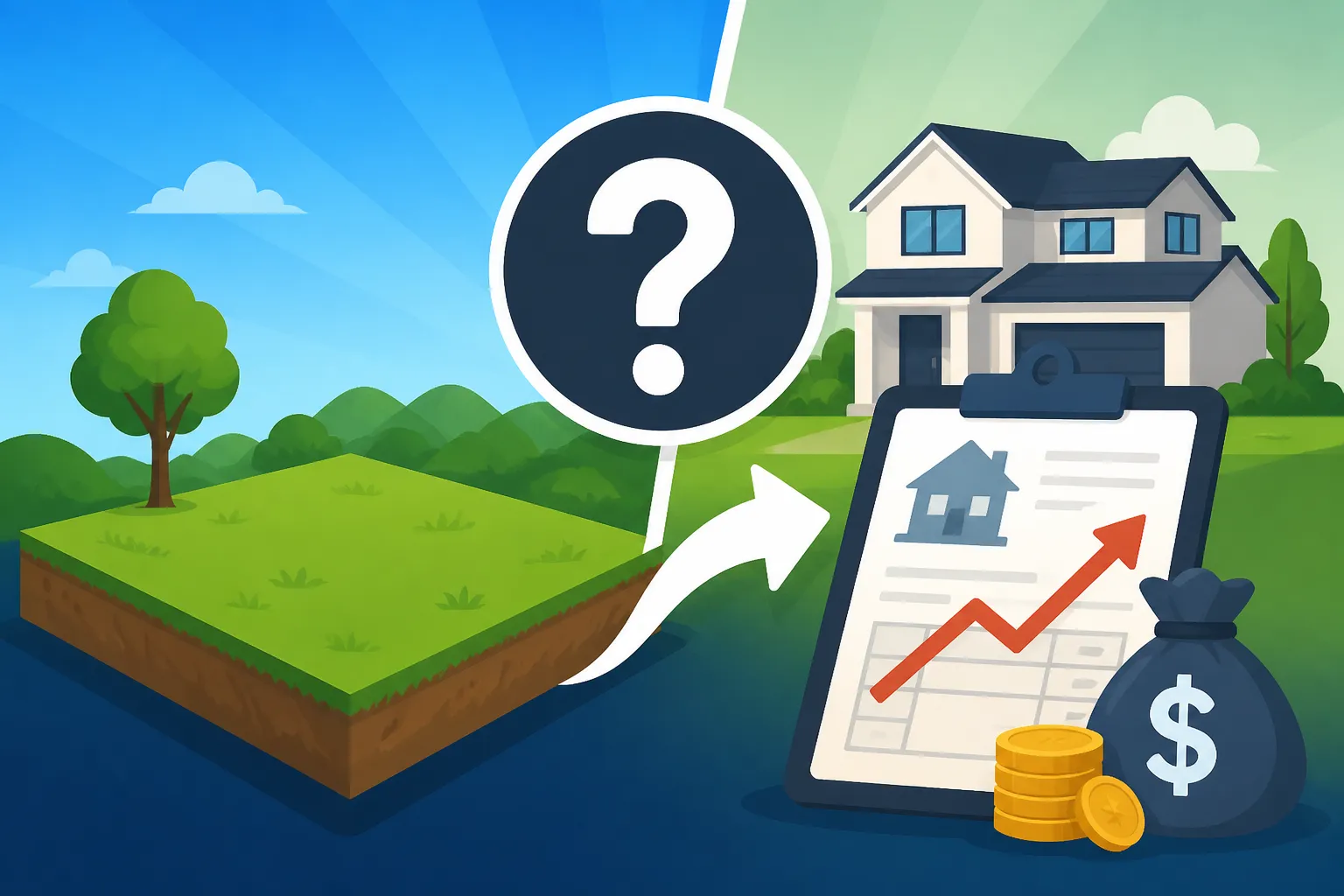
Imagine you purchase a beautiful five-acre wooded lot. Initially, your property taxes reflect its value as unimproved land. But then you decide to clear some trees, install a well and septic system, pave a driveway, and ultimately build your dream home. Each of these steps, especially the construction of a residence, adds substantial value to the property. The local assessor will track these improvements, often through building permits, and once completed (or even during construction in some areas), they will reassess the property. The value will transform from raw land to improved property, encompassing the value of the new structures, utilities, and landscaping. This can cause your property tax bill to jump dramatically – sometimes by several hundred or even a thousand percent, depending on the scale of the development and the local tax rates. This process is often detailed under concepts like New Construction Property Tax Explained. It’s not uncommon for counties to reassess at various stages of construction, issuing what's known as a supplemental property tax bill to account for the increased value that wasn't on the original annual bill. Keeping track of permits and projected tax impacts is vital, and tools like Stessa can help property owners manage the financial ins and outs of such development, even before it becomes an income-generating property.
Types of Land and Their Tax Implications
Not all land is treated equally when it comes to property taxes. The specific characteristics and designated use of a parcel can drastically alter its assessment and the resulting tax burden.
Vacant Residential Lots
A vacant residential lot is typically a parcel of land that is zoned for residential housing but currently has no structures on it. While it lacks a house, it's not simply "raw land" in the purest sense because its value is heavily influenced by its potential to become a home site. These lots are usually located within existing neighborhoods, have access to public utilities (or the potential for easy access), and are often part of a developed subdivision.
The property taxes on vacant residential lots are generally higher than those on purely agricultural or conservation land, but lower than those on lots with existing homes. Assessors value them based on the market price of similar buildable lots in the area. Factors like the size of the lot, its topography, access to utilities (water, sewer, electricity), and proximity to schools, shopping, and transportation hubs all play a significant role. For instance, a half-acre lot in a desirable suburban area like Plano, Texas, that's ready for construction will command a much higher assessed value and therefore higher taxes than a similar-sized lot in a remote, undeveloped rural area of the state. If you plan to build on it in the near future, you'll need to understand that the property tax on this vacant land is just the beginning of your tax journey.
Agricultural and Timber Land
For those looking to embrace rural living or invest in production land, agricultural and timber land often comes with a significant advantage regarding property taxes. Many states have specific programs designed to preserve agricultural use and open spaces by offering preferential tax treatment. This means the land is assessed based on its productive capacity (e.g., how much timber it can yield, or how much crops it can grow) rather than its potential market value for development. This often results in a substantially lower tax bill.
Take, for example, the "agricultural exemption" (often referred to as an "ag exemption") prevalent in states like Texas. If your land meets specific criteria for agricultural use – such as grazing livestock, cultivating crops, or growing timber – you can apply for this special valuation. Instead of your 50 acres being assessed as a prime subdivision development site, it's valued based on its ability to produce agricultural products. The savings can be immense. However, these programs come with strings attached. There are usually minimum acreage requirements, strict definitions of "agricultural use," and often a commitment period. If the land use changes (e.g., you stop farming and start subdividing), you may be subject to "rollback taxes," which means you'll have to pay the difference between the preferential tax rate and what the taxes would have been at market value for a number of preceding years, plus interest. It’s critical to understand these rules and your obligations when considering Agricultural & Farm Property Tax Exemptions.
Commercial and Industrial Land
Commercial and industrial land represents a completely different ballgame when it comes to property taxes. These parcels are assessed based on their potential for income generation and their suitability for business operations, often resulting in higher tax rates than residential or agricultural properties. The valuation process for commercial land is more complex, considering factors beyond just size and location.
Assessors look at the highest and best use for commercial purposes, including what type of business could operate there, its access to transportation, utility infrastructure, and its proximity to customers or labor pools. A prime commercial lot along a busy highway in, say, Dallas or Houston, even if vacant, will carry a very high assessed value due to its potential for lucrative development (e.g., retail, offices, warehouses). Tax rates for commercial property are often higher than residential rates in the same jurisdiction, reflecting the higher revenue potential. For businesses, property taxes on commercial land are a significant operating expense. Property owners often use tools like Stessa to manage the complex financial tracking of commercial properties, including tracking property tax payments and other operating costs, to ensure they have a clear picture of their investments. This difference highlights how How Property Type Affects Your Tax Assessment can truly reshape your financial outlook.
| Land Type | Typical Assessment Basis | General Tax Rate Tendency | Key Considerations |
|---|---|---|---|
| Vacant Residential | Market value of buildable lots | Moderate to High | Proximity to utilities, schools, amenities; zoning for residential development. |
| Agricultural/Timber | Productive capacity (yield) | Low (with exemptions) | Eligibility for special programs (e.g., ag exemption); potential for rollback taxes if use changes. |
| Commercial/Industrial | Income-generating potential | High | Location relative to markets/transport; zoning for specific business use; potential for intensive development. |
| Raw/Undeveloped | Highest and best use potential | Varies (low to high) | General location, future zoning potential; often lower than developed but can jump with development. |
Strategies for Managing Property Taxes on Land
The good news is that understanding how property taxes work on land gives you power. There are proactive steps you can take both before and after purchase to manage your tax burden effectively.
Researching Before You Buy
One of the smartest things you can do to avoid sticker shock with property taxes on land is to do your homework before you ever sign on the dotted line. Due diligence is your best friend when it comes to land purchases, as hidden tax implications can quickly erode the value of your investment or dream property.
Start by contacting the local county appraisal district or assessor's office. This isn't just a suggestion; it's a necessity. Ask for the current assessed value of the parcel you're interested in, and more importantly, inquire about its zoning. Understanding the zoning (e.g., residential, agricultural, commercial) is paramount, as it dictates not only what you can do with the land but also how it's valued. Ask if there are any current special valuations or exemptions on the property, such as an agricultural exemption, and what the requirements are to maintain them. You'll also want to investigate the property's tax history. Has it been recently reassessed? What were the property taxes paid by the previous owner? While your taxes might differ, this gives you a baseline. Don't be shy about asking about any upcoming reassessment cycles or potential changes in the local tax rate structure. A quick online search for "Property Tax Calculator: How to Estimate Your Bill" for your specific county can also give you a rough estimate based on recent sales. This proactive research can prevent future headaches and allow you to budget more accurately for your holding costs.
Utilizing Exemptions and Special Programs
Once you own land, or are planning to build on it, there are often exemptions and special programs available that can significantly reduce your property tax liability. These are not always automatic, and you typically need to apply for them. Missing application deadlines or eligibility criteria can mean paying a higher tax bill than necessary.
If you plan to build your primary residence on the land, you will likely become eligible for a homestead exemption once the home is complete and you occupy it. A Homestead Exemption: Complete State-by-State Guide shows that most states offer some form of this exemption, which reduces a portion of your home's assessed value from taxation, thereby lowering your bill. For example, in Florida, the homestead exemption can reduce the assessed value by up to $50,000 for qualifying homeowners. The process usually involves filing an application with your county's appraisal district, often by a specific deadline (like March 1st in Florida). If you're using the land for agricultural purposes, investigate agricultural and timber exemptions, as discussed earlier. These can be lifesavers for farmers and ranchers. Beyond these, some areas offer specific local programs for conservation easements, historical preservation, or even first-time homebuyers developing land. It's always worth a call to your local assessor to ask, "What exemptions am I eligible for?" Knowing these options and actively applying for them is a crucial part of smart property management. Even if you're not generating income from the land yet, staying organized with applications and deadlines, perhaps through a platform like Stessa, ensures you're not missing out on potential tax savings.
Understanding and Appealing Your Assessment
Even with careful planning and utilizing exemptions, you might sometimes receive a property tax assessment that feels too high or simply incorrect for your land. Thankfully, you have the right to challenge these assessments. This process, known as a property tax appeal or protest, can be a powerful tool to ensure you're not overpaying.
The first step is to understand your "Notice of Appraised Value" when it arrives. It will typically show the appraised value and the proposed taxes. If you believe it's too high, you'll need to gather evidence. For vacant land, this often means finding comparable sales of similar unimproved parcels in your immediate area that sold for less than your assessed value. You might also highlight any unique characteristics of your land that diminish its value, such as poor access, difficult topography, wetlands, or lack of utilities, especially if the assessor didn't fully account for these. Many jurisdictions offer an informal review process where you can discuss your concerns directly with the appraisal district staff. If that doesn't yield results, you can move to a more formal appeal before an Appraisal Review Board (ARB) or similar body. Resources like "How to Appeal Property Taxes: Complete Guide" can walk you through the specifics of the process in your state, including deadlines and the types of evidence that are most effective. Remember, the burden of proof is usually on you, the property owner, to demonstrate why the assessor's value is incorrect. Protesting your property taxes, especially on undeveloped land where comparable sales can be tricky, is a regular activity for many savvy property owners aiming to lower their property taxes.
Disclaimer
Please remember that this article provides general information and is not intended as legal or financial advice. Property tax laws are complex and vary significantly by state, county, and even local jurisdiction. It is always recommended to consult with a qualified property tax professional, real estate attorney, or your local tax assessor's office for advice specific to your situation. Tax laws can change, and individual circumstances can greatly impact your tax obligations.