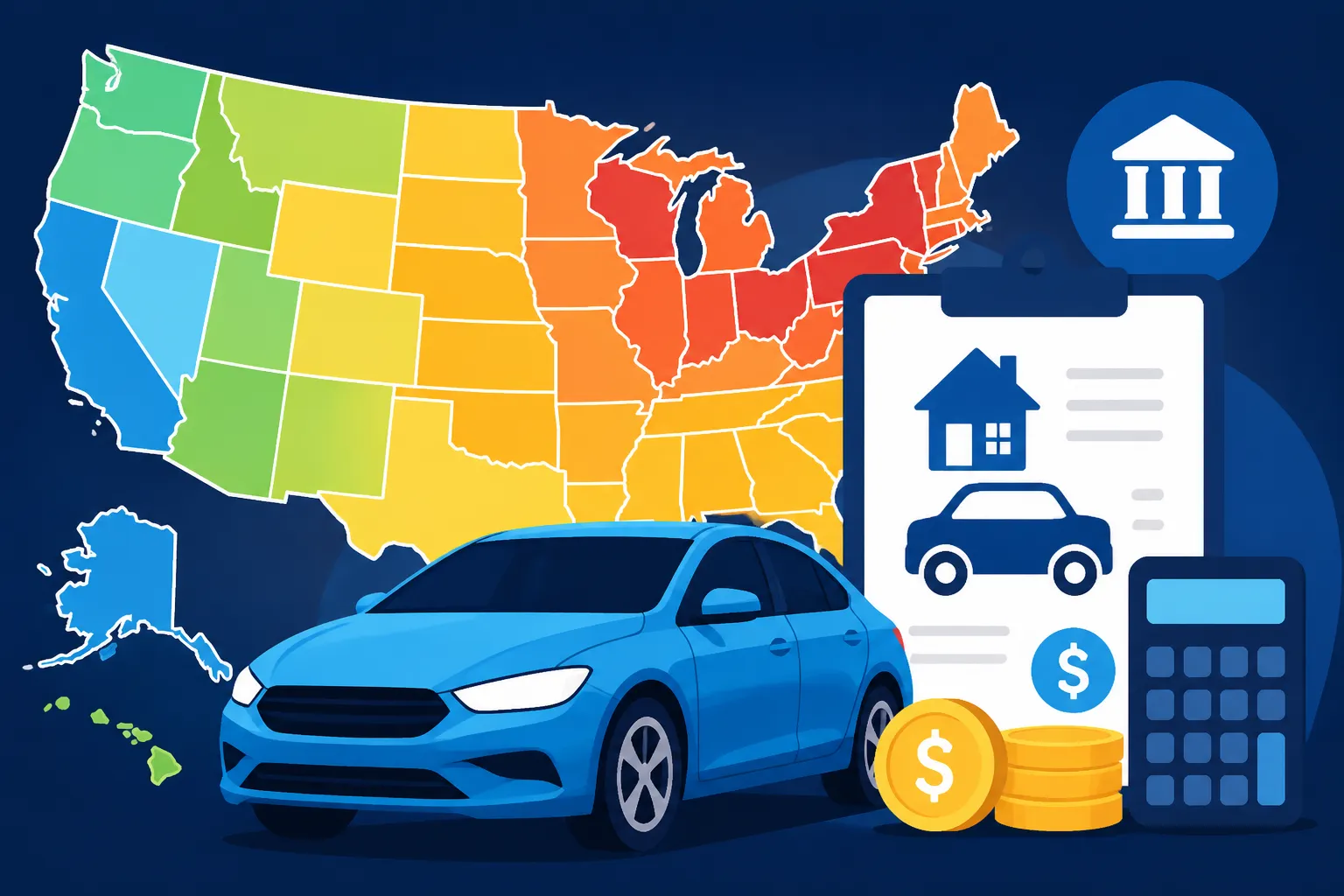
Vehicle Property Tax by State (Car Tax List)
It can be incredibly frustrating to feel like you're constantly paying taxes on everything you own, and vehicles are no exception. Just when you think you've got a handle on your property taxes for your home, you discover there's another "property tax" that applies to your car, boat, or even your RV! This guide is here to untangle the often-confusing world of vehicle property tax, commonly known as "car tax," explaining which states impose it, how it's calculated, and what it means for your wallet.
Understanding Vehicle Property Tax: More Than Just a Car Tag
Many homeowners are familiar with the annual property taxes they pay on their homes, but the concept of an annual property tax on a vehicle can catch people off guard. It’s not just about the one-time sales tax when you buy a car or the yearly registration fee. In some parts of the country, your vehicle is considered "personal property" and is subject to its own recurring tax.
What Exactly is "Car Tax"?
At its heart, "car tax" is an annual tax levied by state or local governments on the ownership of a vehicle. It’s essentially a personal property tax applied to a movable asset, rather than real estate. This is a key distinction, as it operates completely separately from the sales tax you might pay at the dealership, the state's vehicle registration fees, or any emissions testing fees. These other charges are typically for the privilege of purchasing or operating your vehicle, whereas the property tax is for the ownership itself.
For instance, if you live in Fairfax County, Virginia, you're acutely aware of this annual obligation. You'll receive a bill each year for your vehicles, based on their value, in addition to the standard state registration fees. This is a common source of confusion, as people often conflate all vehicle-related charges into one general category, but understanding these differences is crucial for accurate financial planning. The funds collected from vehicle property taxes usually go to local services like schools, libraries, and road maintenance, much like real property taxes.
How Vehicle Property Tax is Calculated
Calculating vehicle property tax isn't a one-size-fits-all process; it varies significantly by state and even by local jurisdiction. However, the basic principle remains consistent: an assessed value of your vehicle is determined, and then a local tax rate is applied to that value.
Local assessors' offices are typically responsible for determining the "assessed value" of your vehicle. This assessment often relies on widely accepted valuation guides, such as the National Automobile Dealers Association (NADA) guide, or other recognized market valuation tools. Unlike real property, which might undergo complex assessments, vehicle values usually follow predictable depreciation schedules. A new car will have a higher assessed value, which then decreases each year as the vehicle ages and accrues mileage. For a deeper dive into how assessed values are determined for real estate, you might find our guide on how assessed value is determined helpful.
Once the assessed value is established, a local tax rate (often expressed as a "mill rate") is applied. A mill rate represents the amount of tax payable per dollar of the assessed value. For example, if your vehicle is assessed at $20,000 and your locality has a tax rate of $4.50 per $100 of assessed value (which translates to a mill rate of 45, or 4.5%), your annual car tax would be $900 ($20,000 * 0.045). This system means that the newer and more valuable your vehicle, the higher your annual property tax bill will likely be.
States Where Vehicle Property Tax is a Reality
Understanding which states levy an annual vehicle property tax is often the first hurdle for many car owners. It's not a nationwide standard, so what applies in one state might be entirely different in another, leading to a patchwork of regulations across the country.
Key States with Notable Vehicle Property Taxes
A significant number of states do impose an annual vehicle property tax. These are typically states that view vehicles as a form of personal property subject to taxation, much like real estate. While the specific rates and calculation methods differ, the underlying principle is the same. Some of the most prominent states where you'll encounter an annual car tax include:
- Virginia: This state is probably one of the most well-known for its comprehensive vehicle property tax system. Virginia's "car tax" is locally assessed and collected, meaning that your specific bill depends on where you live within the state. For example, residents in localities like Loudoun County, Arlington County, or the City of Richmond will find different tax rates applied to their vehicles. The assessed value is generally 100% of the clean trade-in value from resources like NADA, and local governments then apply their own tax rates. Virginia also offers a "Personal Property Tax Relief Act" (PPTRA) in many localities, which provides a certain percentage of relief on the first portion of a vehicle's value, reducing the tax burden for many residents.
- Missouri: In Missouri, personal property tax on vehicles is a significant component of local funding. This tax is assessed at the county level and is based on a percentage of the vehicle's market value, often using the NADA guide. Residents typically pay their personal property tax directly to the county collector, and proof of payment is required to renew vehicle registration.
- Connecticut: Connecticut employs a system where municipalities levy property taxes on motor vehicles based on 70% of the vehicle's market value. The market value itself is usually determined by the average retail price from valuation guides. Each city or town then applies its unique mill rate, which can lead to considerable variation in tax bills even for identical vehicles across different towns. You can learn more about how mill rates impact your overall property tax obligations in our detailed explanation of what a mill rate is.
- Massachusetts: While often referred to as an "excise tax" rather than a "property tax," Massachusetts charges an annual motor vehicle excise tax. This tax is assessed at a rate of $25 per $1,000 of the vehicle's valuation, which is determined by a percentage of the manufacturer's suggested retail price (MSRP) based on the vehicle's age. This valuation method means the tax decreases over time as your car ages.
- Mississippi and Rhode Island: These states also have systems in place where vehicles are subject to annual personal property taxes, with rates and valuation methods set at the local level.
This list isn't exhaustive, but it highlights some of the states where vehicle property tax is a regular part of vehicle ownership.
The Local Impact: How Counties and Cities Set Rates
One of the most critical aspects of vehicle property tax is its deeply localized nature. Even within states that impose this tax, the actual rates can swing wildly from one county or city to the next. This local control means that two neighbors, living just across a county line, could pay vastly different amounts on the exact same make and model of car.
Local governments, such as counties, cities, and towns, are typically empowered to set their own personal property tax rates. These rates are determined by the budgetary needs of the locality, funding services like public schools, local law enforcement, fire departments, and infrastructure projects. For example, in Virginia, the city of Alexandria might have a different tax rate than neighboring Fairfax County, and both will differ from more rural counties further west. This decentralization allows communities to tailor their tax burdens to their specific service requirements and economic conditions.
Understanding these local variations is paramount for vehicle owners. It's not enough to know that your state has a car tax; you need to investigate the specific rates and assessment practices of your county or city. Many local government websites provide online tools to estimate your vehicle tax bill, which can be invaluable for budgeting. This hyper-local approach means that moving even a short distance can have a noticeable impact on your annual vehicle expenses. It's a prime example of how Who Sets Property Tax Rates impacts your wallet directly.
States That Skip the "Car Tax" and What They Do Instead
While many states levy an annual personal property tax on vehicles, a significant portion of the country opts out of this particular revenue stream. This doesn't mean owning a car in these states is free of ongoing costs, but the nature of those costs is different.
States Without Annual Vehicle Property Tax
For residents in many states, the idea of paying an annual tax simply for owning a car, beyond registration and sales tax, is foreign. These states generally do not consider vehicles as "personal property" for ongoing taxation purposes. This offers a significant relief to car owners who otherwise might face substantial recurring costs based on their vehicle's value.
Prominent states that generally do not have an annual personal property tax on vehicles include:
- California: While California has its unique property tax system for real estate (like the famous Proposition 13), it does not impose an annual property tax on vehicles.
- Texas: Despite its reputation for high property taxes on real estate, Texas does not have a state or local annual personal property tax on most vehicles owned by individuals. You'll still pay sales tax upon purchase and annual registration fees. For more details on Texas's real estate taxes, see our article on Property Taxes: Texas vs California Compared.
- Florida: Similar to California and Texas, Florida does not levy an annual personal property tax on privately owned vehicles.
- New York: New York residents do not pay an annual personal property tax on their vehicles. They focus on sales tax, registration, and inspection fees.
- Illinois: While Illinois has one of the highest property tax rates in the nation for real estate, it does not have a statewide annual personal property tax on vehicles for individuals.
- Arizona: No annual personal property tax on vehicles here either, though they do have an "Vehicle License Tax" which is often mistaken for a property tax.
- Many other states, including Delaware, Hawaii, Idaho, Indiana, Iowa, Kansas, Maine, Montana, Nebraska, Nevada, New Hampshire, New Mexico, North Dakota, Oklahoma, Oregon, Pennsylvania, South Carolina, South Dakota, Tennessee, Utah, Vermont, Washington, West Virginia, Wisconsin, and Wyoming, also typically do not levy a traditional annual vehicle property tax.
It's important to differentiate between not having an annual property tax on vehicles and not having any recurring vehicle-related costs. Every state requires vehicle registration and typically charges a fee for it.
Alternative Vehicle-Related Fees and Taxes
Just because a state doesn't have an annual vehicle property tax doesn't mean you're off the hook for all vehicle-related expenses after the initial purchase. These states simply collect revenue through different mechanisms, which can include a variety of fees and other taxes.
The most common alternative is sales tax on vehicle purchases. Almost every state imposes a sales tax when you buy a new or used vehicle. This is a one-time charge, usually a percentage of the purchase price, that goes directly to the state. For example, if you buy a car in California, you'll pay the state sales tax at the time of purchase.
Secondly, all states require annual vehicle registration fees. These fees are mandatory for legal operation of your vehicle on public roads. The cost of registration can vary widely, often depending on the vehicle's age, weight, or even its fuel efficiency. Some states might have slightly higher registration fees to compensate for the absence of a personal property tax on vehicles. These fees are generally fixed amounts or based on simple criteria, not on the assessed market value of the vehicle annually.
Other potential costs can include emissions testing fees, mandatory safety inspection fees, and specialized license plate fees. While these are typically smaller amounts, they are recurring expenses that car owners need to factor into their budgets. In some states, there might also be a local "excise tax" or "privilege tax" which, while not a property tax, functions similarly as an annual levy based on the vehicle's value or age, such as the system in Massachusetts.
Budgeting for Your Car Tax: Practical Tips
For those living in states and localities that impose a vehicle property tax, budgeting for this annual expense is crucial. It's not a small sum, and being prepared can save you from financial stress down the road.
Forecasting Your Annual Vehicle Tax Bill
The first step in budgeting is knowing what to expect. While it might seem daunting, forecasting your annual vehicle tax bill is quite manageable once you understand the components.
Most local governments provide resources to help you estimate your bill. You can usually find the tax rate or mill rate on your county or city assessor's website. They also typically publish information on how they determine the assessed value of vehicles, often referencing the NADA guide or a similar valuation source. By knowing your vehicle's make, model, year, and condition, you can usually look up its estimated trade-in value, which will give you a good proxy for the assessed value. Multiply this assessed value by the local tax rate, and you'll get a solid estimate of your upcoming bill. Don't forget to factor in any state or local relief programs, like Virginia's PPTRA, which might reduce the taxable amount.
It's also important to remember that vehicle values depreciate over time. This means your tax bill will likely decrease each year as your car ages. While this is good news, it doesn't happen drastically overnight. Keep an eye on the Property Tax Trends 2026 for insights into how rates might be shifting in your area. Many local governments have online property tax calculators that simplify this process; a quick search for "[Your County] vehicle property tax calculator" will often yield helpful results.
Managing the Financial Impact
Once you have a good estimate of your annual vehicle property tax, the next step is to integrate it into your financial planning. The key is to avoid a surprise bill that throws your budget off balance.
The most straightforward strategy is to set aside funds monthly. Divide your estimated annual car tax by 12 and transfer that amount into a separate savings account each month. This way, when the bill arrives, the money is already there, ready to go. Think of it like a mini-escrow account for your car. For those managing multiple properties or rental units, tools like Stessa can be incredibly helpful. While primarily known for real estate, the principles of tracking income and expenses apply broadly. Using such platforms can give you a clearer picture of your overall financial obligations, including personal property taxes like those on your vehicles, ensuring you don't miss any deductions or overlook upcoming bills.
If your locality offers payment plans, explore those options. Some jurisdictions allow you to pay your vehicle property tax in two installments or even set up monthly auto-payments. This can spread the financial burden and make it more manageable. Finally, remember that prompt payment is always best to avoid penalties. Delinquent property taxes can accrue interest and additional fees, adding to your financial strain.
Table: Vehicle Property Tax Landscape by State (Selected Examples)
Here's a quick overview of how some states handle annual vehicle property taxes:
| State | Annual Vehicle Property Tax? | How it's Generally Handled | Common Nickname |
|---|---|---|---|
| Virginia | Yes | Locally assessed on market value, rates vary by city/county. PPTRA offers relief on a portion of value. | Car Tax |
| Missouri | Yes | County-assessed on market value. Proof of payment needed for registration renewal. | Personal Property Tax |
| Connecticut | Yes | Municipalities tax vehicles at 70% of market value using local mill rates. | Car Tax |
| Massachusetts | Yes (Excise Tax) | State-mandated excise tax, $25 per $1,000 of valuation based on MSRP percentage and age. | Motor Vehicle Excise |
| Mississippi | Yes | Locally assessed on appraised value, rates vary by county. | Personal Property Tax |
| Rhode Island | Yes | Locally assessed on NADA value, rates vary by municipality. | Car Tax |
| California | No | No annual property tax on vehicles; pays sales tax upon purchase and annual registration fees. | N/A |
| Texas | No | No annual property tax on vehicles; pays sales tax upon purchase and annual registration fees. | N/A |
| Florida | No | No annual property tax on vehicles; pays sales tax upon purchase and annual registration fees. | N/A |
| New York | No | No annual property tax on vehicles; pays sales tax upon purchase and annual registration, inspection fees. | N/A |
| Illinois | No | No annual property tax on vehicles for individuals; pays sales tax upon purchase and annual registration fees. | N/A |
| Arizona | No (Vehicle License Tax) | No property tax, but has an annual Vehicle License Tax (VLT) based on assessed value and depreciation, paid with registration. | Vehicle License Tax |
Exemptions and Considerations for Vehicle Property Tax
While vehicle property tax generally applies broadly to most personal vehicles, there can be specific situations or types of owners that qualify for special treatment. It's always worth exploring these possibilities to potentially reduce your annual tax burden.
Special Exemptions and Relief Programs
Unlike real property, where Homestead Exemption: Complete State-by-State Guide and Senior & Over-65 Property Tax Exemptions and Freezes are relatively common, explicit exemptions for vehicle property tax are less widespread or less substantial. However, some states and localities do offer relief for specific groups of individuals or types of vehicles.
For instance, many states provide Veteran & Disabled Veteran Property Tax Exemptions, and sometimes these can extend to personal property, including vehicles. In Texas, for example, 100% disabled veterans can receive a full exemption on all property taxes, which would include any personal property tax if it were applicable to individuals. However, since Texas doesn't have an annual car tax for individuals, this particular benefit primarily applies to real estate. In states that do have vehicle property tax, a disabled veteran might be eligible for an exemption on one vehicle, up to a certain value. These exemptions typically require specific documentation, such as a VA disability letter, and an annual application process.
Additionally, some states might have limited exemptions for low-income individuals or for vehicles used specifically for certain purposes, like those used by emergency responders. It's less common to find "senior freezes" or income-based circuit breaker programs directly applied to vehicle property tax, as these programs are usually designed for real estate to help seniors on fixed incomes. Nonetheless, it’s always wise to check with your local assessor's office or state Department of Motor Vehicles (DMV) website for any specific programs applicable to your situation.
The Difference Between Personal Property Tax and Real Property Tax
It's easy to lump all "property taxes" into one category, especially when the bill comes from the same government entity. However, there's a fundamental distinction between personal property tax, like the annual car tax, and real property tax, which applies to your home and land. Understanding this difference is key to navigating your overall tax obligations.
Real property refers to immovable assets: land, buildings, and anything permanently attached to them. The taxation of real property is typically based on its assessed value, which can be influenced by market conditions, improvements, and specific assessment methods. Guides like Property Tax Assessment & Reassessment Explained and Assessed Value vs Market Value vs Taxable Value delve deep into how these values are determined for your home.
Personal property, on the other hand, refers to movable assets. This includes vehicles, boats, RVs, and in some commercial contexts, business equipment. For individuals, the most common form of personal property tax outside of business contexts is the vehicle property tax. The valuation for personal property is usually more straightforward, often relying on established depreciation schedules or market guides like NADA. While both are forms of "property tax," the rules, exemptions, and collection methods can differ significantly. Your home's value might be capped by state laws like California's Proposition 13 or Florida's Save Our Homes, but such caps are rarely, if ever, applied to personal property like vehicles.
Disclaimer
The information provided in this guide is for general informational purposes only and does not constitute professional tax or legal advice. Property tax laws, rates, and exemptions can change frequently and vary significantly by state and local jurisdiction. Always consult with a qualified tax professional or legal advisor for advice tailored to your specific situation, and confirm current regulations with your local assessor's office or state tax authority.