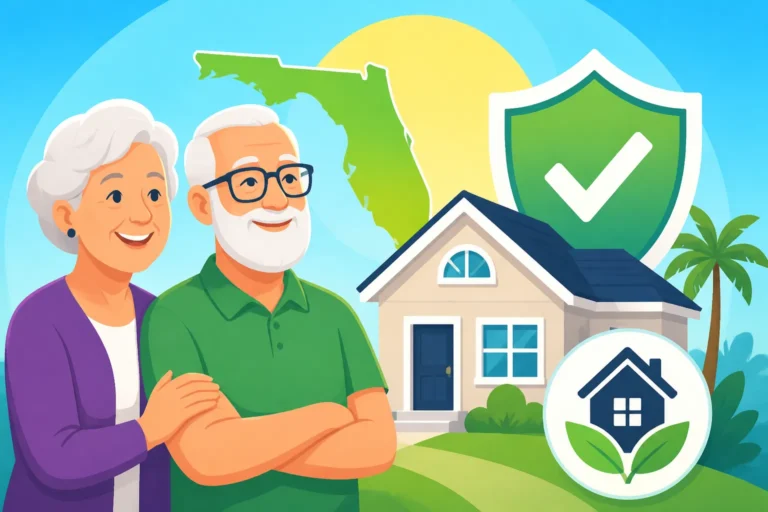
At What Age Do You Stop Paying Property Taxes in Florida?
If you're living in Florida, especially as you approach your golden years, it's natural to wonder about those pesky property tax bills. Many homeowners dream of the day they can stop paying property taxes altogether, assuming that a certain age might unlock a magical exemption. Unfortunately, that's a common misconception that can lead to frustration. While you generally don't stop paying property taxes in Florida based solely on age, there are significant programs designed to provide much-needed financial relief for seniors, which this guide will thoroughly explain.
The Reality: Age Alone Doesn't Eliminate Property Taxes in Florida
Let's get this out of the way upfront: there isn't a statewide law in Florida that says once you hit a certain age, your property tax bill vanishes into thin air. It's a persistent myth that causes a lot of confusion and disappointment. Property taxes are a primary funding source for local services like schools, police, fire departments, parks, and infrastructure, so completely removing them for a large segment of the population isn't financially viable for most communities.
Understanding Florida's Property Tax System
Florida's property tax system is overseen by the Department of Revenue, but the actual assessment and collection happen at the local level, primarily through your county's Property Appraiser and Tax Collector offices. These local entities are crucial because while the state sets the framework, counties and sometimes even cities have the power to adopt additional exemptions.
Here's how it generally works: your property's value is assessed annually by the County Property Appraiser. This "assessed value" is then multiplied by the various "millage rates" set by different taxing authorities (like your county, city, school board, water management district, etc.) to determine your gross tax bill. Any exemptions you qualify for are applied to your assessed value before the millage rate is applied, effectively lowering the taxable value of your home. Understanding this calculation is key to seeing how exemptions reduce your burden, rather than eliminating it. You can learn more about this process in our guide on How Are Property Taxes Calculated?.
Why the "Stop Paying" Myth Persists
The idea that you stop paying property taxes at a certain age often stems from a mix of wishful thinking and confusion with programs in other states or even specific, highly targeted local relief efforts. For instance, some states have more comprehensive property tax freezes or deferral programs that are often tied directly to age without strict income limits. When people hear about these programs elsewhere, they might incorrectly assume they apply universally.
Another reason this myth holds strong is that once seniors do qualify for significant exemptions, the reduction in their tax bill can be so substantial that it feels like they've stopped paying, especially if they were paying a much higher amount previously. It's a critical distinction: you're not exempt from property taxes entirely, but you can certainly benefit from substantial reductions that ease the financial strain, allowing you to enjoy your retirement years with more peace of mind.
Key Property Tax Exemptions for Florida Seniors
While the dream of completely stopping property taxes may not be a reality, Florida does offer a robust array of exemptions designed to significantly reduce the tax burden on qualifying homeowners, especially those who are seniors. These programs are invaluable for those living on fixed incomes.
The Standard Homestead Exemption (A Foundation for All Homeowners)
The most fundamental and widely used property tax relief in Florida is the homestead exemption. This isn't just for seniors, but it's the foundation upon which many senior-specific benefits are built. If your home is your primary residence, you can apply for this exemption.
The Florida Homestead Exemption provides up to $50,000 off your home's assessed value. Specifically, the first $25,000 applies to all property taxes, including school district taxes. An additional $25,000 exemption applies to all non-school taxes for values between $50,000 and $75,000. So, for many homeowners, this translates to a $50,000 reduction in the taxable value of their home. For a senior living on a fixed income, this standard exemption is often the first and most substantial step in reducing their property tax liability. Applying for it is usually a one-time process, but the property must be your permanent residence as of January 1st of the tax year to qualify. Detailed information on this can be found in our guide on the Florida Homestead Exemption March 1 Deadline.
Additional Homestead Exemption for Seniors (Age 65+ and Income-Qualified)
This is where Florida truly steps up to help its senior population, and it's likely what most people are thinking of when they ask about stopping property taxes at a certain age. Florida Statute 196.075 allows counties and municipalities to offer an additional homestead exemption of up to $50,000 for homeowners who are 65 years or older. This exemption is in addition to the standard homestead exemption.
However, there's a crucial catch: it's income-qualified. The specific income limit is set annually by the Florida Department of Revenue and is tied to the Consumer Price Index (CPI). For example, for the 2023 tax year, the household adjusted gross income (AGI) limit was $35,311. This means that if your combined household AGI is above this threshold, you might not qualify, even if you meet the age requirement. Furthermore, this exemption is locally adopted, meaning your specific county or city must have chosen to implement it. Most do, but it’s always best to check with your local Property Appraiser's office. Some localities also have a long-term residency requirement, often specifying that the homeowner must have resided in Florida for at least 25 years to qualify for the full amount of this additional exemption. This program is a significant relief for low to moderate-income seniors and is a key component of Senior & Over-65 Property Tax Exemptions and Freezes.
Disabled Veteran and Widow/Widower Exemptions
Beyond age-specific relief, Florida also provides crucial property tax exemptions for veterans and surviving spouses that can significantly impact a senior's tax bill. These exemptions often stack on top of the homestead exemption and, in some cases, can result in a 100% exemption.
For example, veterans with a service-connected disability of 10% or greater can receive an additional exemption that varies based on their disability percentage. For those with a 100% total and permanent service-connected disability, or veterans who are legally blind due to service, the exemption can cover 100% of their property taxes. This means they effectively pay nothing in property taxes. Surviving spouses of deceased veterans who were entitled to the exemption, or spouses of service members who died from service-connected causes, may also be eligible for this benefit. Similar relief is available for non-veteran spouses, where a widow or widower who is a permanent resident of Florida may receive a $500 exemption. These are vital considerations, particularly for seniors who have served or are surviving spouses of service members.
Here's a quick summary of Florida's key exemptions:
| Exemption Type | Eligibility Criteria | Benefit | Application Deadline (Generally) |
|---|---|---|---|
| Standard Homestead Exemption | Primary Residence as of Jan 1 | Up to $50,000 off assessed value | March 1st |
| Additional Senior Exemption | Age 65+, income-qualified (state-set AGI limit), locally adopted | Up to $50,000 off assessed value (in addition to standard) | March 1st |
| Long-Term Resident Senior Exemption | Age 65+, 25+ years residency, income-qualified, locally adopted | Up to $50,000 off assessed value (in addition to standard) | March 1st |
| Disabled Veteran Exemption | Service-connected disability 10%+, FL resident | Varies based on disability % (up to 100% for 100% disabled) | March 1st |
| Widow/Widower Exemption | Florida resident widow/widower | $500 off assessed value | March 1st |
| Total & Permanent Disability Exemption | Totally and permanently disabled, income-qualified (similar to senior), FL resident | 100% exemption (can be significant or total) | March 1st |
Note: Income limits and specific requirements for locally adopted exemptions can change annually. Always verify with your County Property Appraiser.
How to Apply for Senior Property Tax Relief in Florida
Securing these valuable property tax exemptions isn't automatic; you have to apply for them. The process is managed by your local County Property Appraiser's office. While it might seem a bit daunting to gather documents and fill out forms, the potential savings are absolutely worth the effort. Think of it as investing a little time now for significant financial relief later. Our general guide on How to Apply for Property Tax Exemptions can also offer helpful tips.
Gathering Your Documentation
When you're ready to apply for these exemptions, especially the senior-specific ones, the Property Appraiser's office will need proof of your eligibility. Having all your documents organized beforehand will make the process much smoother.
You'll generally need:
- Proof of Ownership: A copy of your deed or a recent property tax bill that shows you as the owner.
- Proof of Residency: Florida Driver's License or ID card, voter registration card, or declaration of domicile. For the initial homestead exemption, this proves your property is your primary residence.
- Proof of Age: Driver's License, state ID, or birth certificate to verify you meet the 65+ age requirement for senior exemptions.
- Proof of Income: For the additional senior exemption, you'll need documentation of your household's adjusted gross income (AGI) from the previous year. This typically means your federal income tax return (Form 1040) or other income statements. If you don't file a federal return, the Property Appraiser will guide you on what alternative documentation they accept. This is crucial as the income limit is strictly enforced.
- Social Security Numbers: For all owners on the deed who reside in the home.
- Veteran/Disability Documentation: If applying for disabled veteran benefits, you'll need official documentation from the Department of Veterans Affairs (VA) detailing your disability rating.
It’s always a good idea to call your County Property Appraiser’s office directly or check their website for a specific checklist of required documents, as requirements can sometimes vary slightly by county. For instance, the Miami-Dade County Property Appraiser's office or the Hillsborough County Property Appraiser's office will have their own online resources and forms.
The Application Process and Deadlines
The application process is typically straightforward once you have your documents in order. You'll submit an application form to your County Property Appraiser's office. Many counties now offer online applications, which can be a convenient way to apply from the comfort of your home. You can also apply in person or mail in your application.
The most critical thing to remember is the deadline: March 1st of the year you want the exemption to apply. For instance, if you want the exemption for your 2026 property taxes, you must apply by March 1, 2026. While some counties may grant a late application waiver for "good cause," it's never something you want to rely on. Missing this deadline means you'll likely have to wait until the next tax year to receive the benefits, paying the full amount in the interim. Once you receive your initial homestead exemption, you generally don't need to reapply every year unless your ownership changes or you move. However, for the additional senior exemption (age 65+ and income-qualified), you may need to provide annual proof of income to verify continued eligibility, as the income limits change each year. Always pay close attention to any notices from your Property Appraiser.
Long-Term Strategies for Managing Property Taxes in Retirement
Beyond the initial application for exemptions, there are ongoing strategies and understandings that can help Florida seniors manage their property tax burden effectively throughout their retirement years. Being proactive and informed can save you a significant amount over time.
Understanding Assessed Value Caps (Save Our Homes)
One of the most powerful and often overlooked protections for Florida homeowners, particularly seniors who have owned their homes for a long time, is the "Save Our Homes" (SOH) amendment. Enacted in 1992, this constitutional amendment caps the annual increase in the assessed value of homesteaded properties.
Here's how it works: once you receive your homestead exemption, the assessed value of your home for tax purposes cannot increase by more than 3% annually, or the percentage change in the Consumer Price Index (CPI), whichever is lower. This cap protects long-term homeowners from sudden spikes in market value leading to equally sudden spikes in property taxes. For someone who bought their home years ago, their assessed value under SOH might be significantly lower than the current market value, resulting in substantial savings. However, it's crucial to understand that if you sell your home, or if you inherit a property without proper planning for exemption transfers, the Save Our Homes cap is removed, and the property is reassessed at full market value for the new owner. This is why understanding Property Tax Assessment & Reassessment Explained and Florida Save Our Homes Explained (3% Cap) is so vital.
Exploring Property Tax Deferral Programs (Generally Not Available in Florida)
Many states offer property tax deferral programs for seniors, allowing them to postpone paying property taxes until their home is sold, transferred, or they pass away. The deferred taxes, plus interest, are then paid from the equity in the home. This can be a lifeline for seniors on very limited incomes who are "house rich but cash poor."
However, it's important to be realistic: Florida does not have a comprehensive statewide property tax deferral program for seniors like some other states do. While Florida Statute 197.336 does allow for certain installment payment plans, and there are specific disaster-related deferral programs, there isn't a general provision for seniors to indefinitely defer their taxes until a future event. If you encounter financial hardship, your best course of action is to contact your County Tax Collector's office to inquire about any available local payment plans or assistance programs. Do not assume a deferral is an option without explicit confirmation from official sources. Always be wary of third-party companies offering "tax deferral loans" that might come with high interest rates and fees.
Regularly Reviewing Your Property Assessment
Even with exemptions and the Save Our Homes cap, your property taxes can still be a significant expense. It's incredibly important for all homeowners, especially seniors, to regularly review their annual Notice of Proposed Property Taxes, often called the TRIM (Truth in Millage) notice. This notice, typically mailed in August, details your property's assessed value, any exemptions applied, and the proposed tax amounts from all taxing authorities.
When you receive your TRIM notice, take the time to examine it carefully. Does the assessed value seem reasonable compared to properties that have recently sold in your neighborhood? Are all your qualified exemptions correctly applied? If you believe your property's assessed value is incorrect or too high, you have the right to appeal it. The TRIM notice will include instructions on how to file an appeal with your County Property Appraiser and, if necessary, with the Value Adjustment Board (VAB). There's usually a short window, often 25 days from the mailing date of the TRIM notice, to file an appeal. Gathering evidence, such as comparable sales of similar homes in your area, is crucial for a successful appeal. Understanding When Should You Appeal Your Property Taxes? and How to Read Your Property Tax Bill can empower you to challenge an unfair assessment.
Disclaimer
The information provided in this guide is for general informational purposes only and does not constitute professional tax or legal advice. Property tax laws and exemptions in Florida are complex and can change. You should always consult with your local County Property Appraiser's office, a qualified tax advisor, or a legal professional for advice tailored to your specific situation.