Highest Property Tax Counties in the US
Opening your mail only to find a property tax bill that looks more like a luxury car invoice is a gut-wrenching experience that millions of American homeowners face every year. If you feel like your local government is a silent partner in your home equity, you aren't alone, as the geographical lottery of where you live often determines whether you pay a few hundred dollars or tens of thousands. This guide identifies the highest property tax counties in the US and explains the underlying economic factors that drive these staggering costs.
Why Some Counties Charge So Much More Than Others
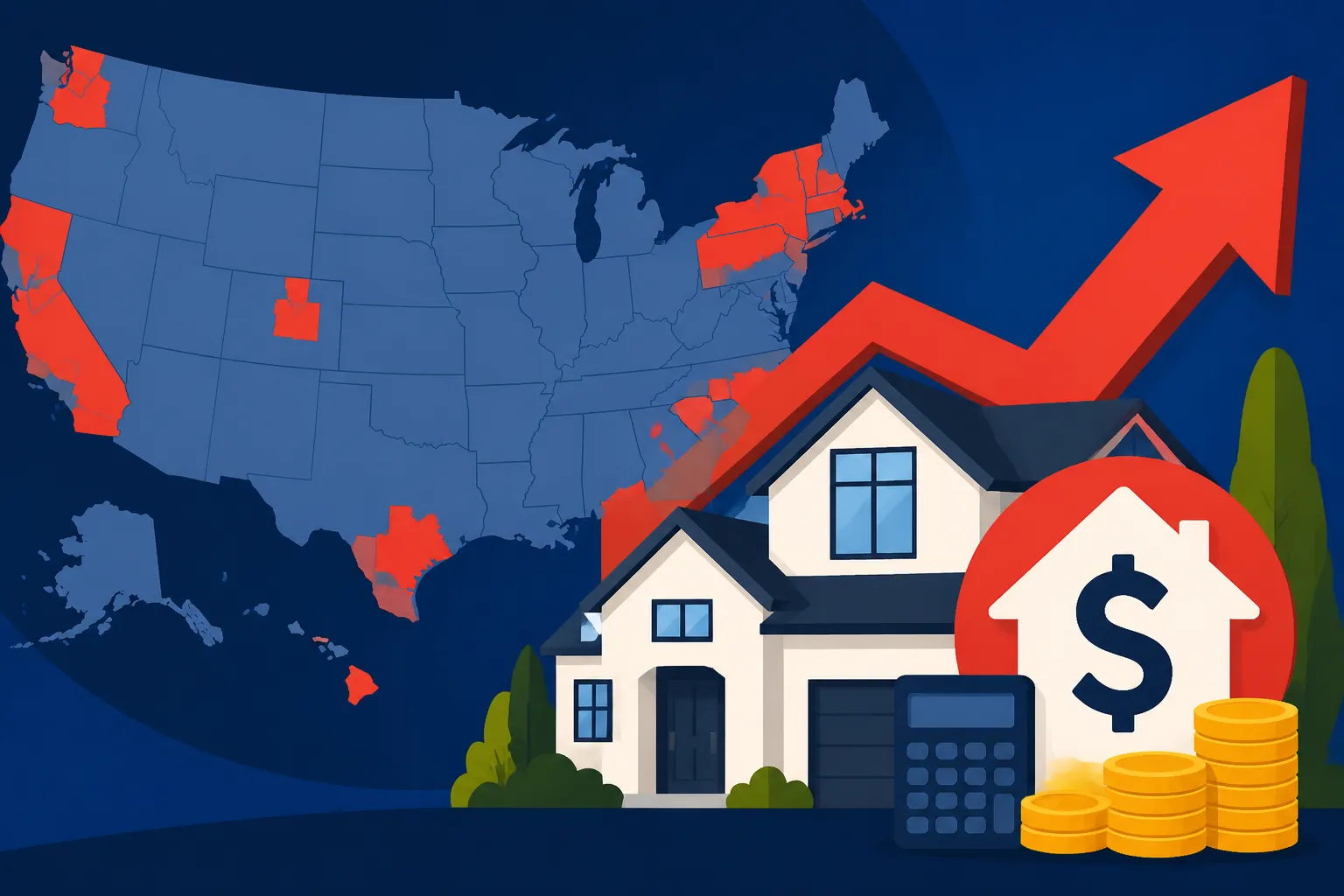
When we look at the map of the United States, property tax isn't a flat landscape; it’s a series of peaks and valleys. If you happen to live in a "peak" county, you might be wondering how your neighbor three states away pays a fraction of what you do for a similar house. The answer usually lies in how local services are funded. In many of the most expensive counties, property taxes are the primary, and sometimes only, major source of revenue for everything from the police department to the local library.
The Education Funding Factor
In the United States, public education is largely a local affair, and this is the single biggest driver of high property tax bills. In counties with prestigious school districts, the residents are often willing—or at least resigned—to paying higher taxes to maintain high rankings, modern facilities, and competitive teacher salaries. When you look at the Highest Property Taxes in the US (States, Counties, Cities), you will notice a direct correlation between top-tier school districts and five-figure tax bills.
In places like the New York suburbs or the North Shore of Chicago, the school portion of the tax bill can represent 60% to 70% of the total amount due. For a homeowner in a high-tax county, this means you are essentially paying a tuition-like fee every year, regardless of whether you have children in the system. This creates a cycle where high property values demand better schools, and better schools drive property values even higher, leading to a relentless upward climb in assessments.
Local Government Services and Infrastructure
Beyond schools, the physical environment and the level of service provided by the county play a massive role. High-density counties with aging infrastructure require constant, expensive maintenance. Think about the snow removal budgets in the Northeast or the complex drainage and levee systems in parts of the Gulf Coast. These costs are baked into your annual bill. Furthermore, counties that provide extensive social services, public health initiatives, and sprawling park systems naturally have higher overhead.
In many high-tax counties, the "cost of living" isn't just about the price of milk or gas; it's about the cost of the civic machine. Many residents in these areas expect a high "concierge" level of service from their local government, which necessitates a larger public workforce and higher administrative costs. When these counties also face high labor costs for public employees, the property tax is the only lever available to balance the budget.
State Funding Gaps and Reliance on Property Tax
The relationship between the state government and the county is often overlooked but is critically important. Some states provide significant aid to their counties, offsetting the need for high local taxes. Other states, however, take a "hands-off" approach, leaving counties to fend for themselves. In states like New Jersey or New Hampshire, the lack of a robust state-level funding mechanism for local needs forces counties to lean heavily on the property tax.
This reliance creates a precarious situation for homeowners. When the state cuts its budget, the county often has to raise the local tax rate to fill the gap. Understanding the Effective vs Nominal Property Tax Rate Explained is vital here, as a low "rate" doesn't mean much if the state has shifted the entire burden of infrastructure and emergency services onto the local property owner's shoulders.
The Heavy Hitters: New Jersey and New York Dominance
It is no secret to anyone living in the tri-state area that the Northeast is the undisputed heavyweight champion of property taxes. If you are looking for the highest bills in the country, you almost always start and end your search within a 50-mile radius of Manhattan. The combination of high property values, dense populations, and a complex web of local taxing jurisdictions creates a perfect storm for the homeowner’s wallet.
New Jersey’s Top-Tier Tax Counties
New Jersey consistently ranks as the most expensive state for property owners, and counties like Bergen, Essex, and Union are the epicenters of this trend. In these areas, it is not uncommon for a modest three-bedroom home to carry a tax bill exceeding $15,000 or even $20,000. This is largely because the New Jersey Property Tax Rate (Highest in US) is driven by a unique system of home rule where every small borough and township maintains its own independent school system and police force.
For example, the Bergen County Property Tax Rate is a constant source of frustration for commuters who work in the city but live in the suburbs. The "sticker shock" for new residents moving into Bergen or Essex is real; they often find that their monthly tax escrow payment is nearly as high as their mortgage principal and interest. The lack of regionalized services in these counties means that homeowners are paying for redundant administrative costs across dozens of tiny municipalities.
The New York Powerhouses
Just across the border, New York’s suburban counties give New Jersey a run for its money. Counties like Westchester, Nassau, and Rockland are perennial fixtures on the list of the highest property tax bills in the nation. In Westchester County, the median property tax bill has historically been the highest in the entire country, frequently topping the list in national surveys.
As detailed in the New York Property Tax Rate Explained, the burden in these counties is compounded by a high "tax on tax" environment. Homeowners are paying county taxes, town taxes, and school taxes, often to three different entities with three different fiscal years. In Nassau County, the assessment system has been a point of political contention for decades, as the county struggles to accurately value property in a way that feels fair to residents. For a homeowner in the Westchester County Property Tax Rate zone, the annual tax bill can feel like a "second mortgage" that never gets paid off.
High Property Taxes in the Midwest: Illinois and Beyond
While the Northeast gets most of the headlines, the Midwest—specifically the area around Chicago—holds some of the highest property tax burdens in the country. Illinois homeowners often feel trapped by a system that has seen rates climb steadily even as property values in some areas have stagnated.
Cook County and the Chicago Suburbs
Cook County is a massive, diverse jurisdiction, but its property tax system is notoriously complex and expensive. For many, the Cook County Property Tax Rate is a major factor in the decision to move across the border to Indiana or Wisconsin. The sheer size of the Cook County government, combined with the funding requirements for the Chicago public school system and various countywide health and pension obligations, keeps the pressure on property owners.
The frustration in Cook County is often directed at the assessment process. Unlike some other states where taxes are capped or predictable, Cook County residents often see significant jumps in their bills during reassessment years. This volatility makes it difficult for families on a fixed income to budget, leading many to seek out professional help to navigate the confusing labyrinth of local levies.
Lake and DuPage Counties: The Price of Proximity
Directly to the north and west of Chicago, Lake and DuPage Counties represent some of the highest effective tax rates in the nation. These counties offer excellent amenities and schools, but they come at a steep price. The Illinois Property Tax Rate (2nd Highest) is felt acutely here, as these suburban enclaves do not have the massive commercial tax base of the city to offset the burden on residential homeowners.
In Lake County, the property tax bills are frequently cited as the primary reason for the "out-migration" of residents. The taxes here are often so high that they impact the resale value of the homes; a buyer has to factor in a $1,200 monthly tax bill when deciding how much they can afford for a mortgage. This creates a downward pressure on home prices in some high-tax pockets, creating a situation where you are paying more in taxes for a house that is worth less than it was five years ago.
The Texas Paradox: High Rates, No Income Tax
Texas presents a fascinating case study in property tax dynamics. Because Texas is one of the few states with no personal income tax, the state government relies heavily on sales tax and, more importantly, local property taxes to fund its operations. This leads to a "hidden" cost of living that often surprises people moving from California or the East Coast.
Urban Hotspots: Harris, Dallas, and Travis Counties
In the major metropolitan hubs of Houston, Dallas, and Austin, property taxes are a significant burden. The Texas Property Tax Rate Explained often highlights that while you might save 5% to 8% of your paycheck by not paying state income tax, you might give a large portion of that right back to the county tax assessor. In Harris County, for example, the combination of city, county, and school taxes—along with specialized districts for flood control or hospitals—can lead to an effective tax rate of 2.5% or higher.
The Harris County Property Tax Rate is particularly impactful because of the rapid growth in property values in the Houston area. Even with a homestead cap, the annual increases in tax bills have become a major political issue. Residents in Austin’s Travis County have seen even more dramatic shifts, as the tech boom drove property values to astronomical levels, leading to tax bills that many long-time residents simply could not afford.
Suburban Expansion: Collin and Denton Counties
The suburbs north of Dallas, including Collin and Denton Counties, are home to some of the fastest-growing communities in America. With that growth comes the need for new schools, new roads, and new infrastructure. These "growth costs" are passed directly to the homeowners. In these counties, the school district portion of the bill is often the largest component, as districts struggle to build new campuses fast enough to accommodate the influx of students.
Homeowners in these areas often find themselves in a "new construction" trap. They buy a home in a beautiful new development, only to find that once the neighborhood is fully assessed and the new school bonds are passed, their tax bill increases by 30% or 40% in just a few years. While the lack of income tax is a draw, the reality of the Texas property tax system is that the "rent" you pay to the government for owning land is among the highest in the country.
Comparing High-Tax Counties: A Snapshot
To truly understand the scale of these taxes, it helps to see the numbers side-by-side. The following table provides a realistic look at the median property tax bills and effective rates in some of the most expensive counties in the US.
| County, State | Median Annual Property Tax Bill | Typical Effective Tax Rate | Primary Driver of High Taxes |
|---|---|---|---|
| Westchester, NY | $11,500+ | 1.9% – 2.3% | Elite School Districts & Infrastructure |
| Bergen, NJ | $10,800+ | 2.1% – 2.5% | Localized Government & High Services |
| Nassau, NY | $10,500+ | 1.8% – 2.2% | Complex Assessment & Multi-Layered Levies |
| Lake, IL | $9,200+ | 2.6% – 3.0% | High School Funding & State Aid Gaps |
| Harris, TX | $6,800+ | 2.2% – 2.7% | No State Income Tax & Rapid Growth |
| Marin, CA | $7,500+ | 0.8% – 1.2% | Extremely High Property Values |
Note: These figures are based on median data and can vary wildly depending on the specific township or school district within the county.
Factors That Could Be Inflating Your Specific County Bill
Even if you live in a high-tax county, you might be paying more than your fair share due to specific local quirks. Property tax isn't just a single number; it's a calculation based on several moving parts that can sometimes spin out of control.
Reassessment Frequency and Cycles
Every county has its own schedule for revaluing property. Some counties reassess every year, while others might wait a decade. If you live in a county that hasn't reassessed in a long time and then suddenly conducts a "market value" update, your bill could double overnight. Conversely, in counties that reassess annually, like many in the West, you are constantly chasing the market, which can be exhausting during a real estate boom.
The "lag" in reassessment can also lead to inequity. If the county hasn't updated its books in years, homeowners in stagnant neighborhoods might be paying based on old, inflated values, while homeowners in booming areas are paying based on outdated, low values. This lack of balance is a major driver of property tax protests and appeals across the country.
Special Assessment Districts and MUDs
In many high-growth counties, especially in Texas and Florida, your tax bill might include "hidden" lines for things like Municipal Utility Districts (MUDs) or Public Improvement Districts (PIDs). These are essentially private taxing authorities created by developers to fund the initial infrastructure of a neighborhood—things like water lines, sewers, and roads.
While these allow for new homes to be built, they add a significant layer to your tax bill. A MUD tax can add 0.5% to 1.0% to your effective rate, and these "bonds" can take 20 to 30 years to pay off. If you are shopping for a home in a high-tax county, it is essential to look past the "base" tax rate and see what special assessments are lurking in the fine print.
Strategies for Homeowners in High-Tax Counties
Living in one of the highest property tax counties doesn't mean you are completely powerless. There are several avenues homeowners can take to mitigate the damage and ensure they aren't paying more than the law requires.
Maximizing Exemptions and Credits
The most common way to lower your bill is through exemptions. Almost every high-tax county offers some form of relief, but they won't give it to you automatically—you have to apply. The most common is the Homestead Exemption, which lowers the taxable value of your primary residence.
For older residents, the savings can be even more significant. Many counties offer Senior & Over-65 Property Tax Exemptions and Freezes, which can either reduce the assessed value or cap the total amount you pay for school taxes. In states like Texas and New Jersey, these freezes are a lifeline for retirees who would otherwise be priced out of their homes. Additionally, veterans, especially those with disabilities, often qualify for substantial reductions or even total exemptions from property taxes.
The Power of the Formal Appeal
If you believe your home is over-assessed compared to similar houses in your neighborhood, you have the right to protest. This is particularly effective in counties like Cook or Harris, where the volume of properties makes it easy for errors to slip through the cracks. Knowing How to Appeal Property Taxes: Complete Guide can save you thousands of dollars over several years.
A successful appeal usually requires evidence—either showing that your home has structural issues the county doesn't know about or proving that "comparable" homes nearby are assessed at a lower value. While it takes time and effort (or the cost of a consultant), the return on investment for a property tax appeal in a high-tax county is often very high. Many homeowners make it a habit to protest every single year as a standard part of their financial maintenance.
Disclaimer
The information provided in this guide is for educational and informational purposes only and does not constitute legal, financial, or tax advice. Property tax laws, rates, and exemptions vary significantly by jurisdiction and are subject to frequent change. You should consult with a qualified tax professional or your local county assessor's office to confirm the specific tax obligations and relief programs available for your property.