What Is a Taxing District?
Ever looked at your property tax bill and felt like you needed a Rosetta Stone just to understand all the different line items and acronyms? You're definitely not alone. It can be incredibly frustrating to see a single bill broken down into charges from what feels like a dozen different entities, all contributing to that grand total you owe. It leaves many of us wondering, "Who are all these people, and what are they doing with my money?" This guide is here to shed some light on one of the most fundamental yet often confusing aspects of local finance: the taxing district. We'll demystify what these districts are, why they exist, and how they directly impact what you pay each year, helping you gain clarity on where your hard-earned property taxes really go.
Unpacking the Concept of a Taxing District
When we talk about property taxes, most homeowners immediately think of their city or county. And while those are certainly major players, they're rarely the whole story. A "taxing district" is essentially a geographical area where a specific governmental or quasi-governmental entity has the authority to levy and collect property taxes to fund its operations. Think of it as a specialized jurisdiction, each with its own budget and services, carved out to meet particular community needs.
More Than Just Your City or County
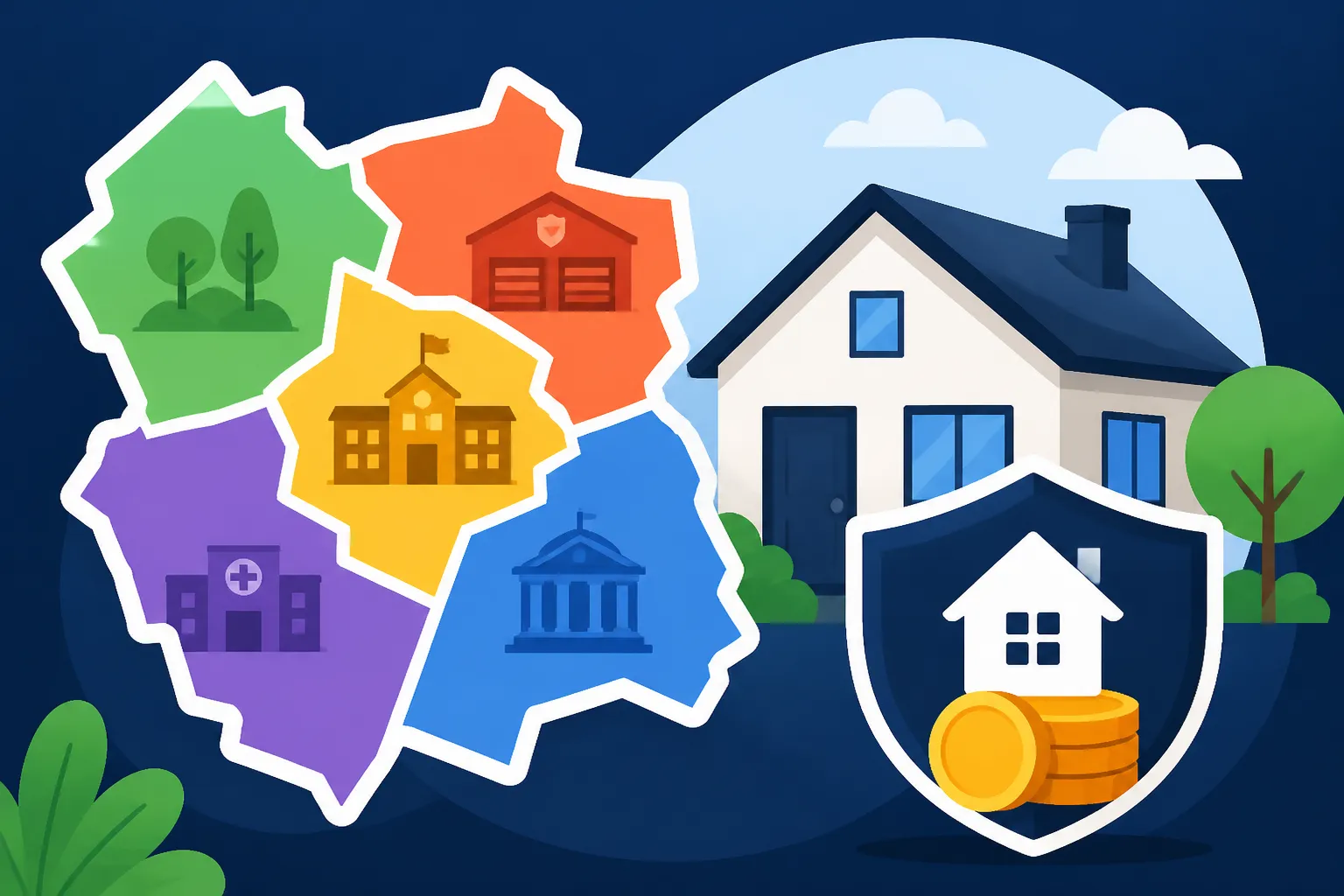
It’s easy to assume your property tax bill is a simple calculation based on your home's value and your city's overall tax rate. The reality, however, is far more intricate. Your property usually falls within the boundaries of multiple, overlapping taxing districts, each with its own distinct purpose and taxing authority. For instance, a home in a bustling suburban area might be within the city limits, a particular county, a specific school district, a water utility district, and maybe even a community college district or a park improvement district. Each of these layers collects a piece of your property tax pie.
This layered approach means that even if your city's tax rate seems reasonable, the accumulation of rates from all the other districts can push your total bill much higher. It's not just a single government body that’s taxing you; it’s a mosaic of local governance, each responsible for delivering specific services that contribute to your daily life. Understanding this intricate structure is the first step to truly comprehending your annual property tax obligations and the numerous services they support.
The Purpose Behind Their Existence
So, why complicate things with so many different districts? The core reason is often efficiency and specialized service delivery. Instead of a single, monolithic government trying to manage everything from education to sewage treatment, individual districts can focus their resources and expertise on specific functions. This allows for more localized control and, ideally, more responsive services tailored to the needs of the residents within that particular district.
For example, a rural fire protection district might be created to serve residents outside of city limits, ensuring they have essential emergency services without burdening city taxpayers for services they don't receive. Similarly, a specific school district exists to manage and fund local public schools, making decisions that directly affect the children in that community. These districts are vital because they directly fund the operations that make our communities function, from the education of our children to the maintenance of our roads. If you're curious about the broader picture, you might want to delve into What Is Property Tax Used For?. It gives a great overview of the various public services that rely on these funds.
Common Types of Taxing Districts You Might Encounter
Your property tax bill is a patchwork, and understanding the different types of stitches in that quilt can help you decipher where your money is going. While the specifics can vary significantly depending on where you live, there are several common categories of taxing districts that almost every homeowner will encounter.
School Districts: Often the Biggest Slice
Without a doubt, school districts are typically the largest consumers of property tax revenue. In many states, the majority of public school funding comes directly from local property taxes. This means that a significant portion of your annual property tax bill goes towards salaries for teachers and staff, school facilities, educational programs, and administrative costs within your local school district.
The reliance on property taxes for school funding is also a major reason why property taxes can feel so heavy. Local control over education is a deeply ingrained American principle, and property taxes provide the financial autonomy for communities to fund their schools based on local priorities and wealth. This also explains why property values and property taxes can be so closely tied to the quality of local schools, making them a key factor in residential real estate markets.
Municipal and County-Level Districts
Beyond schools, your primary city and county governments are fundamental taxing districts that fund a wide array of public services.
City Services
If you live within incorporated city limits, your city government levies property taxes to pay for essential services directly benefiting urban residents. This includes funding for police departments, fire departments, municipal parks and recreation facilities, local road maintenance, sanitation services, public libraries, and city administration. The specific array of services depends entirely on the size and structure of your city government. For example, a homeowner in a city like Plano, Texas, will see a city tax component that covers everything from local police patrols to the upkeep of community parks, all vital for daily urban living.
County Services
Counties typically cover broader geographic areas and provide services that either complement city services or cater to residents outside incorporated areas. These might include the county sheriff's department, courts and judicial services, county-wide health services, maintenance of county roads, animal control, election administration, and various social services. In many rural areas, county taxes might be the dominant non-school component of your bill, as residents rely more heavily on county-provided infrastructure and emergency services. This is why knowing Who Sets Property Tax Rates? (County, School, City Levies) is crucial, as each level plays a role.
Special Purpose Districts
This is where your property tax bill can get really interesting and, frankly, a bit convoluted. Special purpose districts are independent governmental units created to perform a single function or a set of related functions. They often operate across municipal or county lines, or serve specific needs within a larger jurisdiction that isn't adequately covered by general-purpose governments. These districts vary wildly from state to state and even county to county.
Common examples include:
- Water and Sewer Districts: These districts manage the public water supply, wastewater treatment, and associated infrastructure. If your property isn't directly served by a city utility, you might be in a special water or sewer district.
- Hospital Districts: Some regions have dedicated hospital districts that levy taxes to support local public hospitals and healthcare services.
- Fire Protection Districts: In areas outside of city limits, these districts provide fire and emergency medical services.
- Library Districts: Many communities have independent library districts that fund and operate public libraries.
- Community College Districts: These districts support local community colleges, providing educational opportunities beyond high school.
- Road Improvement Districts: Sometimes formed for specific infrastructure projects, these districts collect taxes from properties that benefit directly from the improvements.
- Mosquito Control Districts: Especially in warmer, wetter climates like parts of Florida or Texas, these districts exist solely to mitigate mosquito populations for public health.
The sheer variety means that your property tax bill could list contributions to anything from a local park district to a special assessment for flood control. Each of these districts has its own board, its own budget, and its own tax rate, all of which contribute to your overall property tax burden. For instance, in areas like Harris County Property Tax Rate, you'll see many of these special districts adding to the total.
| District Type | Primary Function | Typical Funding Source | Example Services |
|---|---|---|---|
| School District | Public education (K-12) | Property Tax | Teacher salaries, school buildings, curriculum, sports |
| Municipal (City) District | Local governmental services within city limits | Property Tax | Police, fire, parks, roads, libraries, sanitation |
| County District | County-wide services, often for unincorporated areas | Property Tax | Sheriff, courts, health, larger roads, social services |
| Water/Sewer District | Water supply, wastewater treatment, infrastructure | Property Tax, User Fees | Water mains, sewage lines, treatment plants |
| Fire Protection District | Fire and emergency medical services (outside city) | Property Tax | Firefighters, fire stations, equipment |
| Community College District | Post-secondary education | Property Tax | College facilities, faculty salaries, vocational training |
| Library District | Public library services | Property Tax | Library buildings, books, digital resources, programs |
| Special Improvement District | Funding for specific infrastructure projects | Property Tax (often temporary) | Street lighting, drainage, specific road repairs |
How Taxing Districts Impact Your Property Tax Bill
Understanding that you're paying into multiple taxing districts is one thing, but seeing how each one directly affects your bottom line can still feel like a mystery. The interplay of these districts, their individual rates, and your property's assessed value is what ultimately determines the final amount on your bill.
Understanding the Mill Rate (or Tax Rate) Contribution
Every taxing district that your property falls under will have its own specific tax rate. This rate is often expressed in "mills" (millage rate), which means dollars per $1,000 of assessed value, or as a percentage. For example, a mill rate of 10 mills means you pay $10 for every $1,000 of your property's assessed value. If a district has a tax rate of 1.5%, you pay $15 for every $1,000 of assessed value. Each district, whether it's your local school district, the county, or a special water district, sets its own levy based on its annual budget and the total assessed value of all property within its boundaries.
These individual rates are then applied to your property's Assessed Value vs Market Value vs Taxable Value. So, if your home has a taxable value of $200,000, and your school district has a rate of 12 mills, you'd owe that district $2,400 ($200,000 / $1,000 * 12). Then, you'd repeat that calculation for every other district. This is why knowing What Is a Mill Rate? (Millage Explained) is so critical – it's the language of your property tax bill. The sum of all these individual district contributions makes up your total property tax liability.
The Cumulative Effect on Your Annual Bill
The real impact of these districts becomes clear when you look at the cumulative effect on your property tax bill. Each district adds its own slice to the total. It’s not uncommon to see five, ten, or even more separate line items on your bill, each representing a different taxing authority. For example, let’s imagine a property owner in a suburban part of Ohio. Their property tax bill might include:
- County General Fund: 2.5 mills
- County Library District: 0.5 mills
- City Police/Fire Fund: 3.0 mills
- Local School District: 15.0 mills
- Vocational School District: 2.0 mills
- Sanitation District: 0.8 mills
If their home's taxable value is $250,000, the cumulative mill rate would be 23.8 mills (2.5 + 0.5 + 3.0 + 15.0 + 2.0 + 0.8). This translates to an annual tax bill of $5,950 ($250,000 / $1,000 * 23.8). Suddenly, what seemed like small individual rates add up significantly. Changes in any single district's budget or tax rate can directly affect your overall bill, which is a major factor in Why Do Property Taxes Increase?. Sometimes, even if one district lowers its rate, another's increase can negate any potential savings.
Finding Your Specific Taxing Districts
Understanding which specific taxing districts your property falls under is incredibly empowering. It's the first step to truly understanding How to Read Your Property Tax Bill and engaging with local governance. The best place to start is usually your most recent property tax bill or statement. Most jurisdictions are required to itemize the various taxing authorities and their corresponding rates.
If your bill isn't clear, or you want to do some advance research, your county assessor's office or property appraiser's website is the next stop. Many counties, like those in California or Texas, have robust online portals where you can search for a property by address or parcel number and view detailed tax information, including a list of all applicable taxing districts. Local government websites for your city and county often provide maps or lists of districts as well. Knowing these specifics allows you to pinpoint exactly who is taxing you and for what purpose, giving you the ability to follow budget discussions or raise questions with the correct entity.
Navigating the Landscape of Taxing Districts
Knowing what taxing districts are and how they affect your bill is one thing, but actively navigating this landscape allows you to be a more informed and engaged homeowner. Property taxes aren't just a bill; they're an investment in your community, and understanding the districts involved can help you ensure that investment is well-managed.
Public Hearings and Budget Processes
Here's a crucial piece of advice: taxing districts aren't just faceless entities. They are typically governed by elected or appointed boards that hold public meetings, especially when they're discussing their annual budgets and proposed tax rates. These are your opportunities to have a voice. Before a district finalizes its tax levy for the year, it will often hold public hearings where residents can attend, ask questions, and offer feedback.
For instance, your local school board will debate its budget and tax rate openly, and these decisions directly influence the largest chunk of your property tax bill. Staying informed about these meetings – often advertised on district websites, local newspapers, or county portals – allows you to understand the rationale behind proposed rate changes and advocate for your interests. Being present at these discussions can clarify why your How Much Can Property Tax Increase Per Year? might be on the rise, and give you a chance to influence it.
Challenging Your Assessment within a District
Even if a taxing district's rate is fixed for the year, you still have control over one major factor that determines your bill: your property's assessed value. Each district applies its tax rate to your specific assessed value. If you believe your home's assessed value is too high – perhaps it doesn't reflect the current market, or it's disproportionate to similar homes in your area – you can challenge it.
This process is known as a property tax appeal or protest. While it doesn't change the district's rate, a successful appeal can lower your property's assessed value, which in turn reduces the amount you owe to every taxing district. Many homeowners find this to be a powerful tool for managing their property tax burden. If you're considering this, a guide like How to Appeal Property Taxes: Complete Guide can walk you through the steps involved. Remember, the total tax equals the sum of (Assessed Value / 1000 * Mill Rate) for each district, so lowering the 'Assessed Value' variable is key.
Consolidation and New Districts
The landscape of taxing districts isn't static; it evolves. Sometimes, new special purpose districts are created to address emerging community needs, such as a new flood control district after a major weather event. These new districts are often formed through local referendums or legislative action, usually requiring voter approval. Conversely, sometimes districts might consolidate or merge, often to improve efficiency or streamline services. For example, two small, neighboring fire protection districts might combine to form a larger, more comprehensive fire department.
These changes can have direct implications for your property tax bill, as new districts mean new potential levies, and consolidations can sometimes lead to adjusted rates as services are reorganized. Staying aware of local ballot measures and community planning initiatives is essential, as these can shape the taxing district structure for years to come. Ultimately, understanding your taxing districts is about being an informed citizen, ensuring you know not just what you're paying, but also what services you're supporting and how you can participate in the decisions that affect your community and your wallet.
Disclaimer
The information provided in this article is for general educational purposes only and should not be considered professional financial, legal, or tax advice. Property tax laws and regulations are complex and vary significantly by state, county, and local taxing district. Always consult with a qualified professional for advice tailored to your specific situation.