How Much Are Property Tax Penalties for Late Payment?
It's a sinking feeling, isn't it? You open your mail, and there it is – a property tax bill that's past due, or maybe you've just realized you completely missed the deadline. Immediately, your mind races with questions: How much extra is this going to cost me? Are they going to put a lien on my house? The fear of the unknown, coupled with the frustration of an already hefty tax burden, can be truly overwhelming. This guide is here to walk you through the nitty-gritty of property tax penalties for late payment, helping you understand how they work, what to expect, and most importantly, how to navigate this stressful situation.
The Harsh Reality of Late Property Tax Penalties
Missing a property tax deadline isn't just a minor oversight; it triggers a cascade of financial consequences that can quickly inflate your original bill. Local governments rely heavily on these tax revenues to fund essential services, so they have a vested interest in collecting them promptly. When payments are delayed, they implement penalties and interest to incentivize timely payment and compensate for the disruption. It's a system designed to be punitive, not just a gentle reminder, and understanding that is the first step in dealing with it.
Initial Penalties and Accruing Interest
The moment your property tax payment becomes delinquent, it’s like a meter starts running. Most jurisdictions impose an immediate penalty, which can be a flat fee or a percentage of the unpaid balance. Beyond that, interest begins to accrue on the outstanding amount. This isn't just simple interest; it often compounds, meaning you're paying interest on the penalty and the original tax amount.
Consider a scenario in Texas, for example. If you miss the January 31st deadline, an initial penalty of 6% is typically added on February 1st, along with an interest rate of 1% per month. This interest rate then steadily climbs, reaching 2% in March, 3% in April, and so on, until it hits 12% in July. After this, a further collection penalty of up to 15% (or even 20% if the payment is severely delayed) might be added. It doesn't take long for that initial missed payment to balloon into a significantly larger sum. Each state and even county has its own specific schedule, so understanding the Property Tax Due Dates by State is absolutely crucial to avoiding these extra charges.
The Cumulative Effect of Unpaid Taxes
It’s easy to think of a late penalty as a one-off hit, but the reality is far more insidious. These penalties and interest charges aren’t just a static addition; they pile up month after month, year after year, until the entire debt is resolved. Imagine a snowball rolling down a hill – it starts small but rapidly gathers mass. Your unpaid property taxes work much the same way.
Let's say you owe $3,000 in property taxes and the penalty is 5% plus 1% interest per month. That's an immediate $150 penalty, and then $31.50 in interest for the first month ($3,150 x 0.01). The next month, it's 1% of the new, higher balance. This compounding can quickly make a small, manageable tax bill feel insurmountable. For homeowners already struggling with rising costs, this compounding effect can push them closer to financial distress, making it harder to catch up once they fall behind.
Understanding State and Local Variations in Penalties
Property taxes are inherently local, and so are the rules governing late payments. What applies in Cook County, Illinois, might be vastly different from what you'd experience in Los Angeles County, California. This localized approach means that a "one-size-fits-all" answer to property tax penalties just doesn't exist, which can be incredibly frustrating for homeowners trying to get clear information. You really have to dig into your specific county or municipal tax assessor's rules.
Common Penalty Structures Across States
While the specifics vary, most states follow a similar framework for imposing penalties. Here's a quick look at how some regions handle things:
- California: Property taxes are typically due in two installments. If the first installment (due November 1st, delinquent December 10th) or the second (due February 1st, delinquent April 10th) is missed, a 10% penalty is added, along with a $33 redemption fee for the second installment. Continued delinquency can lead to tax default, where additional penalties of 1.5% per month are applied. For example, in San Diego County, a homeowner missing their April 10th deadline would quickly see their bill jump significantly.
- Florida: Generally, property taxes become delinquent on April 1st of the year following the assessment. At that point, a 3% penalty is added for the first month, and it increases by 0.75% each subsequent month. In Miami-Dade County, for instance, paying late could incur a 3% fee in April, 3.75% in May, and so on.
- New Jersey: With some of the Highest Property Taxes in the US, New Jersey municipalities often impose a grace period, typically 10 days, after which interest accrues at 8% per annum on the first $1,500 of delinquency and 18% per annum on any amount exceeding $1,500. Additionally, if the delinquency is over $10,000 at the end of the calendar year, a 6% year-end penalty can be imposed. This can make even a short delay very costly.
It's clear that these varying rates and structures mean that checking your specific tax jurisdiction's website or directly contacting their office is paramount. Don't assume the rules are the same as what your neighbor in another state experienced.
Additional Fees and Administrative Costs
Beyond the percentage penalties and interest, local tax authorities often levy additional administrative fees to cover the costs of processing late payments, sending notices, and initiating collection efforts. These fees might seem small individually, but they add up, further increasing your overall debt.
These can include:
- Delinquency Notice Fees: Charges for mailing out reminders that your payment is late.
- Certified Mail Fees: If the tax authority needs to send official notices by certified mail, that cost is often passed directly to the homeowner.
- Lien Recording Fees: Should a property tax lien be placed on your home, there will be fees associated with recording that lien with the county recorder's office.
- Attorney Fees/Collection Costs: In cases of severe and prolonged delinquency, the taxing authority may engage legal counsel or a third-party collection agency, and those costs will be added to your bill.
- Advertisement Fees: Before a tax sale or foreclosure, local governments often need to advertise the delinquent property in local newspapers or official gazettes, and these publication costs are typically charged back to the property owner.
It's a stark reminder that every step of the collection process incurs a cost, and those costs ultimately fall on the delinquent taxpayer. This is why addressing the issue quickly is always in your best financial interest, before these "small" fees accumulate into something much larger.
| State Example | Initial Penalty | Monthly Interest | Additional Fees (Potential) | Notes |
|---|---|---|---|---|
| Texas | 6% | 1-12% (monthly) | Up to 20% collection fees | Penalties and interest escalate rapidly after Jan 31st deadline. |
| California | 10% | 1.5% (monthly) | $33 redemption fee, admin fees | Applies per installment. Tax default after 5 years, then 1.5% monthly. |
| Florida | 3% | 0.75% (monthly) | Admin fees, lien costs | Penalties begin April 1st of the following year. |
| New Jersey | 8% / 18% (annum) | N/A | 6% year-end penalty | Grace period often applies. Higher rates for larger delinquencies. |
This table provides general examples and may not reflect specific county or current year rates. Always verify with your local tax assessor.
The Escalating Consequences: From Liens to Foreclosure
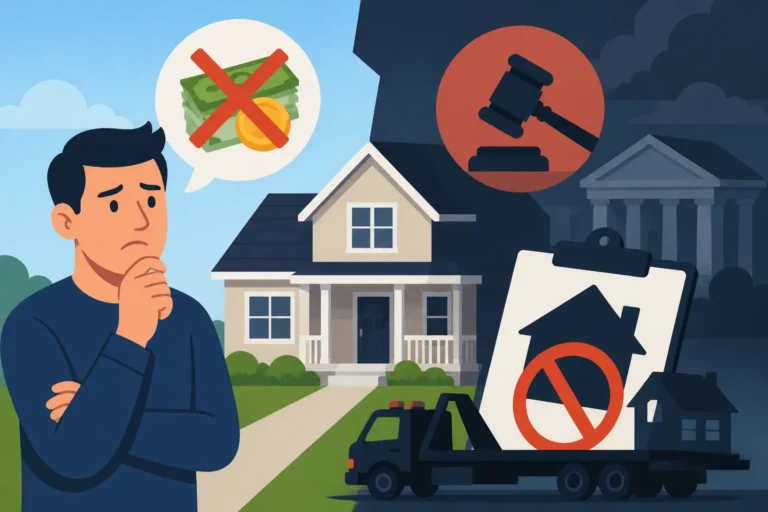
While the immediate financial hit from penalties and interest is painful, the long-term consequences of unpaid property taxes can be truly devastating. Ignoring a delinquent tax bill won't make it go away; instead, it puts your most valuable asset – your home – at severe risk. This escalation from a missed payment to potential loss of property is a harsh reality that every homeowner needs to understand. If you're concerned about your overall property tax burden, it's helpful to understand topics like How Are Property Taxes Calculated? to see how your bill is derived in the first place.
Property Tax Liens and Tax Sales
One of the most significant consequences of unpaid property taxes is the placement of a property tax lien on your home. A lien is a legal claim against your property, giving the government (or an investor who buys the lien) the right to collect the outstanding taxes by ultimately forcing the sale of your home if the debt remains unpaid. This lien takes precedence over almost all other liens, including your mortgage, meaning the government gets paid first.
Once a lien is in place, it severely limits your financial flexibility. You can't sell or refinance your property without clearing the lien first. Many states, like Florida and Arizona, utilize tax lien sales, where the county sells the tax lien to private investors. These investors pay the delinquent taxes and penalties, and in return, they earn a high rate of interest (often 12-18% or more) on their investment. If you, the homeowner, don't repay the investor within a specified timeframe (known as the redemption period), the investor can then initiate foreclosure proceedings to take ownership of your property. This concept is explored in detail in Property Tax Liens Explained.
The Road to Tax Deed Sales and Foreclosure
If your property taxes remain unpaid for an extended period, and a tax lien either isn't sold or expires without redemption, the ultimate consequence is a tax deed sale or outright tax foreclosure. In "tax deed states" like California, Georgia, and New York, the county directly sells the property at a public auction to recoup the delinquent taxes, rather than selling the lien first.
The process typically involves:
- Prolonged Delinquency: The taxes go unpaid for several years, usually 3 to 5 years, depending on the state.
- Notification: The homeowner receives multiple official notices informing them of the impending tax sale or foreclosure.
- Redemption Period: Even in tax deed states, there might be a pre-sale redemption period where the homeowner can pay all outstanding taxes, penalties, and fees to prevent the sale. Some states, like California, also offer a post-sale redemption period, though it’s rare for tax deed sales. Understanding these Redemption Periods & Tax Foreclosure rules is critical.
- Public Auction: The property is sold to the highest bidder, often for significantly less than its market value.
- Loss of Home: Once the sale is finalized and any redemption periods have passed, the original homeowner loses all rights to the property.
This is not a theoretical threat; it happens to thousands of homeowners every year across the country. The county doesn't want to own your property, but they will take it and sell it if that's what's necessary to collect the taxes owed.
Strategies to Avoid or Mitigate Penalties
The thought of losing your home over property taxes is terrifying, but there are proactive steps you can take to avoid reaching that point, and even strategies to help if you've already fallen behind. It's about being informed, organized, and knowing your options.
Proactive Payment Strategies
The best way to deal with property tax penalties is to avoid them altogether. This sounds obvious, but it requires a bit of planning and consistent attention.
- Know Your Deadlines: This is non-negotiable. Mark your calendar, set digital reminders, and double-check your local tax authority's website for the exact Property Tax Due Dates by State. Some states, like California, have two installments, while others might have one annual payment. Don't rely on memory alone.
- Utilize Escrow Accounts: For most homeowners with a mortgage, property taxes are included in their monthly mortgage payment through an escrow or impound account. This means your lender collects a portion of your estimated annual property taxes each month and then pays the tax bill on your behalf when it's due. This is often the safest and most convenient method, ensuring you never miss a payment. If you're unsure, ask your lender about your Escrow & Impound Accounts Explained.
- Set Up Direct Payments/Reminders: If you don't have an escrow account (e.g., if your mortgage is paid off, or you chose not to escrow), many tax jurisdictions offer options for direct debit or email reminders. Take advantage of these! Set up automated payments if available, or at least ensure you receive timely notifications.
- Budget Ahead: Property taxes can be a significant annual expense. Factor it into your budget throughout the year, setting aside money monthly so the lump sum isn't a shock. Financial tools like Stessa can help you track expenses and income, making it easier to budget for these large, recurring costs. Knowing how much to set aside can also be easier if you understand your annual Property Tax by State 2026: All 50 States Ranked.
What to Do If You've Missed a Payment
Okay, so you've missed a deadline. Don't panic, but don't delay either. The sooner you act, the better your chances of mitigating the damage.
- Contact Your Tax Assessor Immediately: This is your first and most crucial step. Call or visit your local county tax assessor's office. Explain your situation. They are usually more willing to work with homeowners who are proactive and transparent, especially if it's your first time missing a payment. They can confirm the exact amount of your outstanding debt, including all penalties and interest, and explain your payment options.
- Explore Payment Plans: Many jurisdictions offer Property Tax Installment & Deferral Plans for delinquent taxpayers. These plans allow you to pay off your outstanding balance over a period, typically with continued interest but potentially with reduced or frozen penalties. The key is to get into a formal agreement.
- Investigate Deferral Programs: For certain demographics, such as seniors or disabled homeowners on fixed incomes, some states offer property tax deferral programs. These programs allow you to postpone paying some or all of your property taxes until the property is sold or changes ownership. This isn't forgiveness, but rather a delay, with interest often accruing.
- Consider Financial Solutions (Carefully): If you're facing a substantial bill and truly can't pay, you might explore options like a personal loan or a home equity line of credit (HELOC). Resources like LendingTree can provide information on various loan products, but it's essential to understand the terms, interest rates, and risks involved. Taking on new debt to pay off old debt needs careful consideration and a clear plan for repayment. Be wary of high-interest property tax loan companies, which can sometimes charge exorbitant fees.
- Seek Professional Advice: For complex situations, or if you feel overwhelmed, consider consulting a financial advisor or a tax professional. They can help you understand your options and negotiate with the tax authorities if necessary. Sometimes, understanding the nuances of how to Lower Your Property Tax Assessment through an appeal might also be an avenue, though this typically addresses future bills, not past delinquencies.
Remember, the goal is to resolve the outstanding balance as quickly as possible to stop the accumulation of further penalties and interest and prevent the more severe consequences of liens and foreclosure. Being proactive and informed is your strongest defense against the snowball effect of late property tax penalties.
Disclaimer
The information provided in this guide is for general informational purposes only and does not constitute financial, legal, or tax advice. Property tax laws and regulations are complex and vary significantly by state and local jurisdiction. You should consult with a qualified financial advisor, tax professional, or legal expert for advice tailored to your specific situation.