Property Tax Reassessment After Buying a Home
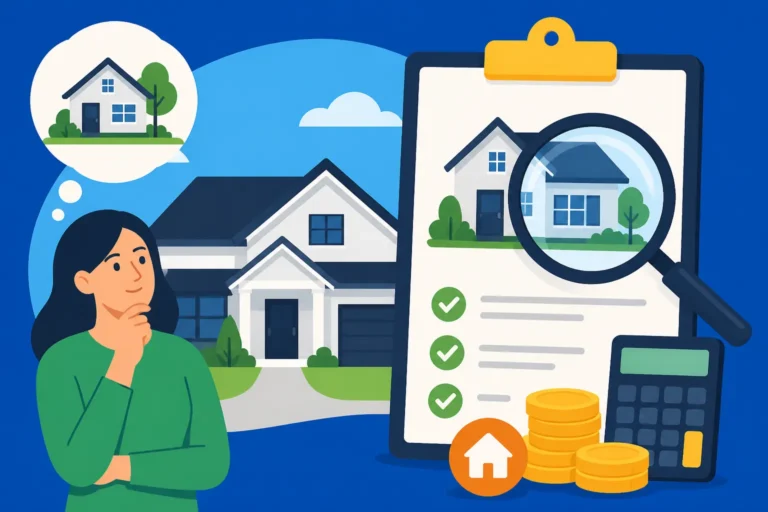
You just closed on your dream home, the boxes are half-unpacked, and you are finally settling into a rhythm when a thick envelope arrives from the county assessor. Instead of a welcome note, it is a notification that your property taxes are skyrocketing because the purchase triggered a reassessment. This guide explains how reassessment works, why it happens, and how to manage the sudden financial shift.
Understanding the Reassessment Trigger
When you buy a home, you aren't just taking over a physical structure; you are stepping into a legal and financial history. One of the most jarring aspects of this transition is the "Welcome Stranger" phenomenon. This occurs when a local taxing authority resets the assessed value of a property to its current market value—usually the price you just paid—regardless of what the previous owner was paying. It can feel deeply unfair to look at your neighbor’s tax bill and realize they are paying half of what you are for the exact same floor plan, but in many jurisdictions, this is simply how the law is structured.
Why Buying a House Raise Property Taxes
In a perfect world, property taxes would be stable and predictable. However, most local governments rely on these funds to pay for schools, roads, and emergency services. The primary reason Does Buying a House Raise Property Taxes is that the sale provides the most accurate and up-to-date data point for what a property is actually worth. For years, a house might have sat under a "valuation cap" that limited how much the previous owner’s taxes could go up annually. When that owner sells, those protections often vanish for a brief moment, allowing the county to "catch up" to the current market value.
Imagine a couple who bought their home in 1995 for $150,000. Over thirty years, the market value grew to $600,000, but their assessed value was limited by state law, only creeping up to $250,000. When you buy that house for $600,000, the tax assessor sees a massive gap between the old $250,000 "paper value" and your $600,000 "real value." Most states will use your purchase price as the new baseline, meaning your tax bill will be calculated based on $600,000. This is the core reason why new homeowners often face a much higher tax burden than the sellers did.
The Role of the Assessor's Office
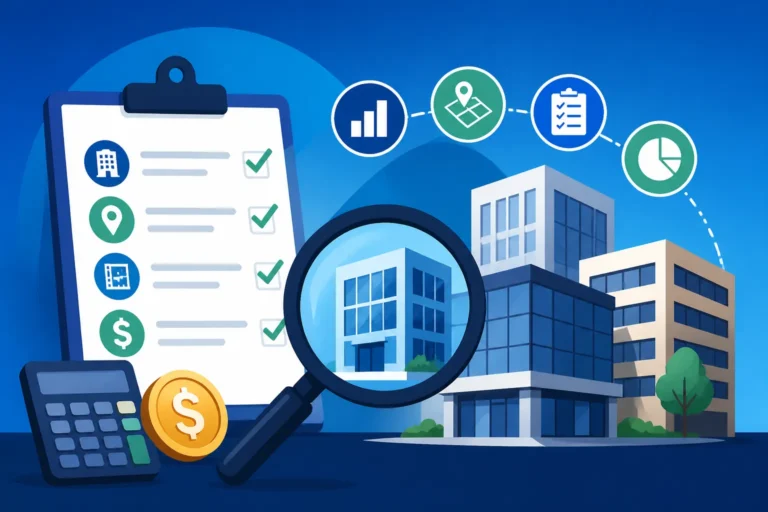
The tax assessor’s office is responsible for discovering, listing, and valuing all property within a jurisdiction. They don't actually set the tax rates—that is done by your city council, school board, or county commissioners—but they do provide the number that those rates are multiplied by. After a sale, the assessor’s staff reviews the deed transfers recorded with the county. They look at the "consideration" (the price paid) and determine if the sale was an "arm’s length transaction."
An arm's length transaction means both the buyer and seller acted independently and had no prior relationship. If you bought your parents' house for $10, the assessor is going to ignore that price and instead look at Assessed Value vs Market Value vs Taxable Value to determine what the house is truly worth in the open market. They use sophisticated software and mass appraisal techniques to ensure that the new assessment aligns with similar homes in your neighborhood. If you feel they have overshot the mark, you are essentially disagreeing with their professional opinion of your home's value.
State Specific Reassessment Rules and Caps
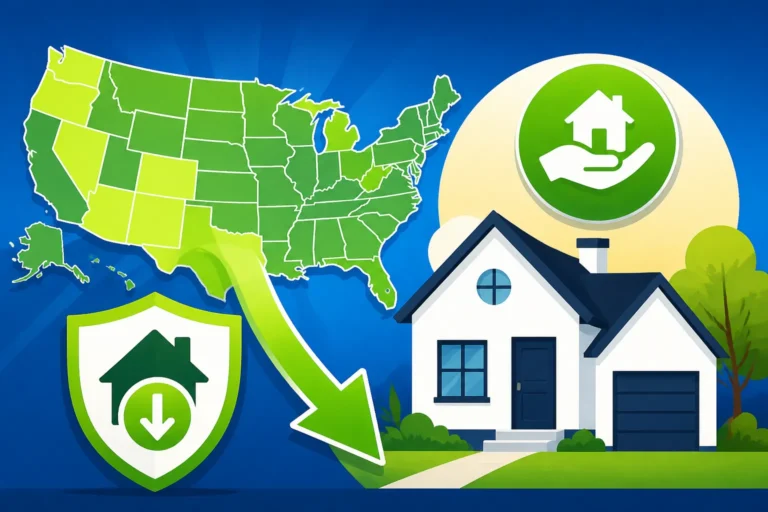
Property tax law is a patchwork quilt across the United States. No two states handle post-purchase reassessments exactly the same way. Some states have "acquisition-based" systems where the tax value is strictly tied to the purchase price, while others use "ad valorem" systems where they try to keep everyone at current market value through periodic county-wide updates. Understanding the specific rules in your area is the only way to avoid a four-figure surprise in your second year of ownership.
California Prop 13 and the 2 Percent Cap
California is the most famous example of an acquisition-based tax system. Under the landmark law known as California Prop 13 Explained (2% Cap), the assessed value of a property is set at the time of purchase. After that initial "base year value" is established, the assessed value can only increase by a maximum of 2% per year, regardless of how much the home's actual market value increases. This creates a massive incentive for long-term ownership but creates a significant disparity for new buyers.
When you buy in California, you should expect your property to be reassessed at the purchase price almost immediately. This is one of the few states where Property Tax Reassessment After Buying a Home is virtually guaranteed and mathematically predictable. If you buy a home for $1,000,000, your base tax will be approximately 1% of that price ($10,000) plus any local voter-approved bonds. You won't benefit from the 2% cap until your second year of ownership. This is why it’s critical for California buyers to look at their own purchase price, rather than the seller’s old tax bill, when budgeting for their mortgage.
Florida Save Our Homes and the 3 Percent Cap
Florida has a unique system designed to protect permanent residents. The "Save Our Homes" amendment limits increases in the assessed value of homesteaded property to the lesser of 3% or the Consumer Price Index (CPI). However, the moment a home is sold, this cap is removed. The property is then reassessed at full market value for the new owner the following January. This often results in what locals call the "tax shock" because Florida has seen rapid appreciation in recent years.
What makes Florida slightly more complex is the concept of "portability." If you are moving from one Florida home to another, you may be able to transfer some of your tax savings from your old home to your new one. This can significantly lower your initial assessment. Without portability, a buyer moving from out of state into a home previously owned by a long-term resident will see a massive spike in taxes. For a detailed breakdown of how this works, you should review Florida Save Our Homes Explained (3% Cap) to see if you qualify for any transfer of tax benefits.
Texas and the 10 Percent Homestead Cap
Texas does not have a state income tax, which means it relies heavily on property taxes to fund its government. This makes the reassessment process particularly high-stakes for Texas homeowners. Unlike California, Texas appraisers attempt to value property at 100% of its market value every single year. However, if you have a homestead exemption, the "assessed value" cannot increase by more than 10% in a single year. The catch? This 10% cap does not apply to the first year you own the home.
When you buy a house in Texas, the "appraised value" will likely jump to your purchase price the following year. Because the 10% cap only kicks in after you have had the homestead exemption for a full calendar year, your first "real" tax bill as an owner could be substantially higher than the seller's. This is why many buyers in the Lone Star State are shocked to find their Texas Homestead 10% Cap Explained doesn't protect them immediately upon closing. You have to survive that first market-value reassessment before the protections begin to shield you from future market volatility.
Calculating Your New Tax Bill Post Purchase
The math behind property taxes can feel like a dark art, but it generally follows a simple formula: (Assessed Value – Exemptions) x Tax Rate = Your Bill. The confusion usually stems from the fact that "value" has multiple definitions in the eyes of the government. After you buy a home, the assessor will look at your closing statement to find the sales price, but that is just the starting point for their calculation.
Assessed Value vs Market Value vs Taxable Value
It is vital to distinguish between these three terms to understand your reassessment. Market value is what a willing buyer would pay a willing seller—essentially, your purchase price. Assessed value is the dollar amount assigned to your property by the public tax assessor for the purposes of taxation. In many states, the assessed value is a percentage of the market value, known as an Property Tax Assessment Ratio by State. For example, if your state has a 20% assessment ratio, a $500,000 home would have an assessed value of $100,000.
Taxable value is the final number used to calculate your bill. This is the assessed value minus any exemptions you might qualify for, such as a Homestead Exemption: Complete State-by-State Guide. If your $100,000 assessed value qualifies for a $25,000 homestead exemption, your taxable value is $75,000. When you see a news report about property tax rates, they are usually referring to the "millage rate" applied to this taxable value. Understanding these layers helps you identify exactly where the assessor might have made an error during the reassessment process.
| State | Reassessment Frequency | Primary Tax Cap/Protection |
|---|---|---|
| California | Upon Sale | Prop 13 (2% Annual Cap) |
| Florida | Annual (Jan 1st) | Save Our Homes (3% Annual Cap) |
| Texas | Annual | 10% Homestead Cap |
| New York | Annual/Periodic | Varying local caps (STAR Program) |
| New Jersey | Varies by County | No statewide cap on assessments |
Using a Property Tax Calculator
Because tax rates (millage) are often a combination of county, city, and school district levies, the total rate can be difficult to track down. A Property Tax Calculator: How to Estimate Your Bill is an essential tool during the home-buying process. You should never rely on the "Taxes" figure listed on a Zillow or Redfin page, as those numbers reflect what the current owner is paying. Instead, take your purchase price, multiply it by the local assessment ratio, subtract any exemptions you plan to file for, and then multiply that by the total millage rate for your specific tax district.
For instance, if you are buying in a high-tax area like Cook County Property Tax Rate, you need to be aware of how the "equalization factor" affects your bill. This is an additional multiplier the state uses to ensure that assessments are uniform across different counties. If you don't account for these variables, your estimated monthly mortgage payment could be off by hundreds of dollars, leading to a massive escrow shortage at the end of your first year.
Supplemental Tax Bills: The Surprise in the Mail
One of the most misunderstood aspects of buying a home is the supplemental tax bill. In many states, particularly California, the regular tax bill is produced once a year. If you buy a house in the middle of the tax year, the county doesn't want to wait until next year to collect the higher taxes triggered by your purchase. They want that money now. This results in a "Supplemental" bill that covers the difference between the old owner’s lower tax rate and your new, higher tax rate for the remaining months of the fiscal year.
Supplemental Property Tax Bill Explained
The Supplemental Property Tax Bill Explained (California) is essentially a "catch-up" bill. When the assessor updates your home's value to the purchase price, they calculate the "supplemental assessment," which is the difference between your new value and the previous owner's value. If the previous owner was assessed at $300,000 and you bought at $500,000, the supplemental assessment is $200,000. The county then issues a one-time bill for the taxes on that $200,000, prorated for the number of months you will own the home during that tax cycle.
The biggest danger here is that most mortgage companies do not pay supplemental tax bills out of your escrow account. They only pay the "secured" or "annual" bills. This means you will receive a bill in the mail for several thousand dollars that you are expected to pay out of pocket. Many new homeowners mistakenly throw these bills away, thinking their mortgage company will handle it, only to face penalties and interest later. Always call your lender when a supplemental bill arrives to confirm who is responsible for the payment.
Timing and Payment Schedules
The timing of a reassessment notice and the subsequent bill depends heavily on how fast your local county clerk and assessor's office move. In some counties, you might receive the notice within three months of closing. In others, it might take a full year. This delay can create a false sense of security. You might think, "Oh, my taxes stayed low!" only to receive a massive bill eighteen months later that covers the entire retroactive period since your purchase date.
If you are concerned about the delay, you can check your status through a Los Angeles County Property Tax Search & Lookup or the equivalent portal for your specific county. Monitoring the "Assessed Value" field on your property record will tell you if the county has processed your sale yet. If you see the old seller’s value still listed, you should be setting aside extra cash in a high-yield savings account to prepare for the inevitable supplemental bill. Proactive saving is the only way to survive the "welcome stranger" tax without a financial crisis.
How to Manage the Financial Impact
Once the reassessment happens, the financial ripple effects can be significant. It’s not just a one-time bill; it often changes your monthly mortgage payment and your overall debt-to-income ratio. Being prepared for these shifts—and knowing how to mitigate them—is a hallmark of a savvy homeowner. You have more power than you think to soften the blow if you act quickly after your deed is recorded.
Why Did My Escrow Payment Go Up
Most homeowners pay their taxes through an escrow (or impound) account managed by their lender. Each month, a portion of your payment goes into this "bucket" so the lender can pay the tax bill when it's due. If your taxes were reassessed upward, your lender will eventually receive the new, higher bill. This creates two problems: a "shortage" for the taxes they already paid and a need for a higher monthly deposit to cover future bills.
When you ask Why Did My Escrow Payment Go Up?, the answer is usually that your lender is trying to "catch up" and "keep up" at the same time. They might divide the past shortage by 12 and add that to your new, higher base tax payment. This "double whammy" can result in a mortgage payment that jumps by $300 to $500 overnight. To avoid this, you can proactively send your reassessment notice to your mortgage company's escrow department. They can adjust your payment early, spreading the increase over a longer period and avoiding a massive lump-sum shortage later.
Applying for Homestead Exemptions Immediately
The single most effective way to lower your post-purchase tax burden is to file for every exemption available to you. The most common is the Homestead Exemption, which is available in most states for your primary residence. This exemption usually does two things: it knocks a flat dollar amount off your assessed value and, in many states, it triggers a "cap" that prevents your taxes from rising too quickly in the future.
Don't wait for the county to remind you to file. In many jurisdictions, there are strict deadlines—often in early spring—to file for the following tax year. If you miss the deadline, you are stuck paying the full market-rate tax for another twelve months. Check How to File for Homestead Exemption to see what documentation you need. Usually, it’s as simple as a copy of your driver's license showing the new address and a utility bill. For seniors, veterans, or those with disabilities, there are often additional "layers" of exemptions that can save you thousands more.
Challenging a High Post Purchase Assessment
Just because you paid a certain price for a home doesn't mean the assessor's value is set in stone. While it is much harder to challenge an assessment that matches your purchase price, it is not impossible. Assessors sometimes include personal property (like expensive appliances or furniture) in the valuation, or they might fail to account for hidden damage that decreases the home's value relative to others in the neighborhood.
How to Win a Property Tax Appeal
If you believe the reassessment is too high, you have the right to file an appeal. The window to do this is usually very short—often just 30 to 60 days after you receive your assessment notice. To succeed, you need to prove that the assessor’s value is either higher than the actual market value or that it is "unequal" compared to similar homes. In states like Texas, an "equity appeal" is a common strategy where you argue that even if your value is accurate, it’s unfairly high compared to your neighbors.
A successful appeal requires data. You should look for Evidence & Comps for a Property Tax Appeal that support your lower valuation. If you bought a "fixer-upper" for a high price because of the neighborhood, but the interior is gutted, the assessor might be valuing it as if it were in pristine condition. Photos of the damage, repair estimates from contractors, and an independent appraisal can all serve as powerful evidence in an informal or formal hearing. Many homeowners find that Learning How to Win a Property Tax Appeal pays for itself within the first year.
Finding Comparable Sales for a Tax Appeal
The gold standard for a tax appeal is "comparable sales," or comps. These are homes similar to yours in size, age, condition, and location that sold around the same time you bought yours. If you can find three or four homes that sold for less than your assessment, you have a strong case. However, be careful: the assessor will also have their own list of comps that likely support the higher value.
When you are Finding Comparable Sales for a Tax Appeal, look for "distressed" properties or sales that happened under unique circumstances that the assessor's mass-appraisal software might have missed. If your home is on a busy corner or backs up to a commercial lot, find other homes with those specific "detriments" to show that your purchase price shouldn't be the baseline for the entire neighborhood. If the process feels too overwhelming, you might consider Are Property Tax Appeal Companies Worth It? to have a professional handle the negotiation for you on a contingency basis.
Property Tax Reassessment Disclaimer
This guide is provided for informational purposes only and does not constitute legal, financial, or tax advice. Property tax laws, assessment ratios, and exemption deadlines vary significantly by state, county, and local municipality and are subject to change by legislative action. Homeowners should verify all tax information with their local county assessor’s office or a qualified tax professional before making financial decisions based on estimated property tax liabilities.