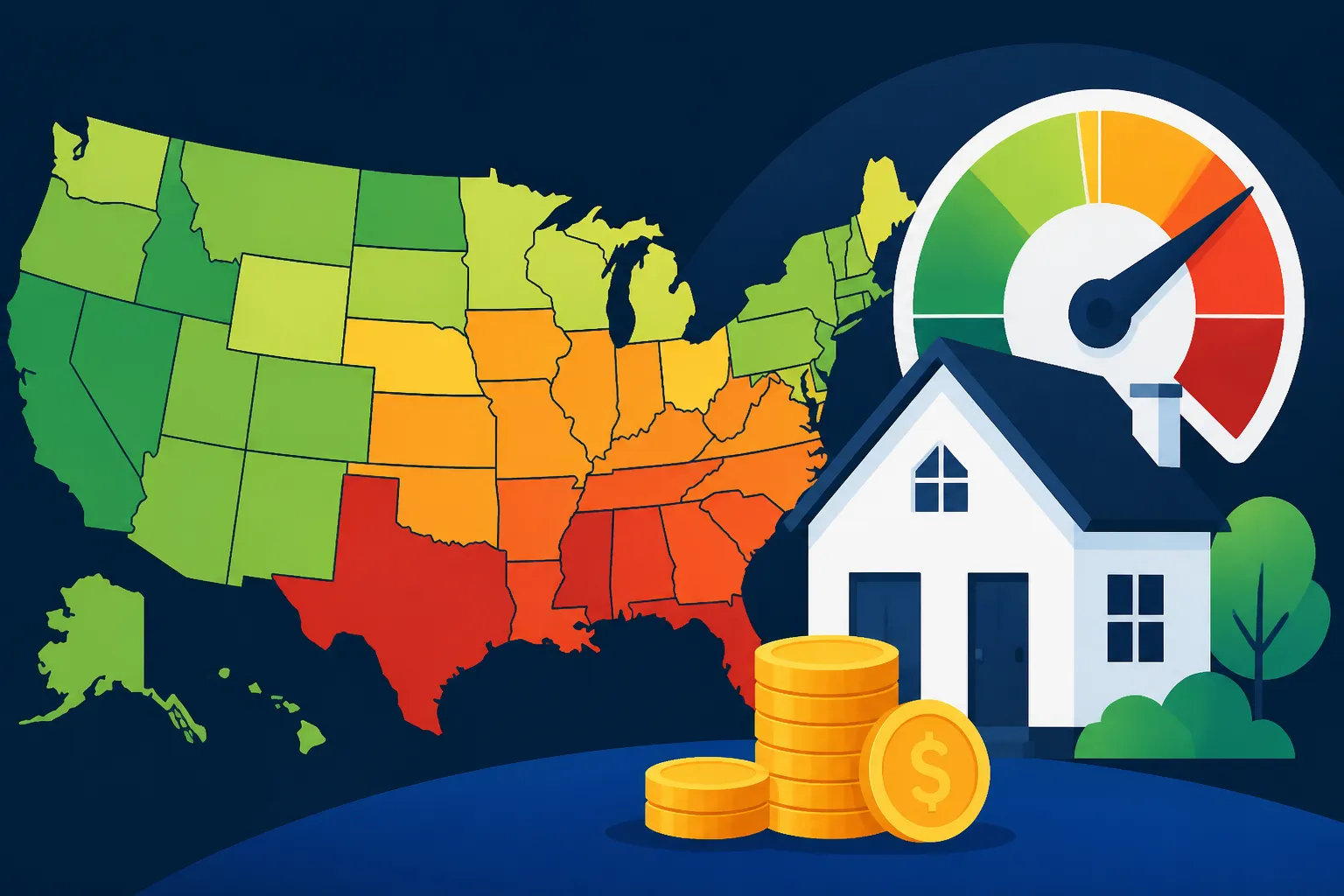
Tax Lien Interest Rates by State
Facing an unexpected property tax bill or struggling to keep up with your payments can be incredibly stressful, sometimes leading to the daunting prospect of tax delinquency. For homeowners, understanding what happens next, especially concerning property tax liens and the interest that can accrue, is absolutely vital. For those considering tax lien investing, grasping the varying interest rates by state is the key to identifying potential opportunities. This guide is designed to demystify tax lien interest rates, explain how they function, and provide a comprehensive look at what you can expect across different states.
Understanding Property Tax Liens and Their Purpose
Let's start by clarifying what a property tax lien actually is. It's often misunderstood, and frankly, the terminology can be confusing. Many homeowners, especially those facing financial hardship, might not even realize a lien has been placed on their property until it's too late, leading to a cascade of problems.
What Exactly is a Property Tax Lien?
At its core, a property tax lien is a legal claim placed on your property by the local government when you fail to pay your property taxes. Think of it as a cloud on your title, asserting the government's right to collect those overdue taxes, penalties, and interest. This isn't just a casual notice; it's a serious legal instrument that gives the taxing authority priority over almost any other debt secured by your property, including your mortgage. It ensures that essential public services, which are funded by property taxes, can continue even if individual homeowners fall behind. When you owe taxes, the county or municipality isn't just sending you a stern letter; they're creating a powerful mechanism to ensure that the debt is eventually settled.
It's important to remember that a property tax lien isn't the same as losing your home immediately. It's the first step in a process that could lead to foreclosure if the taxes remain unpaid. The lien itself serves as public notice that the property owner owes taxes, making it difficult to sell or refinance the property until the debt is cleared. This legal encumbrance essentially warns any potential buyers or lenders that there's an outstanding obligation attached to the property.
How a Tax Lien Sale Works
When a property tax bill goes unpaid for a certain period, and a lien is placed, some states and counties take the additional step of selling that tax lien to private investors. This is known as a tax lien sale. In these sales, investors pay the delinquent tax amount to the local government in exchange for the right to collect that debt, plus interest, from the homeowner. It's a way for local governments to quickly recoup lost revenue without having to go through a lengthy and costly foreclosure process themselves. The investor essentially steps into the shoes of the taxing authority, hoping to earn a return on their investment.
The sale process can vary significantly. In some areas, it's an auction where investors bid down the interest rate they are willing to accept, with the lowest bid winning. In other states, the interest rate is fixed by statute, and investors bid on the lien itself, sometimes for a premium or at a discount. Understanding Tax Lien Sales & Certificates is crucial for anyone looking to enter this market, as the specific mechanics determine profitability and risk. The goal for the investor is for the homeowner to eventually pay off the original tax debt plus the accrued interest. If the homeowner doesn't pay, the investor may then have the right to initiate foreclosure proceedings to take ownership of the property, though this is a long and often complex process with strict redemption periods designed to protect the homeowner.
The Role of Local Governments in Tax Liens
Local governments, whether they are counties, cities, or school districts, are the primary entities that set and enforce property taxes. They play a critical role in the entire tax lien process, from assessing property values to determining tax rates, issuing bills, and ultimately initiating liens and sales for delinquent accounts. The specific rules for when a lien is placed, when it's sold, and what interest rate applies are all determined at the state and local levels. For instance, you can learn more about How Property Tax Levies and Rates Are Set to understand the foundational process.
The revenue generated from property taxes is the lifeblood of communities, funding everything from schools and libraries to police, fire departments, and local infrastructure projects. When taxes go unpaid, these services are put at risk. Tax lien sales are therefore a vital financial tool for municipalities to maintain liquidity and ensure continuous service provision. They also act as a strong incentive for property owners to stay current on their tax obligations. The specific county or municipal tax collector's office is typically the agency responsible for managing these liens and sales, and their websites are often the first stop for both homeowners and investors seeking information.
Why Tax Lien Interest Rates Matter So Much
The interest rate attached to a property tax lien is not just a minor detail; it's a powerful force that shapes the decisions of both homeowners and investors. For homeowners, it represents the escalating cost of delaying payment, while for investors, it's the primary driver of their potential returns.
Impact on Investors: Returns and Risks
For investors, the interest rate on a tax lien is quite simply their expected return on investment. States that offer higher statutory interest rates, such as Arizona's 16% or Florida's maximum of 18%, can be very attractive. These rates, often much higher than traditional savings accounts or even some bond yields, lure investors looking for potentially lucrative, government-backed opportunities. The promise of a high, secured return is a significant draw, especially since the lien is typically superior to other encumbrances on the property.
However, the actual return isn't always as simple as the advertised rate. Factors like redemption periods, which dictate how long a homeowner has to pay back the lien, influence how quickly an investor can get their capital back. A longer redemption period means the investor's money is tied up for a longer time. Moreover, competition at tax lien auctions can drive down the effective interest rate, especially in states where rates are bid down. For instance, in an auction where investors bid on the interest rate, a 16% statutory rate might be bid down to a fraction of a percent if there's high demand. This introduces a layer of complexity and risk, making thorough research paramount for any investor considering tax lien certificates. Platforms like Stessa, while primarily used for rental property management, could be adapted by active tax lien investors to track redemption dates and potential property acquisitions if the lien isn't redeemed.
Impact on Homeowners: The Cost of Delinquency
For homeowners, the tax lien interest rate represents the ever-increasing penalty for unpaid taxes. It's not just the original tax bill; it's that bill compounded by significant interest, plus any administrative fees and penalties. In states with high statutory rates, a homeowner's debt can quickly snowball. What might start as a few hundred dollars in overdue taxes can become thousands in a relatively short period, making it even harder to pay off. This escalating cost is a major frustration for individuals already struggling financially.
The pressure to pay is immense because if the lien isn't redeemed (paid off) within the specified redemption period, the investor who purchased the lien can begin proceedings to take ownership of the property through foreclosure. This means that a homeowner could lose their home over a tax debt that, if addressed promptly, might have been manageable. The high interest rates are designed to be a strong deterrent to non-payment and to encourage quick resolution, but for many, it simply adds another layer of financial burden during an already difficult time. Understanding What Happens If You Don't Pay Property Taxes? is essential for homeowners to grasp the severe implications.
How Interest Rates Drive the Market
The interest rates offered on tax liens are a crucial market signal, influencing the supply and demand for these investments. In states with attractive fixed or maximum interest rates, there's usually a robust market with many investors competing for liens. This competition can, as mentioned, sometimes lead to interest rates being bid down, especially in auction environments. Conversely, in states with very low statutory rates or less favorable terms, the investor pool might be smaller, or only properties with very specific characteristics (e.g., high value, short redemption periods) might be sought after.
These rates also determine how quickly local governments can offload delinquent tax liabilities. If the rates are too low, attracting investors becomes challenging, leaving municipalities with unpaid taxes on their books for longer. If rates are too high, they can be seen as overly punitive to homeowners, leading to public outcry and potential legislative changes. It's a delicate balance that states try to strike, ensuring enough incentive for investors while maintaining some level of fairness for property owners. The interplay between state laws, local auctions, and investor appetite creates a dynamic market where interest rates are the primary currency.
A Deep Dive into Tax Lien Interest Rates by State
When it comes to tax lien interest rates, there's no single federal rule; each state crafts its own legislation. This patchwork of regulations means that an investor's strategy or a homeowner's risk profile can look drastically different depending on where the property is located.
States with Fixed High Interest Rates
Some states offer statutory fixed interest rates that are quite attractive to investors. These rates are often set at a percentage that is higher than typical bank lending rates or even many other investment vehicles. For example, Florida allows interest rates on tax certificates to go up to 18% per year, though this is often bid down in auctions. Arizona also has a relatively high statutory rate of 16%, calculated from the date of the sale until redemption. Illinois sets its maximum rate at 18%, with bids being placed on the penalty percentage over the statutory rate.
These states are popular among tax lien investors because the potential for a high, government-secured return is clear. However, the 'fixed' rate often refers to the maximum rate, and actual returns can vary due to competitive bidding at auctions. In a highly competitive auction, investors might bid down the interest rate from the statutory maximum to a much lower figure, sometimes even a fraction of a percent. This scenario often frustrates new investors who assume they'll automatically earn the top rate. The actual interest earned depends on the winning bid and how long it takes for the homeowner to redeem the lien.
States with Variable or Auction-Determined Rates
Many other states employ a system where the interest rate is not strictly fixed but is determined through an auction process. For instance, in states like New Jersey, investors bid on the premium they're willing to pay for the lien, and the interest rate itself can also be bid down. New York has a more complex system where counties can charge different interest rates, often around 12% per year, but the process leans more towards tax deed sales rather than pure tax lien certificates in many areas. Ohio also permits counties to set their interest rates, generally not exceeding 18%, but the rates are often negotiated or determined by competitive bidding.
The variability means that investors need to do significant due diligence before participating in a sale. They must research the specific county's rules, historical bidding trends, and the property characteristics. For homeowners in these states, the upside is that the final interest rate might be lower than a fixed, high statutory rate if there's sufficient competition among investors. However, the uncertainty can also make it harder to predict the exact cost of redemption. These auction-based systems reflect a desire for market efficiency, letting supply and demand dictate the cost of carrying the delinquent tax debt.
Redemption Periods and Their Influence on Rates
The redemption period is the timeframe a property owner has to pay off their delinquent taxes, plus interest and penalties, before the tax lien investor can take steps toward owning the property. This period varies drastically by state, and it significantly influences the attractiveness of a tax lien to investors and the pressure on homeowners. For a deeper dive, check out Property Tax Redemption Period by State.
| State | Statutory Max Interest Rate (Approx.) | Typical Redemption Period | Notes |
|---|---|---|---|
| This is the heart of what many of you are here for—a state-by-state look at tax lien interest rates. However, it's crucial to understand that these rates are not always straightforward; they come with their own set of rules and nuances that can drastically affect both homeowners and investors. |
States with Fixed High Interest Rates
A number of states are known for having statutory fixed interest rates that, on paper, appear quite generous to investors. These rates are often considerably higher than what you'd see in a typical savings account or even a bond.
Let's look at some examples:
- Arizona: This state is often cited for its maximum 16% annual interest rate on tax liens. This rate is set by statute and accrues from the date the lien is sold until it's redeemed. However, in Arizona, the bidding process for tax liens usually involves investors bidding down this interest rate. So, while the maximum is 16%, a highly competitive auction might see successful bids come in much lower, even to 1% or less, especially for desirable properties. This means that while the potential is high, the realized rate depends heavily on market competition.
- Florida: Similar to Arizona, Florida has a maximum statutory interest rate of 18% on its tax certificates. The bidding process here is also typically an interest rate "bid-down" auction. Investors compete to offer the lowest interest rate they are willing to accept. If you see a certificate selling at 0.25%, that means a savvy investor won it by offering to accept that rate, which was the lowest among bidders. This strategy ensures the county quickly recovers its funds but means investors must be precise with their bids.
- Illinois: Illinois operates with a statutory maximum interest rate of 18% (1.5% per month) on tax certificates. Here, investors bid on the penalty percentage over the statutory interest rate. What makes Illinois unique is the bidding structure—it's often a "bid-down" on the penalty rate. For example, a successful bid might be 0%, meaning no additional penalty beyond the statutory interest is owed, or even a negative penalty if allowed, essentially reducing the total owed.
For a homeowner in these states, these high maximum rates can feel incredibly punitive, watching their debt grow significantly if they can't pay quickly. For investors, these states offer a strong potential return, but the actual rate achieved is often a function of intense competition.
States with Variable or Auction-Determined Rates
Many other states opt for a system where the interest rate isn't rigidly fixed but is instead determined through an auction process, sometimes with a statutory cap, or by local government decree.
Consider these variations:
- New Jersey: New Jersey tax lien sales typically involve investors bidding on the interest rate, starting from a maximum of 18% and bidding down. If the interest rate is bid down to 0%, bidders then compete by offering a premium to the municipality for the lien. This premium is a one-time payment to the municipality and is generally not recoverable by the investor if the lien is redeemed. This unique structure requires investors to balance potential interest earnings with the cost of any premium paid. For homeowners, this means the eventual interest rate they owe could be much lower than the 18% maximum if the lien was heavily contested.
- New York: New York's approach is highly localized. Interest rates can vary by county and even by municipality within counties, often ranging from 10% to 12% annually. However, many parts of New York, particularly its larger counties, tend to favor tax deed sales rather than pure tax lien certificate sales. In a tax deed sale, the government sells the property itself (after a judicial process) to recover unpaid taxes, rather than just the lien. For homeowners, this distinction is critical, as a tax deed sale means direct foreclosure risk, while a tax lien sale still allows for a redemption period. You can explore Property Tax Due Dates by State to see how critical it is to pay on time in these jurisdictions.
- Ohio: Ohio's counties have the flexibility to set their own interest rates, often capped around 18% per year. However, the actual rates are frequently negotiated or determined by competitive bidding among investors. Ohio also allows for "tax lien transfers" where counties can bundle and sell their delinquent tax receivables to large institutional investors, who then service those liens. This can create a less transparent market for individual investors but still allows for smaller, localized sales.
This variability means that both investors and homeowners must delve into the specific rules of their county or municipality. There's no one-size-fits-all answer, and a blanket assumption about "tax lien rates" can lead to costly surprises.
Redemption Periods and Their Influence on Rates
The "redemption period" is absolutely crucial to understanding the real value and risk associated with tax liens. This is the window of time after a tax lien sale during which the original property owner can pay off the delinquent taxes, plus all accrued interest and penalties, to reclaim their property and nullify the lien. These periods vary wildly, typically from six months to three years, but some states offer even longer protections.
- Shorter Redemption Periods: In states with shorter redemption periods, such as some municipalities in Georgia (which can be as short as 12 months for tax deeds, though tax liens might vary), investors face less risk of their capital being tied up for extended durations. This can make these liens more attractive, potentially leading to higher competition and possibly lower bid-down interest rates. However, a shorter period also means more immediate pressure on the homeowner, with a quicker path to potential foreclosure if they can't make good on the debt.
- Longer Redemption Periods: Conversely, states like Michigan or Texas, which offer longer redemption periods (often two years or more), provide homeowners with a more substantial grace period. While this is a relief for those struggling to gather funds, it means an investor's capital is locked up for a longer time, potentially making the investment less appealing unless the interest rate is particularly high. A longer redemption period can sometimes lead investors to demand a higher interest rate to compensate for the extended holding period of their funds. Learning about Redemption Periods & Tax Foreclosure can provide even more detail on this critical aspect.
The interplay between the interest rate and the redemption period is a delicate balance. A high interest rate combined with a short redemption period offers a potentially quick and lucrative return for investors, but it creates immense pressure and risk for homeowners. A lower interest rate with a longer redemption period offers more breathing room for homeowners but requires more patience and a different risk calculation for investors. The complexity of these rules underscores why platforms like LendingTree, while not directly related to tax liens, could be a resource for homeowners looking for personal loans or refinancing options to clear a tax lien before the redemption period expires.
Factors That Influence Tax Lien Interest Rates Beyond State Law
While statutory caps and auction formats are the bedrock, the actual interest rates you'll encounter in the tax lien market are also heavily shaped by dynamics that go beyond mere legal frameworks. These real-world elements introduce another layer of complexity for both homeowners trying to understand their liabilities and investors looking for opportunities.
Local Market Dynamics and Competition
It's one thing for a state to set a maximum interest rate, but it's quite another to see what that rate actually looks like in practice at a county or municipal auction. The level of competition among investors in a specific local market plays an enormous role. If an area, say, Harris County, Texas (which primarily uses tax deed sales, not liens, but the principle applies), has a high volume of desirable properties with delinquent taxes, and there's a strong, active investor community, the bidding for tax liens (or tax deeds) can become incredibly fierce.
In competitive bid-down states, this means the interest rate will often drop significantly, sometimes to fractions of a a percent, well below the statutory maximum. Conversely, in a less popular county, or if a particular auction has less desirable properties (e.g., landlocked parcels, properties with environmental issues), the competition might be lower, allowing investors to secure liens at closer to the maximum allowable interest rate. For homeowners, this means the ultimate cost of redeeming their lien can depend on how many investors showed up at the auction and how eager they were to bid. This local dynamic is why general state information isn't enough; you need to investigate the specifics of your exact location.
Economic Conditions and Investor Demand
Broader economic conditions also cast a long shadow over tax lien interest rates. When traditional investment opportunities like stocks, bonds, or real estate itself offer lower returns, the relatively stable and often high-interest returns of tax liens become significantly more attractive. During periods of low interest rates in the general economy, investor demand for tax liens tends to surge, driving down the effective interest rates at auction. People are simply looking for better places to park their cash, and a 10-18% return, even if bid down, can beat many alternatives.
Conversely, if the economy is booming and other investments are yielding high returns, or if there's a general sense of financial instability, investor demand for tax liens might cool off. This can lead to higher interest rates being achieved at auction, as fewer bidders compete. Furthermore, the overall health of the real estate market impacts investor confidence. If property values are rising, investors might be more willing to bid aggressively, seeing potential for upside if they end up acquiring the property through foreclosure. However, a downturn could make them more cautious.
Property Type and Location Specifics
Not all properties are created equal in the eyes of a tax lien investor. The type of property, its condition, and its specific location within a county can greatly influence the interest rate it commands. A tax lien on a well-maintained, single-family home in a desirable neighborhood, where there's clear equity, will almost certainly attract more aggressive bidding and thus a lower interest rate, than a lien on a dilapidated commercial building in a declining industrial area.
Investors are always assessing the underlying value of the asset. They want to know that if the homeowner doesn't redeem the lien, they could potentially acquire a valuable property. Factors like potential for quick resale, rental income potential (where a tool like Stessa would come in handy for managing a portfolio of properties), and even zoning regulations all play a part. Liens on vacant land, properties with environmental concerns, or those with clouded titles often fetch higher interest rates because they carry greater risk and less investor appeal. Therefore, the physical characteristics and perceived marketability of the property itself have a direct bearing on the interest rate it will yield at a tax lien sale.
Navigating the Complexities of Tax Lien Investing
For those considering venturing into the world of tax lien investing, it's far from a set-it-and-forget-it endeavor. It requires careful planning, diligent research, and a clear understanding of the risks involved. While the potential returns can be attractive, the process itself can be intricate and demanding. To get started, you might want to review our comprehensive guide on Tax Lien Investing: Complete Guide.
Researching Opportunities and Due Diligence
Before you even think about bidding on a tax lien, extensive research is paramount. This isn't just about identifying states with high statutory interest rates; it's about drilling down to the county and specific property level. You need to understand the local tax sale rules, the exact process for bidding, and any specific redemption timelines. Most county tax collector or treasurer websites will publish lists of delinquent properties slated for sale, often including property identification numbers.
Beyond the administrative details, you must perform thorough due diligence on the underlying property. This means researching the property's market value, checking for any other outstanding liens (though property tax liens are usually superior, other encumbrances can complicate foreclosure), and investigating the property's condition and occupancy. Driving by the property is often recommended, but be mindful of privacy and trespassing laws. You need to assess the actual market value, not just the assessed value, which can be quite different. Remember, the goal is to ensure that if the lien goes to foreclosure, you're not inheriting a money pit or a property with insurmountable legal issues.
The Redemption Process and Investor Payouts
The vast majority of tax liens are redeemed by the homeowner. This means the homeowner eventually pays the outstanding taxes, plus the interest and any penalties, directly to the taxing authority or to the investor (depending on the state's system). When this happens, the investor receives their original investment back, along with the accrued interest, and the lien is cleared. This is the ideal outcome for many tax lien investors: a secured, relatively high-yield return without the hassle of property ownership.
However, the redemption process can sometimes be complex. The investor might need to apply for the interest, or it might be automatically disbursed. If the redemption period is long, the investor's capital is tied up for that entire duration. It's crucial to understand the exact mechanics of how and when you receive your money back in your chosen state and county. This is where diligent record-keeping comes into play, tracking redemption deadlines and interest accruals.
Potential Pitfalls and How to Avoid Them
While tax lien investing can be rewarding, it's not without its pitfalls. One major risk is the property never going to tax deed (foreclosure), meaning you never get the property, but merely the interest payment. If the interest rate was bid down significantly, your overall return might be minimal, and your capital was tied up for an extended period. Another pitfall is the risk of "zero-interest bids" in highly competitive auctions, where investors essentially invest money for almost no return, banking on the hope of eventually getting the property (which is rare).
Other risks include acquiring a property with environmental hazards, undiscovered title defects, or costly structural issues if it does go to foreclosure. Sometimes, properties might have limited access, or be landlocked, making them less valuable. To mitigate these risks, investors should:
- Diversify: Don't put all your eggs in one basket. Invest in multiple liens across different properties and locations.
- Thorough Due Diligence: As mentioned, research everything about the property and its history.
- Understand State Laws: Know the intricacies of Tax Lien States vs Tax Deed States and all redemption procedures.
- Conservative Bidding: Avoid getting caught up in auction fever and overbidding, especially by bidding down interest rates to unsustainable levels.
- Seek Expert Advice: Consider consulting with a real estate attorney or a tax lien expert if you're new to the game.
Finding Specific Tax Lien Information for Your Area
Whether you're a homeowner trying to understand your local tax burden or an investor researching potential opportunities, knowing where to find accurate, up-to-date information is half the battle. This information is highly localized, so generic searches won't cut it.
Official Government Websites and Resources
Your first and most reliable source of information for property tax liens will always be the official websites of your local government. Start with your county's tax assessor, tax collector, or treasurer's office. For instance, if you live in Cook County, Illinois, you'd look for the Cook County Treasurer's Office website. If you're in Miami-Dade County, Florida, it would be the Miami-Dade County Tax Collector. These offices are responsible for:
- Property Tax Records: You can often look up specific property tax bills, payment histories, and current lien statuses by parcel number or address.
- Tax Lien Sale Schedules: They publish dates, times, and locations of upcoming tax lien auctions or sales.
- Tax Sale Lists: Detailed lists of properties with delinquent taxes, often including the amount owed, the property's legal description, and sometimes even the assessed value.
- Rules and Regulations: Official documents outlining the specific state and local statutes governing tax liens, interest rates, redemption periods, and the entire sale process. This is where you'll find the definitive answers to questions about How to Find My Property Tax Rate and related lien procedures.
Don't be afraid to navigate these sites. While they might not always be the most user-friendly, they contain the authoritative information you need. Many offer online payment portals, which can be useful for homeowners looking to resolve delinquent taxes quickly.
Leveraging Professional Services and Data Platforms
Beyond government websites, several professional services and data platforms can assist both homeowners and investors. For homeowners facing tax delinquency, it might be worth exploring credit counseling services or financial advisors who can help you budget or find options to pay off your lien, potentially even through refinancing (where LendingTree could offer relevant loan comparisons).
For investors, a variety of private data providers and auction platforms specialize in aggregating tax lien information. These services often compile lists from multiple counties, offer enhanced search functionalities, and sometimes provide additional property data like estimated market values or even past bidding results. Some platforms might even facilitate the bidding process itself for online auctions. While these services can be incredibly helpful for streamlining research, they often come with a subscription fee. Always cross-reference any information obtained from third-party platforms with the official government sources to ensure accuracy, as errors can occur, and regulations can change rapidly. Remember, no platform can replace your own due diligence, but they can be powerful tools to enhance your research and decision-making process.
Disclaimer
The information provided in this guide is for general informational purposes only and does not constitute financial, legal, or tax advice. Property tax laws, lien procedures, and interest rates are highly complex and vary significantly by state and local jurisdiction. You should consult with a qualified financial advisor, real estate attorney, or tax professional for advice tailored to your specific situation. Reliance on any information on this site is solely at your own risk.