Personal Property Tax (Car Tax) in Connecticut
Dealing with vehicle personal property tax in Connecticut can feel like a peculiar annual burden that many other states don't impose. It often catches new residents by surprise and can be a consistent frustration for long-time homeowners juggling their budgets. This comprehensive guide is here to demystify Connecticut's "car tax," breaking down how it's calculated, when it's due, and what you can do to ensure you're paying a fair amount.
Unpacking Connecticut's Vehicle Personal Property Tax
It’s easy to feel a bit confused when you first encounter the concept of a "car tax" on top of your real estate property taxes. You might be thinking, "Don't I already own this car outright?" or "Why do I pay a tax on something that depreciates in value?" These are totally valid questions, and it’s a system unique to a handful of states, with Connecticut being one of the most prominent.
What is Personal Property Tax (Car Tax) in CT?
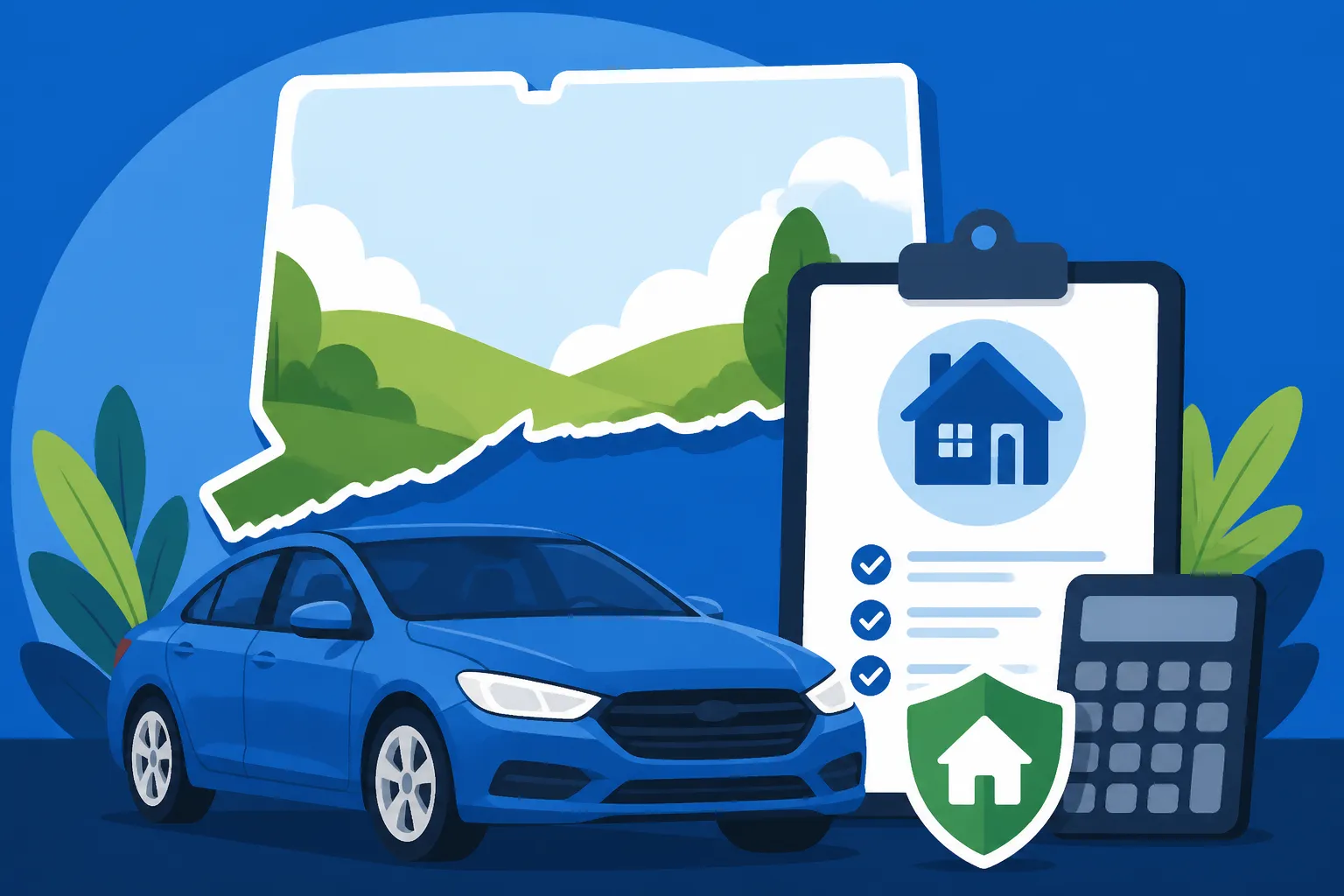
In Connecticut, the "car tax" is officially known as a motor vehicle personal property tax. Unlike the property tax you pay on your home, which is considered real property, your vehicle is classified as personal property. This means that if it's registered in a Connecticut town as of October 1st of any given year, that town has the right to assess and tax it. This tax isn't based on your income or how much you drive; it's simply based on the town's assessed value of your vehicle.
Think of it this way: your car is an asset that takes up space and uses local infrastructure – roads, emergency services, etc. – so the town levies a tax on that asset to help fund those services. It's a local tax, not a state tax, which means the rules, rates, and even the due dates can vary slightly from one municipality to another, adding another layer of complexity for residents who might live in one town but work in another. This distinct approach is part of what makes Personal Property Tax: Business Equipment & Vehicle 'Car Tax' such an important topic to understand.
The Local Funding Behind the "Car Tax"
So, why does Connecticut go this route? The simple answer is local funding. Property taxes, both real and personal, are the lifeblood of local municipal budgets. The funds collected from your car tax, alongside your real estate property taxes, are crucial for supporting a wide array of local services that benefit everyone in the community.
This includes things like maintaining local roads, funding public schools, providing police and fire protection, and supporting town libraries and parks. Without these revenue streams, towns would struggle to offer the quality of life their residents expect. While it can feel like just another bill, understanding that it contributes directly to the vibrancy and functionality of your specific community, whether that’s Hartford, Stamford, or a smaller town like Redding, can sometimes make it a little easier to digest. Each dollar helps ensure your children's schools are funded and your streets are plowed, reinforcing why the topic of What Is Property Tax Used For? is so vital.
How Your Connecticut Car Tax Bill is Determined
Knowing that you'll be paying a car tax is one thing, but figuring out how much you'll owe can often feel like a mystery. It's not just a flat fee; it's a calculation based on a few key factors, primarily your vehicle's value and your town's specific mill rate. This is where understanding the mechanics can potentially empower you to question your bill if something looks off.
Assessing Your Vehicle's Value
The first critical step in determining your car tax is the assessment of your vehicle's value. Each town's assessor's office is responsible for determining this value as of October 1st each year. They don't just pull a number out of thin air; they typically use recognized valuation guides, like the NADA (National Automobile Dealers Association) Used Car Guide. These guides provide average retail values for vehicles based on their make, model, year, and often, general condition.
However, it’s important to remember that the assessed value isn't necessarily the full market value. In Connecticut, your car is assessed at 70% of its clean retail value according to the valuation guide. So, if the NADA guide says your car is worth $10,000, your assessed value for tax purposes would be $7,000. This 70% assessment ratio is a state-mandated standard, but the interpretation and application of the NADA guides can sometimes lead to discrepancies. For more general insights into this process, you might find our guide on Property Tax Assessment & Reassessment Explained helpful, even though it focuses on real estate, the principles of valuation are similar.
Understanding Mill Rates and Your Local Impact
Once your vehicle's assessed value is determined, the next crucial piece of the puzzle is the mill rate. This is the local tax rate set by your town or city, and it varies significantly from one municipality to another. A mill rate is expressed in "mills," where one mill equals $1 of tax for every $1,000 of assessed value. So, a mill rate of 30 means you'd pay $30 in tax for every $1,000 of assessed value.
For example, if your car has an assessed value of $7,000 and your town has a mill rate of 30 mills (or 0.030), your tax bill would be $7,000 * 0.030 = $210. Different towns have different mill rates based on their budgetary needs and their overall property tax base. A city with extensive infrastructure and services, like New Haven, might have a higher mill rate than a smaller, more rural town. It’s imperative to know your specific town's mill rate, which you can usually find on their assessor's or tax collector's website. Our article What Is a Mill Rate? (Millage Explained) delves deeper into how these rates are established and applied.
Key Factors Affecting Your Annual Bill
Beyond the assessed value and mill rate, several other factors can subtly influence your final car tax bill. The most significant is simply the age and condition of your vehicle. As cars get older, their value generally depreciates, which should (in theory) lead to a lower assessed value and thus a lower tax bill over time. However, assessors use the average condition as per the NADA guide, so if your car is in particularly rough shape for its age, that might not be fully reflected.
Registration status and date also play a role. The October 1st assessment date is crucial; if you registered your car after October 1st but before the following August, you’ll likely receive a supplemental bill for the portion of the year you owned it. Conversely, if you sold your car or moved out of Connecticut and canceled your registration before the October 1st assessment, you wouldn't owe tax for that period. Your specific tax district within a town can also sometimes have minor variations if there are special taxing districts (e.g., fire districts) with additional levies, though this is less common for car tax than for real estate.
Navigating Payment, Deadlines, and Potential Relief
Once you've wrapped your head around how your car tax is calculated, the next step is managing the payment itself. Missing deadlines can lead to headaches and extra costs, so staying on top of the schedule and understanding your options is key.
Critical Due Dates and Payment Procedures
For most motor vehicles registered in Connecticut, the personal property tax bills are typically due in two installments: the first on July 1st and the second on January 1st of the following year. This covers the assessment period of October 1st of the prior year. So, for a car assessed on October 1, 2025, you'd likely pay half the bill on July 1, 2026, and the other half on January 1, 2027.
However, be aware of supplemental bills. If you purchased and registered a vehicle after October 1st but before August 1st of the next year, you’ll receive a supplemental bill. This bill is typically due in a single installment, often on January 1st, covering the prorated portion of the year you owned the car. It’s a common point of confusion, so always check your town’s tax collector’s website or your specific bill for exact dates. Most towns offer multiple payment methods: online portals (often with a small processing fee), mail, or in-person at the tax collector’s office. Make sure to factor these due dates into your financial planning, especially if you manage multiple properties or budgets. Our guide on Property Tax Due Dates by State can offer a broader view, but Connecticut's local variances are particularly important here.
What Happens If You Pay Late?
Ignoring your property tax bill, whether for your home or your car, is never a good idea. Connecticut towns are quite strict with delinquent taxes. If you miss a due date, penalties and interest will begin to accrue immediately. The standard interest rate is 1.5% per month, or a portion thereof, from the original due date. This means even if you're just a few days late, you could be charged a full month's interest.
But it gets more serious than just interest. Unpaid motor vehicle taxes will result in a DMV (Department of Motor Vehicles) hold being placed on your registration. This means you will not be able to renew any vehicle registrations in Connecticut, including the one for which you owe taxes, or any other vehicles you own, until all outstanding personal property taxes are paid in full, including all accrued interest and penalties. Imagine trying to renew your registration and finding out you can't because of an old, forgotten car tax bill! It's a major inconvenience and a strong incentive to pay on time. Our piece on What Happens If You Don't Pay Property Taxes? provides more general information on these severe consequences.
Opportunities to Challenge Your Assessment
Just like with real estate, you have the right to challenge your vehicle's assessed value if you believe it's incorrect. This is one of the most proactive steps you can take if you feel your car tax bill is too high. The first step is to contact your local assessor's office. They can explain how they arrived at their valuation and provide the specific NADA guide information they used.
You might argue that your vehicle's condition is below average for its make and model year, or that its mileage is significantly higher, leading to faster depreciation. Gather evidence like repair bills, dated photos showing damage, or comparable sales of similar vehicles in poor condition. If an informal discussion with the assessor doesn't resolve the issue, you can typically appeal to your town's Board of Assessment Appeals (BAA). This is a formal process where you present your case and evidence. Be sure to check your town's website for specific appeal deadlines, as these are often very strict and vary by municipality. Learning How to Lower Your Property Tax Assessment can provide a general framework for this process, applicable to vehicles as well.
Exploring Limited Exemptions and Credits
While Connecticut's car tax is fairly universal, there are a few specific, albeit limited, exemptions and credits that might apply to certain individuals or vehicle types. These are not widespread for the average car owner, but it’s always worth checking if you might qualify.
The most common exemptions relate to active-duty military personnel who are residents of Connecticut but are stationed elsewhere. There are also specific exemptions for certain disabled veterans, which can vary in amount based on the percentage of disability. Some towns might also have exemptions for specific types of farm vehicles or vehicles used primarily for manufacturing purposes. These exemptions are not automatic; you must apply for them through your local assessor's office, often with specific documentation and by a firm deadline. It's crucial to consult your town's assessor or tax collector directly to see if any of these rare exceptions might apply to your situation and what the application process entails.
Common Questions When Dealing with Connecticut Car Tax
Connecticut's car tax system can throw a few curveballs, especially when life events like selling a car or moving come into play. Let's tackle some common scenarios and clear up any lingering confusion.
Selling Your Car or Moving Out of State
This is where many people get tripped up. What happens if you sell your car mid-year, or perhaps you decide to move from a charming Connecticut town like Greenwich to, say, Charleston, South Carolina?
If you sell your car after the October 1st assessment date but before the July 1st or January 1st payment deadlines, you may be eligible for a pro-rated credit or refund for the portion of the year you no longer owned the vehicle. However, it's your responsibility to notify your town's assessor's office and provide proof of the sale (e.g., bill of sale, copy of the cancelled registration). You typically need to provide this documentation by a certain date (often by December 31st of the year the bill is due) to ensure your account is adjusted correctly. Without it, the town will assume you still own the vehicle and expect full payment.
Similarly, if you move out of Connecticut and register your vehicle in another state, you need to cancel your Connecticut registration and notify your previous Connecticut town's assessor. Providing proof of your new out-of-state registration and the cancellation of your CT registration will allow for a pro-rated adjustment to your tax bill for the period you were no longer a resident. This is a crucial step that many forget, leading to unexpected bills and DMV holds down the line.
Special Cases: Leased Vehicles and Commercial Use
The Connecticut car tax also applies to leased vehicles, but the payment responsibility typically falls on the leasing company. They will usually pay the tax directly to the municipality and then pass that cost on to you, the lessee, as part of your monthly lease payments. It's built into your contract, so you won't typically receive a separate bill directly from the town for a leased car. Always check your lease agreement to understand how these taxes are handled.
For commercial vehicles or vehicles used for business purposes, the personal property tax applies just as it would for a personal vehicle. However, businesses might have additional considerations for reporting their assets and could potentially face different valuation methods or reporting requirements, especially for fleets of vehicles or specialized equipment. Small business owners should consult their local assessor or a tax professional to ensure they are correctly reporting and paying taxes on their business-owned vehicles. This ties into the broader topic of Commercial Property Tax Explained, even if your vehicles are not strictly "commercial property" in the real estate sense, they are business assets.
| Key Aspect | Description | Important Details |
|---|---|---|
| Taxable Property | Motor vehicles, motorcycles, and certain trailers registered in CT. | Assessed at 70% of clean retail value (NADA Guide). |
| Assessment Date | October 1st each year. | Ownership on this date determines liability for the upcoming tax year. |
| Bill Due Dates | Typically July 1st (first half) and January 1st (second half) for primary bills. | Supplemental bills (for new registrations after Oct 1) often due in one installment, usually Jan 1. |
| Calculation Method | (Assessed Value / 1,000) * Mill Rate = Tax Bill. | Mill rates vary significantly by town/city. |
| Late Payment Penalties | 1.5% interest per month (or part thereof) from the original due date. | Unpaid taxes lead to DMV registration holds. |
| Appeals Process | Contact Assessor's Office first, then Board of Assessment Appeals (BAA). | Strict deadlines apply; requires documentation of condition, high mileage, or errors. |
| Proration/Refunds | Possible if you sell your car or move out of state after Oct 1st assessment. | Requires proof of sale/registration cancellation and notification to assessor. |
Disclaimer
Please note that this guide provides general information about personal property tax (car tax) in Connecticut. Property tax laws and regulations can change, and specific rules may vary significantly by municipality. Always consult your local town's assessor's office or tax collector's office for the most accurate and up-to-date information regarding your specific vehicle and tax situation. This content is for informational purposes only and not intended as financial or legal advice.