Homestead Exemption in Pennsylvania
It’s a tale as old as time, or at least as old as homeownership: that sinking feeling when your property tax bill lands in your mailbox. For many homeowners in Pennsylvania, navigating the ins and outs of property taxes can feel like deciphering an ancient scroll, especially when it comes to potential savings. This comprehensive guide is here to shed light on the Pennsylvania Homestead Exemption, a valuable program that can offer a much-needed reduction on your annual school property tax bill, helping you keep more money in your pocket.
Understanding the Pennsylvania Homestead Exemption
The Pennsylvania Homestead Exemption isn't always as straightforward as it sounds, especially when compared to similar programs in other states. Unlike some places where a homestead exemption might simply reduce your home's assessed value across the board, Pennsylvania's program is specifically designed to reduce the taxable value of your primary residence solely for school district property tax purposes. This means the benefit you receive directly offsets the portion of your property tax bill that goes to fund your local schools, and trust me, that can be a substantial chunk of change!
How the Program Works in the Keystone State
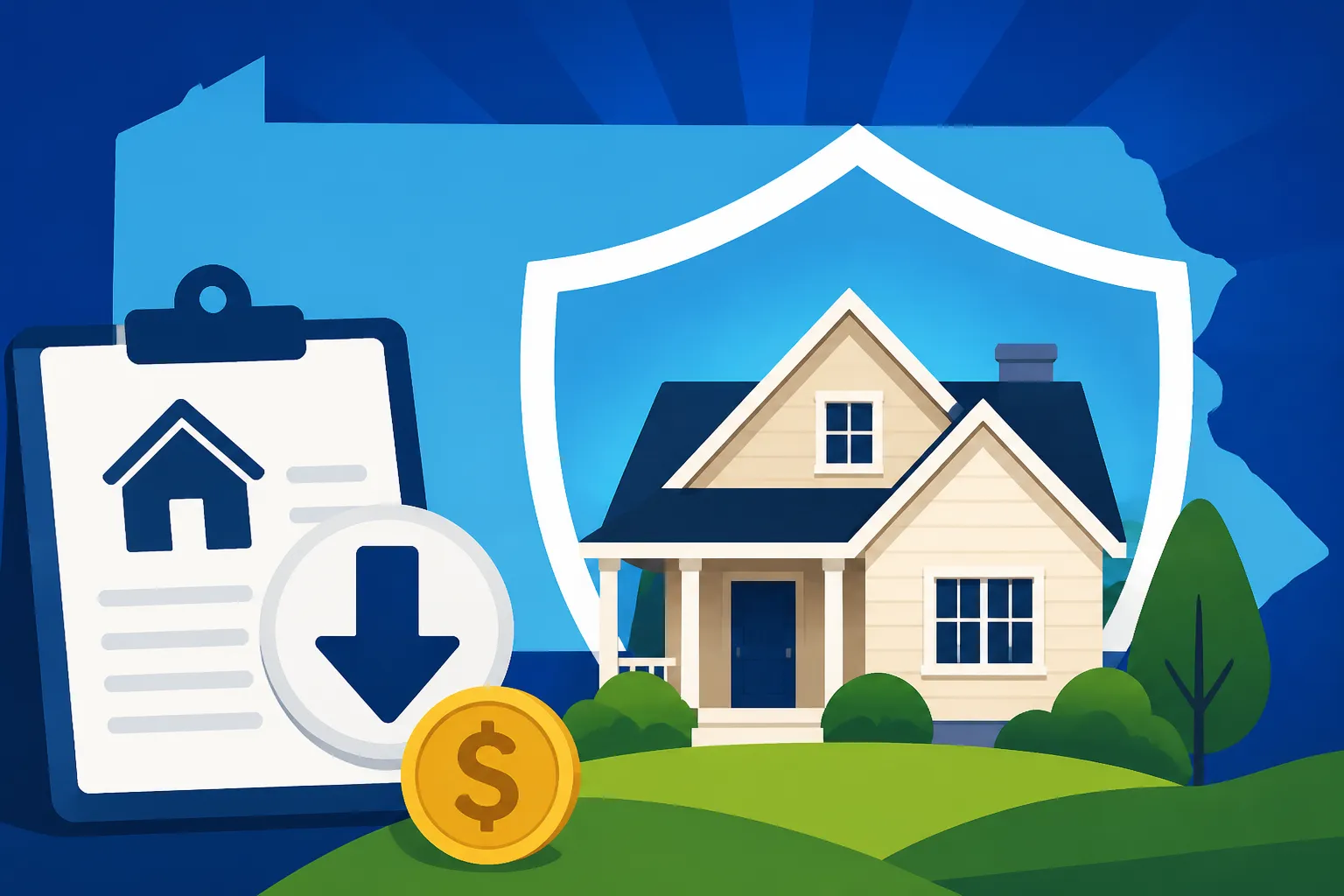
At its core, the Homestead Exemption in Pennsylvania aims to provide property tax relief to homeowners on their primary residence. This isn't just a feel-good initiative; it's a practical program funded by a portion of the state's gaming revenues (think slot machines at casinos). These funds are distributed back to school districts, which then use them to offset the school property tax burden for eligible homeowners. The reduction typically comes in the form of an exclusion that lowers the taxable portion of your home's assessed value by a set amount, which your school district determines annually based on the funds they receive and the number of qualified homestead properties.
For example, your county assessment office will typically apply an exclusion amount to your property's assessed value. Let's say your home is assessed at $150,000, and your school district has authorized a homestead exclusion of $18,000. Instead of paying school taxes on the full $150,000, you'd only pay taxes on $132,000 ($150,000 – $18,000). The actual tax savings you see on your bill will depend on your local school district's millage rate, which is the tax rate applied to your property's assessed value. It’s important to remember that this reduction only applies to the school portion of your bill, not county or municipal taxes, which can sometimes be a point of confusion for homeowners expecting a universal break.
Homestead vs. Farmstead Exemption
While we primarily focus on the Homestead Exemption for most residential properties, Pennsylvania also offers a similar "Farmstead Exemption." These two programs are closely related and share a similar application process. A property qualifies for a farmstead exemption if it is actively used for agricultural purposes. This means a working farm can benefit from the same school property tax reduction as a residential homeowner.
For many family farms in Pennsylvania, this distinction is crucial. Maintaining agricultural land can be costly, and any relief on property taxes can significantly impact a farm's viability. The process to determine eligibility for a farmstead exemption often involves ensuring that a certain acreage is dedicated to agricultural use and meets specific income requirements from farming activities. Both exemptions are administered through the county assessment offices, and usually, you only need to apply for one if your property qualifies. If you own a piece of land that serves as both your primary residence and a working farm, you would typically apply for the farmstead exemption as it encompasses the residential component within the agricultural designation.
Eligibility Requirements for PA Homeowners
So, you're looking at your property tax bill and dreaming of a lower number. Who can actually qualify for this benefit in Pennsylvania? The requirements are designed to ensure the program helps those who truly reside in and own their homes. It's not a free-for-all, but if you meet the criteria, it's absolutely worth applying!
Primary Residence and Owner-Occupancy Rules
The most critical factor for eligibility is that the property must be your primary residence. This isn't just a casual rule; it's the bedrock of the program. "Primary residence" means the place where you habitually live, where your mail is delivered, where you return after work or travel, and generally, where you file your income taxes. You, as the owner, must reside in the dwelling.
This rule means you cannot claim a homestead exemption on a vacation home, a rental property where you don't live, or any secondary residence. For instance, if you own a home in suburban Philadelphia and a cabin in the Poconos, you can only apply for the exemption on the Philadelphia property if that's where you genuinely live most of the time. The county assessment office might verify this through various records, like your driver's license address or voter registration. They want to make sure the relief goes to bonafide Pennsylvanians living in their homes. It’s a pretty standard approach you'll see with many property tax relief programs across the country, aiming to support local residents.
No Income Restrictions or Age Limits
One of the great aspects of the Pennsylvania Homestead Exemption is its broad accessibility. Unlike some property tax relief programs, such as senior freezes or circuit breaker programs in other states that often have strict income limits or age requirements, Pennsylvania's homestead program generally does not. This is fantastic news because it means a wide range of homeowners, regardless of their income level or age, can potentially benefit.
Whether you're a young couple just starting out, a family with school-aged children, or retirees enjoying your golden years, if the property is your primary residence, you're generally eligible. This contrasts sharply with programs like the Senior Property Tax Exemption in Texas or the Illinois Senior Citizens Assessment Freeze which are specifically tailored for older adults or those meeting certain financial criteria. For Pennsylvania homeowners, this means one less hurdle to jump, making the application process simpler and more inclusive. This universality ensures that a broad base of taxpayers contributes to and benefits from the local school system, fostering community support for education.
Applying for Your Homestead Exemption in Pennsylvania
The thought of dealing with government forms can make anyone sigh, but applying for the Pennsylvania Homestead Exemption is generally a straightforward process, and the potential savings are absolutely worth the effort. Once you're approved, you typically won't need to reapply unless there's a change in your ownership or residency status.
The Application Process and Key Deadlines
To apply, you'll need to contact your county's assessment office or board of assessment appeals. They are the local authority responsible for property valuations and administering this program. Many counties, like Allegheny County or Bucks County, have the application forms readily available on their websites. The form is usually called a "Homestead/Farmstead Application" or something similar.
The application itself is relatively simple, requiring basic information about your property and a certification that it is your primary residence. You'll typically need to provide your property identification number (often found on your property tax bill) and your mailing address. The most critical part is submitting it by the deadline. While the deadline can vary slightly by county, many Pennsylvania counties use December 15th as the cutoff date to be considered for the following tax year. For example, if you want the exemption for your 2026 property taxes, you'd likely need to apply by December 15, 2025. Missing the deadline means you'll have to wait another year to receive the benefit, so it's best to mark your calendar! You can often find a comprehensive guide on How to Apply for Property Tax Exemptions on our site.
Required Documentation
The beauty of the Pennsylvania Homestead Exemption application is its simplicity regarding documentation. For most homeowners, you won't need to gather an extensive file of paperwork. The application form itself is usually sufficient. You'll sign it, affirming that the property is your primary residence and that you meet the eligibility criteria.
However, be prepared that the county assessment office might, in some cases, request additional information to verify your primary residency. This could include things like your driver's license, voter registration card, or state income tax returns (showing your Pennsylvania address). These requests are usually to resolve any ambiguities or if the property ownership records are complex. For a standard, owner-occupied home, the process is typically smooth. Just ensure all information on the form is accurate and complete to avoid any delays. Keep a copy of your submitted application for your records, just in case you ever need to refer back to it.
The Financial Impact: How Much Can You Save?
Let's talk about the real reason most people look into these exemptions: saving money! The Pennsylvania Homestead Exemption can lead to meaningful reductions in your annual property tax burden, directly impacting your household budget. The exact savings, however, aren't uniform across the state.
Calculating Your Potential Savings
The amount of your property tax savings through the Homestead Exemption depends on two main factors:
- The exclusion amount set by your local school district: This is the dollar amount that is excluded from your property's assessed value when calculating your school taxes. As mentioned earlier, this amount is funded by the state's gambling revenue and can vary year to year and by school district. It's often capped at $40,000 off the assessed value, though the actual reduction benefit can be lower depending on the funds available.
- Your school district's millage rate: A millage rate represents the amount of tax per $1,000 of assessed value. To figure out your savings, you'd multiply the school district's exclusion amount by their millage rate.
Let's use a hypothetical example. Suppose your home is assessed at $200,000. Your school district has approved a homestead exclusion of $18,000, and their millage rate is 25 mills (which translates to $25 per $1,000 of assessed value).
- Without the exemption: You pay school tax on $200,000.
- With the exemption: You pay school tax on $200,000 – $18,000 = $182,000.
- Your savings would be: ($18,000 / $1,000) * $25 = $450.
That's $450 off your school tax bill each year! While individual savings can vary, every little bit helps, especially with the rising costs of living. Understanding How Are Property Taxes Calculated? and What Is a Mill Rate? (Millage Explained) can give you an even clearer picture.
How the Exemption Appears on Your Tax Bill
When you receive your annual property tax bill, you should see a clear indication of your Homestead Exemption. Typically, there will be a line item that specifically notes the "Homestead Exclusion" or "Homestead/Farmstead Tax Reduction." This line will show the amount by which your taxable assessed value has been reduced, or in some cases, the direct dollar amount of the tax savings.
It's crucial to review your property tax bill carefully each year to ensure the exemption has been properly applied. If you’ve successfully applied and don't see the reduction, or if the amount seems incorrect, contact your county assessment office immediately. Sometimes, administrative errors can occur, and it's always best to address them promptly. Knowing How to Read Your Property Tax Bill is a valuable skill for any homeowner. The reduction might not make your school taxes disappear, but it certainly softens the blow, often making your property taxes more manageable throughout the year.
Common Questions and Misconceptions
When it comes to property taxes, there are always questions bubbling up. The Pennsylvania Homestead Exemption, while beneficial, isn't immune to these queries and common misunderstandings. Let’s clear up some of the usual points of confusion.
What if My Property Value Increases?
A common concern among homeowners is what happens to their homestead exemption if their property value goes up, perhaps after a Property Tax Reassessment After Buying a Home or just due to market appreciation. The good news is that the homestead exclusion amount itself is typically a fixed dollar amount off your assessed value as determined by your school district, not a percentage of your home's value. So, if your home's assessed value increases, your homestead exclusion amount generally stays the same.
For instance, if your exclusion is $18,000, and your home's assessed value jumps from $150,000 to $170,000, you'll still get an $18,000 reduction. The effect of that $18,000 exclusion might feel less impactful percentage-wise on a higher value home, but the absolute dollar savings remains. The main takeaway is that an increase in your home's market value or assessed value won't disqualify you from the exemption or reduce the exclusion amount itself, which is definitely a relief for many homeowners seeing their home equity grow. If you're wondering Why Do Property Taxes Increase?, understanding how assessments factor in is key.
Does Refinancing or Transferring Ownership Affect My Exemption?
This is where vigilance is key. Generally, refinancing your mortgage does not affect your Homestead Exemption. The exemption is tied to the property and its owner-occupancy status, not the financing details. So, if you refinance your home to get a better interest rate, you don't need to reapply for the exemption.
However, if there's a change in ownership or residency, that's a different story. If you sell your home, the new owner will need to apply for their own homestead exemption. If you transfer the property to a family member or into a trust, you should notify your county assessment office. In some cases, a new application might be required, or the exemption might be temporarily removed until the new ownership is verified and an application is submitted. For example, if you move out of your primary residence and convert it into a rental property, you would no longer qualify for the homestead exemption on that property. Always err on the side of caution and contact your county's assessment office if you have any doubts about changes in ownership or how it might impact your exemption status. They can provide specific guidance for your situation.
Where to Go for More Information and Assistance
Navigating local government programs can sometimes feel like a maze, but there are resources available to help. Your first and best point of contact for anything related to the Pennsylvania Homestead Exemption is your county's assessment office or board of assessment appeals. They are the experts on local property tax matters and can provide the most accurate and up-to-date information for your specific municipality and school district. You can usually find their contact information on your county's official website.
Additionally, the Pennsylvania Department of Community and Economic Development (DCED) often has resources and information related to property tax relief programs on its website. They can provide a broader overview and context for statewide initiatives. Don't hesitate to reach out if you have questions about eligibility, application deadlines, or how the exemption amount is determined in your area. They are there to assist you and ensure you receive the benefits you're entitled to. For those interested in deeper dives into how the state government influences local property taxes, understanding Who Sets Property Tax Rates? (County, School, City Levies) can be very insightful.
Maximizing Your Property Tax Savings Beyond the Homestead Exemption
While the Homestead Exemption is a fantastic starting point for property tax relief in Pennsylvania, it's not the only arrow in your quiver. Savvy homeowners know that every little bit counts, and there are other strategies and programs that might offer additional savings.
Exploring Other Property Tax Relief Programs
Pennsylvania offers various property tax relief programs beyond the basic Homestead Exemption, though many of these often come with specific eligibility criteria. For instance, some municipalities or school districts might offer programs for seniors, disabled individuals, or low-income households. These can include:
- Senior Property Tax Rebate Program: This state-funded program offers rebates on property taxes or rent paid by eligible older Pennsylvanians, widows/widowers, and people with disabilities. It often has income limits and specific age requirements (e.g., age 65 for homeowners, 50 for widows/widowers, 18 for people with disabilities).
- Disabled Veterans' Real Estate Tax Exemption: This invaluable program provides full exemption from real estate taxes for honorably discharged veterans who are 100% disabled and meet specific residency and financial need criteria.
- Local Programs: Some individual townships, boroughs, or school districts might have their own local initiatives, so it's always worth checking with your local government offices to see what else might be available in your area.
It truly pays to investigate every avenue. You could be leaving money on the table if you don't explore these options, especially if your circumstances align with their criteria. Look for details on our site about Senior & Over-65 Property Tax Exemptions and Freezes or Veteran & Disabled Veteran Property Tax Exemptions for more comprehensive information.
The Importance of Monitoring Your Assessment
Even with a homestead exemption, your property tax bill can still feel burdensome if your home's assessed value is too high. Property tax assessments are not always perfect, and errors can occur. Sometimes, your assessed value might not accurately reflect your property's true market value, or it might be out of line with comparable properties in your neighborhood.
Regularly monitoring your property's assessed value and understanding how it's determined is crucial. Every few years, or more frequently in some areas, counties conduct reassessments, which can significantly impact your tax bill. If you believe your assessment is unfair or inaccurate, you have the right to appeal it. The process often involves gathering evidence, such as recent comparable sales in your area, and presenting your case to your county's board of assessment appeals. This can be a proactive way to lower your overall tax burden, regardless of exemptions. You can find more detailed guidance on How to Appeal Property Taxes: Complete Guide or How to Lower Your Property Tax Assessment to learn how to challenge an unfair valuation. Being an informed homeowner is your best defense against unexpectedly high tax bills.
Conclusion
Navigating property taxes in Pennsylvania doesn't have to be a bewildering experience. The Homestead Exemption offers a tangible reduction on your school property tax bill, a benefit that can add up to significant savings over the years. By understanding who qualifies, how to apply, and what to expect, you can confidently claim this well-deserved relief. Remember, staying informed and proactive about your property's assessment and exploring all available relief programs are key steps to being a financially savvy homeowner in the Keystone State.
Disclaimer
This article is for general informational purposes only and does not constitute professional advice. Laws and regulations vary by location and change over time. Consult a qualified professional for guidance on your specific situation.