How Are Vacant Lots Taxed?
Owning a piece of vacant land can sometimes feel like a financial enigma, especially when that dreaded property tax bill arrives. Unlike a home or a bustling business, undeveloped parcels don't generate immediate income, making the recurring tax expense a point of frustration and confusion for many landowners. This comprehensive guide aims to demystify how vacant lots are taxed, breaking down the complex factors that influence your bill and empowering you with the knowledge to understand and potentially manage these costs more effectively.
Understanding the Fundamentals of Vacant Land Property Taxation
The core principle behind property taxation remains largely the same whether you own a skyscraper, a suburban home, or a patch of undeveloped dirt: local governments levy taxes based on the assessed value of the property. However, the methods and factors that determine that assessed value for vacant land can differ significantly from those used for improved properties. It's not just a flat rate; it's a nuanced calculation tied to the land's potential, its location, and even its current state.
The Basic Assessment Process for Undeveloped Parcels
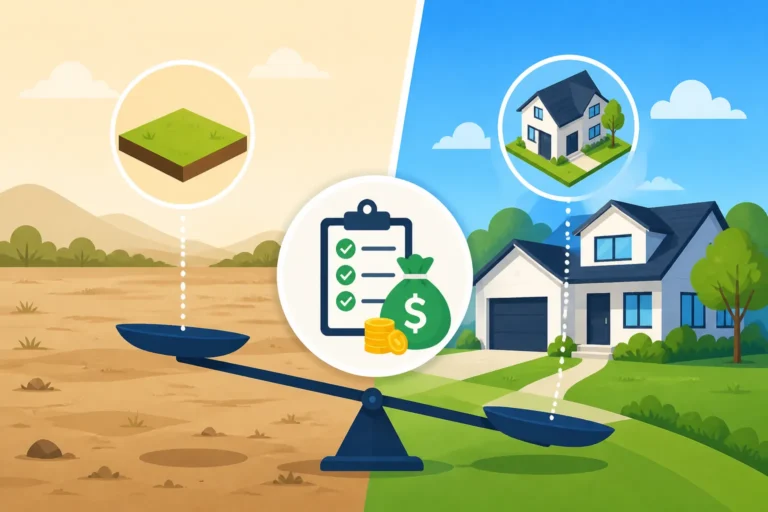
When it comes to assessing vacant land, local tax authorities, often called assessors or appraisal districts, are looking at the highest and best use of that land, even if you have no immediate plans to develop it. This is a crucial concept. They're not just looking at what's there now (which is often nothing more than grass and trees), but what could be built or done on that parcel according to zoning laws and market conditions. This forward-looking assessment can sometimes lead to surprisingly high valuations for land that feels, to the owner, quite unproductive.
The assessment process typically involves comparing your vacant lot to similar undeveloped parcels that have recently sold in your area. Assessors will consider attributes like size, shape, frontage, topography, and access to utilities. They also look at local market trends; if demand for development is high, the assessed value of vacant land will reflect that. Understanding this initial step is critical, as it forms the basis of your property tax liability, much like understanding How Are Property Taxes Calculated? for any property type.
Distinguishing Vacant Land from Improved Property Assessments
The primary difference in assessment between vacant land and improved property (like a house with a garage) lies in the presence of structures. For a home, the assessment typically includes both the land value and the value of the improvements (the house itself). For vacant land, the value is almost entirely derived from the land. This means that while a home's value might be influenced by factors like its number of bedrooms, recent renovations, or roof condition, vacant land is assessed purely on its inherent qualities and development potential.
Another key distinction is how depreciation is factored in. Buildings and other improvements depreciate over time, which can influence their assessed value. Land, however, generally does not depreciate; in fact, it often appreciates, especially in desirable locations. This inherent appreciation potential means that the tax burden on vacant land can steadily increase, sometimes without the owner making any changes to the property itself. It's a fundamental aspect of Property Tax Assessment & Reassessment Explained.
Factors Influencing Vacant Lot Tax Assessments
Numerous variables contribute to how your vacant lot is valued and, consequently, taxed. These aren't just arbitrary numbers pulled from thin air; they're based on established criteria that reflect the land's potential utility and market demand. Understanding these factors can help you anticipate changes in your tax bill and identify potential grounds for appeal.
Location, Zoning, and Permitted Use
Perhaps the most significant factors influencing a vacant lot's tax assessment are its location and the zoning regulations that govern it. A vacant lot in a rapidly developing urban core with commercial zoning will almost certainly have a higher assessed value and, thus, a higher tax bill than a similar-sized lot in a remote rural area zoned exclusively for agricultural use. Zoning dictates what can be built on the land – residential homes, retail spaces, industrial facilities, or perhaps nothing at all if it's designated as conservation land. This directly impacts its market value and, subsequently, its assessed value for tax purposes.
Even within a single municipality, differences in specific zoning classifications can lead to wildly different tax liabilities. For example, a lot zoned for multi-family residential development (like an apartment complex) will typically be assessed higher than an adjacent lot zoned for a single-family home, even if both are currently vacant. Local zoning ordinances are dynamic and can change over time, and a rezoning could dramatically impact your tax liability, sometimes for the better, sometimes for the worse. It's always wise to stay informed about local planning and zoning meetings.
Size, Shape, Topography, and Access
Beyond zoning, the physical characteristics of your vacant lot play a critical role in its valuation. Larger lots generally command higher overall values, though the value per square foot might decrease beyond a certain size, especially in residential areas where oversized lots can be less desirable or harder to develop efficiently. The shape of the lot also matters: a rectangular or square lot is often easier and less costly to develop than an irregularly shaped or unusually narrow parcel.
Topography refers to the land's natural features – is it flat, hilly, prone to flooding, or does it have significant slopes? Buildable land with minimal environmental constraints is usually valued higher. Finally, access is paramount. A lot with direct road frontage and easy access to existing utilities (water, sewer, electricity) will be more valuable than a landlocked parcel or one that requires extensive, costly infrastructure extensions. When considering Assessed Value vs Market Value vs Taxable Value, these physical attributes are key drivers of market value.
Utility Availability and Infrastructure Proximity
The presence and proximity of essential utilities are massive determinants of vacant lot value. Land that is "shovel-ready" with water, sewer, and power lines already run to the property line (or easily accessible nearby) is far more attractive to developers and, therefore, carries a higher assessed value. The cost of bringing utilities to an undeveloped site can be substantial, sometimes tens of thousands of dollars or more, and this cost is directly factored into the market's perception of the land's value.
Conversely, a vacant lot that is far from existing utility lines, requiring significant investment in extensions, will typically be assessed lower. The same applies to other infrastructure, such as paved roads, storm drains, and even public transportation access. In more rural settings, the availability of well water or septic system suitability can also influence value. Assessors consider these practical development costs when determining the land's worth.
Common Valuation Methods for Undeveloped Land
Assessors employ specific methodologies to determine the value of vacant land, ensuring a standardized approach. While the exact details might vary by jurisdiction, the underlying principles are quite similar. These methods aim to arrive at a fair market value, which is then used to calculate your property tax bill.
Sales Comparison Approach for Vacant Lots
The most common and often preferred method for valuing vacant land is the sales comparison approach, also known as the market data approach. This method involves finding recent sales of comparable vacant lots in the same market area. Assessors look for properties that are similar in terms of size, zoning, location, topography, and utility access. They then make adjustments for any differences between the sold comparables and your subject property.
For instance, if a comparable lot sold recently but was slightly smaller or had superior road frontage, the assessor would adjust its sale price downwards to reflect what your property, with its less favorable attributes, might sell for. This method relies heavily on robust market data and recent transactions to provide an accurate picture of value. For landowners, understanding these comparable sales can be invaluable when trying to understand How to Find My Property Tax Rate and assessing if their property is being fairly valued.
Development Cost Method and Land Residual Technique
While less common for individual residential vacant lots, the development cost method and land residual technique are often used for larger parcels intended for complex development projects. The development cost method essentially estimates the value of the land by subtracting all estimated development costs (construction, permits, marketing, profit, etc.) from the projected gross sales value of the completed project. This method is particularly relevant for large-scale subdivisions or commercial developments where the ultimate value is tied to the completed improvements.
The land residual technique is similar, focusing on what's left over for the land itself after accounting for all other development expenses and returns. It involves projecting the income or sales price of a developed property, then deducting the costs of constructing improvements, operating expenses, and a reasonable profit margin for the developer. The remaining "residual" value is attributed to the land. These methods are more complex and require significant market analysis and construction cost data, often employed by specialized appraisal firms rather than for routine assessments.
Income Approach for Income-Generating Vacant Land
Though less frequent for purely vacant residential lots, the income approach can be applicable if the vacant land itself is generating income. This might be the case for land leased for agricultural purposes, billboards, cell towers, or even temporary parking. In such scenarios, the assessor would capitalize the net operating income generated by the land to estimate its value. This involves converting the income stream into a present value, essentially determining how much an investor would pay for the land based on its earnings potential.
The capitalization rate used in this approach is derived from market data of similar income-generating properties. For example, if you have a vacant lot in rural Georgia that you lease to a farmer for cattle grazing, the income generated from that lease could be a factor in its assessed value. Even if your vacant lot isn't directly producing income, if it has a clear potential to do so (e.g., a commercial lot in a high-traffic area suitable for a future retail tenant), an assessor might consider its income-generating potential when using other valuation methods. Tracking any potential income and expenses is where a tool like Stessa can be incredibly helpful, even for vacant land, to get a clear financial picture.
Strategies to Potentially Lower Your Vacant Lot Property Taxes
The feeling of being overtaxed on undeveloped land is a common grievance. Fortunately, there are proactive steps you can take to potentially reduce your property tax burden. These strategies range from direct challenges to your assessment to exploring specialized land use programs.
Appealing Your Property Tax Assessment
If you believe your vacant lot's assessed value is too high, one of the most direct actions you can take is to appeal the assessment. This process usually begins with an informal review with the assessor's office, followed by a formal hearing if an agreement isn't reached. The key to a successful appeal is providing compelling evidence that your property's assessed value exceeds its fair market value. This is where those comparable sales come into play again.
You'll want to gather data on recent sales of vacant lots in your immediate area that are truly comparable but sold for less than your property's assessed value. You can also highlight any negative physical attributes of your land that the assessor might have overlooked – significant slopes, wetlands, lack of utility access, or an unusual shape that makes development difficult or costly. Documenting these issues with photos, surveys, and professional estimates of development costs can strengthen your case. Remember, deadlines for appeals are strict, so understanding Property Tax Appeal Deadlines by State is crucial. A thorough guide like How to Appeal Property Taxes: Complete Guide can provide detailed steps.
Agricultural, Conservation, or Greenbelt Exemptions
Many states and local jurisdictions offer special valuation programs for vacant land used for specific purposes, such as agriculture, timber production, or conservation. These programs are often referred to as "agricultural exemptions," "greenbelt laws," or "current use valuation." The core idea is to tax land based on its current use rather than its highest and best use, which can significantly reduce the assessed value for tax purposes. For instance, if your vacant lot in Texas is actively used for farming or ranching, you might qualify for a significant reduction under the Texas Ag Exemption, which values the land based on its agricultural productivity rather than its potential for residential development.
To qualify, there are usually specific requirements regarding minimum acreage, the intensity of the agricultural activity, or a commitment to maintaining the land in its natural state for a certain period. The process typically involves applying to your local appraisal district and providing documentation of the land's use. These exemptions can be a lifesaver for landowners with large undeveloped parcels who are genuinely using the land productively or preserving it. If you're considering this, researching Agricultural & Farm Property Tax Exemptions by state is a great starting point.
Leveraging Professional Property Tax Consultants
Navigating the intricacies of property tax assessments and appeals can be daunting, especially for vacant land where valuations might be more subjective. This is where engaging a professional property tax consultant or appraisal expert can be highly beneficial. These professionals specialize in property valuation and tax law, often having deep local market knowledge and experience dealing with specific appraisal districts. They can perform an independent appraisal of your vacant lot, identify discrepancies in the assessor's valuation, and help compile the necessary evidence for an appeal.
A consultant can represent you during informal reviews and formal hearings, presenting a well-researched and persuasive case on your behalf. While there's a fee involved, the potential savings on your property tax bill can often outweigh the cost, especially for larger or more complex parcels. When asking When Should You Appeal Your Property Taxes?, a consultant can help you make an informed decision and identify if you have strong Evidence & Comps for a Property Tax Appeal. For managing the associated costs and tracking the return on investment from such services, a platform like Stessa could be useful in recording expenses and monitoring the impact on your property's financial performance.
The Impact of Future Development on Vacant Land Taxes
Owning vacant land is often a long-term play, with many envisioning future development or sale. Understanding how these future possibilities can influence your current and future tax burden is essential for sound financial planning.
Anticipating Reassessments Due to Development Trends
Even without active construction on your specific parcel, broad development trends in your area can trigger reassessments and higher property taxes on your vacant lot. If a major new employer moves into your county, or if a large residential development breaks ground nearby, the market value of all surrounding vacant land tends to increase. Assessors are constantly monitoring these trends and will adjust values accordingly during their regular reassessment cycles.
This means that a seemingly dormant piece of land can suddenly see a significant jump in its assessed value simply because the market around it has become hotter. Staying aware of local economic development news and proposed zoning changes is crucial. A vacant lot in a growing area of Phoenix, Arizona, for example, might see its value climb far more rapidly than a similar parcel in a stagnant market. This proactive awareness allows you to prepare for potential tax increases or to appeal assessments that might be based on over-optimistic market projections.
Tax Implications of Rezoning and Subdivision
If you decide to pursue rezoning your vacant lot or subdividing it into smaller parcels, be prepared for an immediate and often substantial impact on your property taxes. Rezoning a large agricultural parcel to residential, for example, typically indicates a significant increase in its "highest and best use" potential, leading to a much higher assessed value. The same applies to subdivision: creating multiple buildable lots out of one larger parcel instantly multiplies its potential value, and each new parcel will be assessed individually.
Local governments often use these actions as triggers for immediate reassessments outside of the regular cycle. Before embarking on any rezoning or subdivision efforts, it's vital to consult with local planning departments and the assessor's office to understand the precise tax implications. The increase in tax liability could be considerable and needs to be factored into your development budget. Managing the financial details of such projects, from initial expenses to potential future income, is where robust financial tracking becomes indispensable.
Managing Your Vacant Land's Financials
Beyond the tax bill itself, there's a whole financial picture to consider when owning vacant land. Effective management can help you understand the true cost of ownership, identify opportunities, and prepare for future plans.
Tracking Expenses and Potential Income
Just because land is vacant doesn't mean it's free of expenses or incapable of generating income. Beyond property taxes, you might have costs for maintaining the land (mowing, brush clearing, fence repairs), liability insurance, or even interest payments if you financed the purchase. Keeping meticulous records of all these expenses is not just good practice, it's essential for understanding your net cost of ownership and for tax purposes, as some of these costs might be deductible if the land is held for investment or business.
On the income side, even vacant land can sometimes generate revenue. This could be from leasing a portion for hunting, a cell tower, advertising billboards, temporary storage, or even agricultural use, as mentioned earlier. Consolidating all this financial information in one place gives you a clear picture of your property's performance. For real estate investors, even those holding vacant land for future development, platforms like Stessa offer a comprehensive way to track property expenses, income, and overall portfolio performance, making it easier to see your property's financial health at a glance.
Future Planning and Long-Term Value Creation
Owning vacant land is inherently a forward-looking investment. Your property tax payments are part of that long-term strategy. Understanding how your taxes are calculated and how they might change helps you plan for the future. Are you holding the land for eventual sale to a developer? Do you plan to build your dream home there someday? Or are you considering a different kind of investment, perhaps one that qualifies for a tax deferral program?
Thinking about your long-term goals for the property allows you to make informed decisions today. For example, if you anticipate development in 5-10 years, you might strategically manage the land to qualify for current-use valuation programs in the interim, reducing holding costs. Regularly checking your county's proposed land use maps and zoning changes can provide clues about where future growth is expected, potentially increasing your land's value but also signaling future tax increases. Keeping an eye on Property Tax Trends 2026 can help inform these long-term strategies.
Property Tax Table: Vacant Land Classification Examples
To illustrate how different classifications can affect vacant land taxation, here's a simplified table. Keep in mind that specific rates, qualifications, and assessment ratios will vary significantly by state and local jurisdiction.
| Property Classification | Typical Assessment Basis | Common Tax Impact | Example States (May Vary by County) |
|---|---|---|---|
| Residential Vacant Lot | Highest & Best Use (Future Home) | Standard rate, often higher if services are present. | California, Florida, New York |
| Commercial Vacant Lot | Highest & Best Use (Future Business) | Generally higher rates than residential, reflecting commercial potential. | Texas, Illinois, New Jersey |
| Agricultural/Farm Land | Current Use (Productivity Value) | Significantly reduced assessment, based on income potential from farming. | Texas, Georgia, Oregon |
| Forest/Timber Land | Current Use (Timber Value) | Reduced assessment, often under specific forestry programs. | Oregon, Maine, Washington |
| Conservation/Open Space | Current Use (Ecological/Recreational) | Reduced assessment, often requiring a conservation easement. | Maryland, Virginia, Massachusetts |
This table highlights the importance of how your land is classified by the assessor's office, as it directly influences the valuation methodology and ultimately, your tax bill.
Concluding Thoughts on Vacant Land Taxation
Owning vacant land comes with its own unique set of property tax considerations. It's not just a passive asset; it requires active management, especially when it comes to understanding and challenging its valuation for tax purposes. By delving into the factors that influence assessments, knowing the common valuation methods, and exploring potential avenues for tax relief, you can become a more informed and empowered landowner.
Don't let the complexities of property taxes on undeveloped land catch you off guard. Stay informed about local market trends, zoning changes, and always be prepared to scrutinize your assessment notice. With the right knowledge and tools, you can manage your vacant lot finances strategically and ensure you're not paying more than your fair share.
Disclaimer
The information provided in this guide is for general informational purposes only and does not constitute financial, legal, or tax advice. Property tax laws and regulations are complex and vary significantly by state, county, and local jurisdiction. You should consult with a qualified property tax professional, real estate attorney, or financial advisor for advice tailored to your specific situation.