Property Tax Trends 2026
Opening your mailbox in 2026 shouldn't feel like a high-stakes gamble, yet for many homeowners, the annual property tax bill has become a source of genuine anxiety. This guide dives deep into the shifting landscape of property tax trends 2026, exploring why assessments are still climbing despite a stabilizing housing market and identifying the specific legislative changes that could either save you thousands or leave your household budget in a pinch.
The Macroeconomic Drivers of 2026 Property Taxes
The primary reason many homeowners are seeing a disconnect between their home's current "Zestimate" and their tax bill is the inherent lag in the assessment cycle. Most jurisdictions do not value property in real-time. Instead, they look backward. In 2026, many counties are finally catching up to the massive price surges that occurred in the mid-2020s. If you are wondering How Often Is Property Reassessed?, the answer varies by state, but the result is the same: the "sticker shock" you feel today is often the delayed reaction to market gains from two years ago.
Furthermore, the inflationary pressures that hit the general economy have finally trickled down into municipal budgets. Everything the local government pays for—from the diesel for school buses to the asphalt for road repairs—has increased in price. To cover these rising operational costs, local officials are often forced to adjust the levies. When you look at Who Sets Property Tax Rates? (County, School, City Levies), it is important to remember that these entities are reacting to their own increased costs of living, just as you are.
The result is a phenomenon where even if the market value of your home has plateaued or slightly dipped, your bill continues to climb. This is because the "taxable value" is often still catching up to the "market value." For homeowners on a fixed income, this creates a precarious financial situation where the home they have owned for decades suddenly becomes a liability they can barely afford.
Post-Inflationary Lag and Assessment Cycles
The year 2026 is marking a pivotal moment where the "catch-up" period of local assessments is peaking. In states that only reassess every three to four years, the 2026 bill is the first time the record-high sales prices of 2024 are being factored into the math. This creates a scenario where a homeowner might see a 20% or 30% jump in their assessed value in a single year. It is a frustrating reality that feels like being penalized for a market boom that you haven't actually cashed out on.
Consider a family in a suburb of Phoenix or Austin. They might have seen their home value skyrocket during the migration booms, but they didn't sell. Now, the local assessor is finally adjusting their records to match those nearby sales. Even if the market has cooled off and buyers are less aggressive, the tax office is still looking at the high-water marks of previous years. This is why understanding Assessed Value vs Market Value vs Taxable Value is more critical now than ever before; your tax bill is based on a snapshot of the past, not necessarily the reality of today.
To navigate this, homeowners need to be proactive. Waiting until the bill arrives is often too late to dispute the valuation. You have to look at the preliminary assessment notices that usually arrive months earlier. In 2026, the trend is toward shorter appeal windows, meaning if you don't act within 30 days of that notice, you are stuck with the higher rate for the next cycle. It is a system that rewards the vigilant and penalizes the distracted.
Local Government Budget Shortfalls and the Service Squeeze
Municipalities are facing a "perfect storm". While property tax revenue is high due to increased valuations, the cost of providing services has outpaced that growth in many regions. Police departments, fire services, and public schools are all demanding larger budgets to keep up with wage competition and equipment costs. This leads to an increase in the actual tax rate (the millage), not just the value of the property.
In many jurisdictions, we are seeing the "Service Squeeze." Local leaders are caught between a rock and a hard place: they can either cut popular community programs or raise taxes on a population that is already feeling the pinch of high interest rates and insurance premiums. Most often, they choose the latter, but they attempt to mask it behind the rising property values. They might keep the tax rate the same, but because your home's value went up, they collect more money—a "stealth" tax increase that homeowners are increasingly calling out in town hall meetings.
For those living in the Highest Property Tax Counties in the US, this squeeze is particularly brutal. In these areas, the baseline for services is already high, and the expectation for top-tier schools and infrastructure means there is very little "fat" to cut from the budget. As we move through 2026, expect to see more localized "special assessments" for things like drainage projects or school technology upgrades, which appear as separate line items on your bill, further driving up the total amount due.
Regional Hotspots and Shifting Tax Landscapes
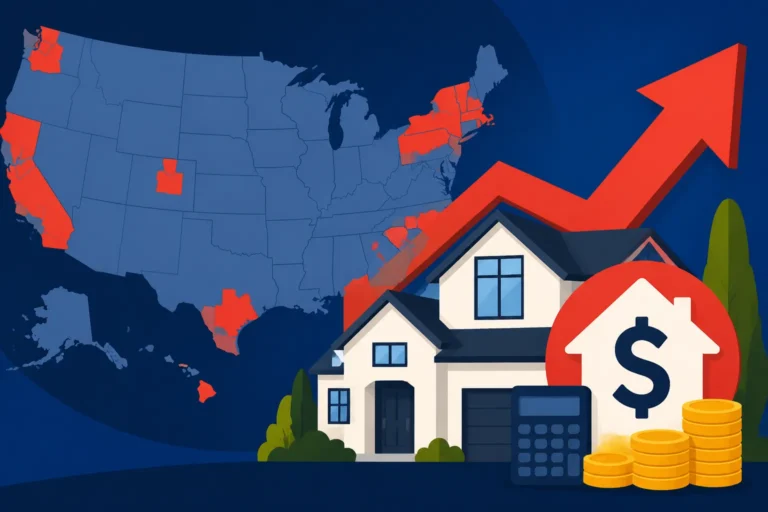
The geography of property taxes is shifting rapidly. For decades, the narrative was that people moved to the Sun Belt to escape the high taxes of the Northeast and the Midwest. While that remains true in a broad sense, the gap is closing. As more people move to states like Florida, Texas, and Tennessee, the need for new schools, roads, and utilities in those states has exploded. This infrastructure isn't free, and the primary way these states fund it is through—you guessed it—property taxes.
We are seeing a trend where the Texas Property Tax Rate 2026 and the Florida Property Tax Rate 2026 are becoming more central to political debate. In Texas, for instance, there has been a massive push for legislative relief to offset the lack of a state income tax. Without an income tax, the burden falls almost entirely on the property owner. Homeowners in these "growth" states are finding that their "cheap" move is becoming increasingly expensive as the local tax bill catches up to their new lifestyle.
Conversely, some of the traditional high-tax states are beginning to implement more aggressive relief programs to stem the tide of residents leaving. States like New Jersey and Illinois are finding that they simply cannot raise rates any further without causing a total exodus of the middle class. This has led to a fascinating "rebalancing" across the country, where the Lowest Property Tax States 2027 are seeing their rates climb to fund growth, while high-tax states are desperately trying to find ways to freeze or cap their assessments.
The Sun Belt Migration and Infrastructure Levies
If you moved to a booming metro area like Charlotte, Nashville, or Tampa in the last few years, 2026 might be the year the "infrastructure bill" comes due. These cities have grown so fast that their existing sewage, water, and road systems are at a breaking point. To fund these massive capital projects, local taxing districts are increasingly turning to bond referendums and supplemental levies.
What does this mean for the average homeowner? It means that even if your base property tax rate stays flat, your "total tax due" might increase because of these new voter-approved bonds. It is a classic "catch-22." Everyone wants better roads and less traffic, but nobody wants to pay the extra $400 a year on their tax bill to fund the highway expansion. We are seeing more of these local measures pass as residents realize that the quality of life in these boomtowns depends on immediate investment.
Furthermore, the "new construction" factor is playing a big role. As developers build thousands of new homes, the cost of extending services to those new neighborhoods is often shared by the entire county. If you live in an established neighborhood, you might be indirectly subsidizing the infrastructure for the new subdivision five miles away. This has led to a rise in "impact fees" for developers, but those costs are often passed on to the home buyer, and eventually, the entire community’s tax base feels the upward pressure.
Northern Industrial States Re-evaluating Rates
In the "Rust Belt" and the Northeast, 2026 is a year of reckoning. States that have historically relied on high property taxes to fund extensive social services are seeing their tax bases shrink as businesses and residents move south. To combat this, we are seeing a trend toward "circuit breaker" programs and more robust homestead exemptions. The goal is to keep seniors in their homes and make the state more attractive to young families who are comparing the Property Tax Rates by State: Effective Rate Map.
For example, a homeowner in Pennsylvania or Ohio might see new legislative efforts to move school funding away from property taxes and toward a different revenue stream, like a small increase in sales tax. While these reforms move slowly, the 2026 legislative sessions are seeing more "tax swap" proposals than we’ve seen in a decade. The realization is setting in: you cannot tax property at 2% or 3% of its value indefinitely when other states are taxing it at less than 1%.
This regional competition is actually good news for the homeowner who is willing to stay put. If you live in a state like New Jersey, you might finally see some relief through expanded programs like the ANCHOR benefit or senior freezes. These states are learning that property tax relief isn't just a "nice-to-have" policy—it is a survival strategy to prevent their tax base from evaporating entirely.
| Region | 2026 Tax Trend | Primary Driver | Projected Impact |
|---|---|---|---|
| Sun Belt (TX, FL, AZ) | Increasing | Infrastructure & Schools | 5-10% Rise in Total Bill |
| Northeast (NJ, NY, CT) | Stabilizing | Legislative Relief Caps | 1-3% Rise (Limited) |
| Midwest (IL, OH, MI) | Fluctuating | School Funding Reforms | Varies by School District |
| West Coast (CA, WA, OR) | Slow Growth | Strong Assessment Caps | Predictable 2% Increases |
Legislative Reforms and Taxpayer Relief Measures
The most positive trend is the surge in taxpayer relief legislation. Across the country, lawmakers have realized that property tax is the most "hated" tax because it is not based on the ability to pay (income), but on an estimated value of an asset that doesn't produce cash. In response, 2026 is seeing an expansion of Property Tax Assessment Caps (Prop 13, Save Our Homes, Texas 10%), which limit how much an assessor can raise your taxable value in a single year, regardless of how much the market value has soared.
Beyond just caps, we are seeing a major trend toward "targeted relief." This means instead of lowering taxes for everyone, states are creating deep discounts for specific groups like seniors, veterans, and low-income families. The logic is that a wealthy homeowner in a $2 million mansion can handle a $5,000 tax increase, but a veteran on a fixed disability check cannot. Programs for Senior & Over-65 Property Tax Exemptions and Freezes are becoming the standard rather than the exception.
We are also seeing the rise of "Transparency Laws." In the past, tax rates were often set in obscure meetings with very little public input. New laws in several states now require local governments to mail "Truth in Taxation" notices. These notices explicitly tell you how much your taxes will go up if the new budget passes and provide the date and time of the public hearing where you can protest. This transparency is empowering homeowners to fight back against unnecessary budget bloat at the local level.
The Rise of Enhanced Assessment Caps
The "California Model" of Prop 13 is no longer an outlier. More states are adopting similar hard caps on annual increases. Texas, for instance, has been refining its Texas Homestead 10% Cap Explained to ensure that even in a wild real estate market, a homeowner’s taxable value cannot jump by 30% or 40% in a single year. These caps provide a level of "budgetary certainty" that is essential for middle-class families.
However, there is a "hidden" side to these caps that homeowners need to understand. While they protect you while you live in the home, they often "reset" when the property is sold. This creates a "lock-in" effect where people are afraid to move because their new home—even if it's smaller—will be taxed at the current market rate, while their old home was taxed at a capped rate from ten years ago. We are seeing more "portability" laws being proposed, which would allow you to take your tax cap with you to a new home, though these are still rare.
If you are planning to buy a home, you must calculate your taxes based on the full purchase price, not what the previous owner was paying. Too many buyers get hit with a massive tax bill in their second year of ownership because they didn't realize the assessment was going to "pop" to the new market value once the deed transferred. Always look for the "uncapped" or "estimated future tax" in your closing documents to avoid a financial disaster.
Targeted Exemptions for Seniors and First-Time Buyers
One of the most compassionate trends is the expansion of exemptions for those who need them most. We are seeing states implement "Automatic Senior Freezes," where as soon as you turn 65, your property tax bill is locked in at that year’s rate for as long as you live in the home. This removes the fear that rising taxes will eventually price you out of the neighborhood you spent thirty years building.
For younger generations, several states are experimenting with "First-Time Homebuyer Tax Credits" that act as a property tax rebate for the first three to five years of ownership. This is a direct response to the housing affordability crisis. By lowering the "carry cost" of the home in those early years, the government is trying to help young families build equity faster. If you fall into this category, check your state's 2026 tax handbook; you might be leaving thousands of dollars on the table simply because you didn't check a box on your homestead application.
Veterans are also seeing unprecedented levels of support. Many states in 2026 have moved toward a 100% exemption for veterans with a total service-connected disability. This isn't just a small discount; it is a total removal of the property tax burden. If you are a veteran or a surviving spouse, the 2026 trends suggest you should re-apply or update your status with the local assessor, as many of these benefit amounts were increased during the last legislative cycle.
Technology’s Role in Modern Assessments
In 2026, the local tax assessor's office looks less like a dusty file room and more like a tech startup. The move toward Automated Valuation Models (AVMs) is the biggest technological trend of the year. These are complex algorithms—essentially the government's version of Zillow—that use big data, satellite imagery, and AI to determine your home's value. While this is more "efficient" for the county, it is often less "accurate" for the individual homeowner.
The problem with AI-driven assessments is that they cannot see inside your house. The algorithm knows your neighbor sold their renovated home for $600,000, so it assumes your home, with its 1980s kitchen and leaky roof, is also worth $600,000. This is leading to a record number of appeals. Homeowners are finding that they have to "re-humanize" the process by providing Evidence & Comps for a Property Tax Appeal to prove that the computer got it wrong.
Another tech trend is the use of high-resolution drone photography. Assessors no longer need to walk your property to see that you added a new deck or an unpermitted "man cave" in the backyard. In 2026, many counties are using AI to compare satellite images year-over-year to automatically flag properties with "unrecorded improvements." If you did a DIY project without a permit, the eye in the sky is more likely than ever to find it and add it to your tax bill.
Automated Valuation Models and Big Data
The shift to AVMs is meant to ensure "equity" across the board—the idea that everyone is being judged by the same yardstick. However, "equity" on paper often feels like "unfairness" in practice. We are seeing a trend where lower-income neighborhoods are often over-assessed relative to their actual market value, while luxury homes are under-assessed. This is because the data in high-volume neighborhoods is easier for the AI to crunch, while unique, high-end properties are harder to model.
If you feel your assessment is part of this "algorithmic error," you are not alone. There is a growing movement of community groups using their own "counter-data" to challenge the county's models. In 2026, the best way to win an appeal is to show that the AVM didn't account for "obsolescence"—factors like a nearby commercial development, increased noise pollution, or structural issues that aren't visible from a satellite.
The "big data" trend also means that the tax office has access to more than just real estate records. In some jurisdictions, they are looking at building permit data, contractor filings, and even social media posts to identify renovations. It sounds like science fiction, but it is the reality of 2026 property tax administration. The lesson? If you are making improvements, be prepared for the tax man to know about them sooner rather than later.
The Impact of Remote Work on Commercial vs. Residential Assessments
One of the most significant "hidden" trends of 2026 is the ongoing crisis in commercial real estate. With remote work remaining a permanent fixture for many companies, downtown office buildings are seeing record-high vacancy rates and plunging valuations. Why does this matter to you as a homeowner? Because the local government still needs the same amount of money.
When the "commercial slice" of the tax pie shrinks, the "residential slice" has to get bigger to make up the difference. We are seeing a massive shift in the tax burden from businesses to homeowners. In 2026, suburban homeowners are essentially subsidizing the lost tax revenue from empty downtown skyscrapers. This is a structural trend that will likely last for the rest of the decade, making it even more important to understand How to Appeal Property Taxes: Complete Guide as your residential share of the bill continues to grow.
Some cities are trying to combat this by converting office space into apartments, but that takes years and billions in investment. In the meantime, the residential property owner is the "last man standing" for the tax collector. This is particularly evident in cities like Chicago, San Francisco, and New York, where the "death of the office" has led to significant upward pressure on home property taxes to keep the city's budget solvent.
How Homeowners Can Navigate the 2026 Tax Season
Navigating the 2026 property tax season requires a mix of skepticism and strategy. You cannot simply accept the number on the bill as "the law." The first step is to check your escrow accounts. One of the most common complaints this year is Why Did My Escrow Payment Go Up?, and the answer is usually a combination of rising tax assessments and skyrocketing home insurance premiums.
If your mortgage payment jumped by $300 a month, don't panic—but don't wait. Contact your lender to see if you can spread the "shortage" over a longer period, and then immediately look into your assessment. In 2026, "protesting" your taxes is no longer just for the wealthy or for commercial landlords. It is a necessary annual chore for every homeowner. Think of it like shopping for a better insurance rate; if you don't do it, you are almost certainly overpaying.
Finally, make sure you are taking advantage of every possible legal protection. The homestead exemption is the most powerful tool in your belt. In 2026, many states have increased the "homestead deduction" amount. For instance, if your state increased the deduction from $25,000 to $40,000, you need to make sure that change was actually applied to your account. The tax office makes mistakes, and in a year of transition like 2026, those mistakes are more frequent than ever.
The Strategic Importance of Filing Appeals Early
The biggest mistake homeowners make in 2026 is waiting until the bill is due in the fall to complain about the assessment they received in the spring. By the time the bill arrives, the "appeal window" has long since slammed shut. You must act the moment you receive your "Notice of Appraised Value."
In 2026, the trend is toward "Informal Hearings." This is a quick meeting (often via Zoom) where you can sit down with an appraiser and show them photos of your foundation cracks or the neighbor's dilapidated fence. You don't need a lawyer for this. You just need to be organized. If you can show three "comps" (comparable homes) that sold for less than your assessed value, the county is highly likely to offer you a settlement on the spot.
If the informal hearing doesn't work, don't be afraid to go to the formal board. In 2026, these boards are seeing a lot of success from homeowners who bring a professional appraisal or a "broker's price opinion" (BPO). While an appraisal costs a few hundred dollars, if it saves you $1,000 a year in taxes for the next three years, the return on investment is massive. It is one of the few areas where a small amount of effort can result in a direct, tangible increase in your monthly cash flow.
Leveraging Homestead Protections to the Fullest
The homestead exemption is your primary defense against the 2026 tax trends. But here is the catch: it is not always automatic. If you bought a home recently, or if you just turned 65, or if you were recently designated as a disabled veteran, you must file the paperwork yourself. In 2026, we are seeing a trend of "automated audits" where counties are stripping exemptions from people who don't respond to residency verification letters.
Make sure your "primary residence" is clearly established. This means your driver's license address and your voter registration should match the home you are claiming. If the county suspects you are renting the home out or using it as a vacation property, they will revoke your exemption and your taxes will instantly double.
Lastly, stay informed about local bond elections. In 2026, your "vote" is just as important as your "appeal." When you see a "school bond" or a "library levy" on the ballot, remember that those are the direct drivers of your future tax bills. Being an informed citizen means looking past the "it's only $10 a month" marketing and realizing that five or six of those small increases add up to a significant burden over time.
Disclaimer
The information provided in this guide is for informational purposes only and does not constitute legal, financial, or professional tax advice. Property tax laws, rates, and exemptions vary significantly by state, county, and local jurisdiction and are subject to change. Homeowners should consult with their local tax assessor's office, a qualified tax professional, or a real estate attorney to discuss their specific situation and ensure they are meeting all deadlines and requirements for their area.