How Much Does Ownwell Charge?
The property tax bill landing in your mailbox can feel like a punch to the gut, especially when you suspect your home's assessed value is just plain wrong. It’s frustrating to think you might be overpaying year after year, but the idea of navigating the complex appeal process on your own can be incredibly daunting. This guide is here to demystify one popular solution: property tax appeal services, specifically diving into what Ownwell charges and how their service model works, so you can decide if it's the right path for you.
Understanding Property Tax Appeal Services
Let's be real, property taxes are rarely simple. The assessment notices, the deadlines, the jargon – it's enough to make anyone's head spin. That's why many homeowners, tired of feeling helpless, start looking for a professional to step in and handle the appeal process for them. It’s not just about saving money; it's about reclaiming peace of mind and knowing someone is fighting for a fair assessment.
Why Homeowners Seek Professional Help
The biggest reason homeowners turn to property tax appeal services is often a feeling of being overwhelmed. You get that assessment notice, maybe it’s significantly higher than last year, or perhaps it seems totally out of sync with what similar homes in your neighborhood are selling for. Your first thought might be, "I should protest this!" but then you're hit with the reality of what that entails. You need to research comparable properties, understand local appraisal methods, fill out specific forms, and potentially even present your case at a hearing. It’s a huge time commitment, and let’s face it, most of us have busy lives. Between work, family, and everything else, dedicating hours to property tax research isn't high on the priority list.
Moreover, there's a perceived expertise gap. Unless you're a real estate appraiser or deeply involved in local government, you might not know the exact arguments or data points that carry the most weight with your appraisal district. These companies specialize in precisely that, understanding the nuances of the local market and the specific criteria that assessors use. They can spot discrepancies that an average homeowner might miss and articulate a more compelling case. It’s like hiring an accountant for your taxes; you could do it yourself, but a professional might find deductions you never knew existed. Many people find the peace of mind knowing an expert is handling it is worth the cost alone.
The Challenge of the DIY Approach
Going it alone on your property tax appeal, while admirable, comes with its own set of hurdles. First, there's the research. You need to find solid comparable sales – houses similar to yours in size, age, condition, and location that have sold recently for less than your assessed value. This isn't always as simple as a quick Zillow search; you need access to detailed sales data, sometimes only available through local realtor associations or appraisal district records. Then, you need to analyze this data to form a coherent argument. What makes your home less valuable than your neighbor's, even if they're similar on paper? Maybe your roof is older, or you lack certain upgrades. Documenting these differences clearly and concisely is key.
Next, there's the administrative burden. Every county and state has its own unique process and deadlines. Miss a deadline, and you're often out of luck for the year. Filling out the forms incorrectly or failing to provide sufficient evidence can lead to a quick denial. Finally, there's the hearing itself. If your informal appeal isn't successful, you might find yourself in front of an Appraisal Review Board (ARB) or similar body. This can feel intimidating, like a mini-court case where you're representing yourself against a government entity. Without experience, it's easy to get flustered or fail to present your case effectively. Many homeowners, after trying once or twice, realize that their time and effort might be better spent elsewhere, leading them to seek out services like Ownwell. This is why understanding How to Appeal Property Taxes: Complete Guide is so crucial, whether you DIY or hire help.
Ownwell's Service Model and Fee Structure
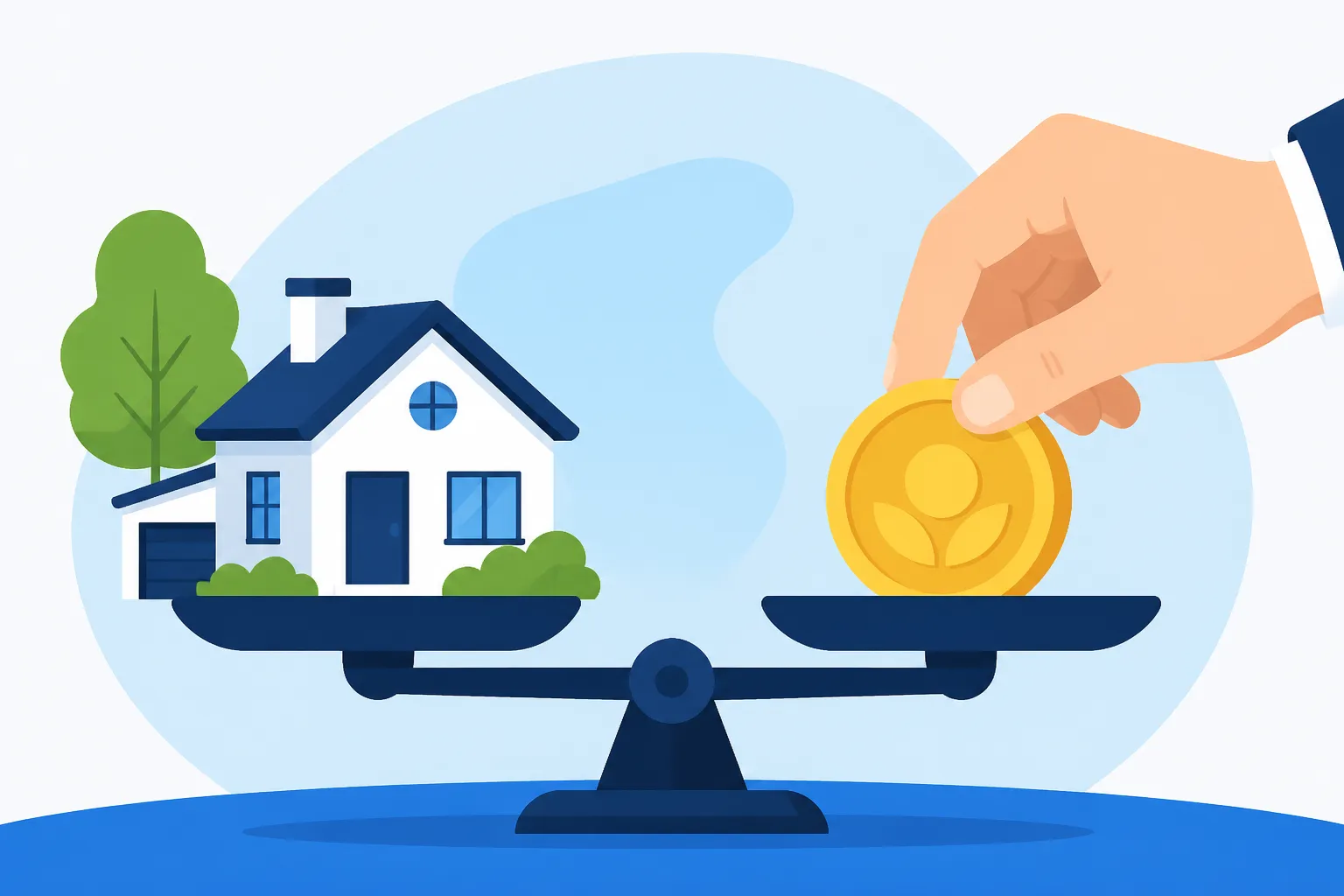
When you're looking into professional help for property tax appeals, one of the first questions on your mind is undoubtedly, "How much is this going to cost me?" Ownwell has a pretty straightforward approach that's popular among homeowners, primarily because it aligns their success with yours. They operate on a contingency-based fee model, which means you only pay if they manage to save you money. This takes a lot of the upfront financial risk off your shoulders, which is a big relief for many.
How Ownwell's Contingency-Based Fee Works
Ownwell's core offering is a contingency-based fee, meaning they only get paid if they successfully reduce your property tax bill. This is a huge selling point for homeowners because it essentially means there's no upfront cost and no risk of paying for a service that doesn't deliver results. If Ownwell appeals your property value and doesn't achieve a reduction, you owe them nothing. Zero. Zilch. This model inherently motivates them to work hard on your behalf, as their compensation is directly tied to your savings.
The way it typically works is that after you sign up, Ownwell takes over the entire protest process. They gather the necessary data, analyze your property's assessment, prepare the appeal, and communicate with the appraisal district. If they achieve a reduction in your assessed value, that translates directly into tax savings for you. Their fee is then a percentage of those savings. This structure avoids the situation where you pay a hefty fee only to find your property value unchanged, leaving you frustrated and out of pocket. It’s a very consumer-friendly approach, especially when dealing with the uncertainty of property tax outcomes.
Breaking Down the Typical Percentage
So, what's that percentage? While it can vary slightly depending on the market and specific agreements, Ownwell generally charges 35% of your gross property tax savings for the current year. Let's break down what that means with an example. Imagine your property was assessed at $400,000, and after Ownwell's successful appeal, it's reduced to $380,000. That's a $20,000 reduction in your assessed value. If your local tax rate (or mill rate) is, say, 2.5%, then a $20,000 reduction in value means a direct tax saving of $500 for that year ($20,000 * 0.025 = $500). Ownwell would then take 35% of that $500 saving, which is $175. You, the homeowner, would still save $325.
It's important to remember this percentage is applied to the gross savings. This means the total amount of tax dollars you avoid paying due to the assessment reduction, not just the net amount after other factors. They're transparent about this, and it’s a standard model for contingency services. This percentage can feel significant to some, but considering they handle all the legwork, research, and potentially stressful hearings, many find it to be a fair trade-off for the expertise and time saved. For a deeper dive into the overall value proposition, you might want to check out Are Property Tax Appeal Companies Worth It?.
Understanding the "Savings" Calculation
The "savings" calculation, for the purpose of Ownwell's fee, is typically based on the reduction in your property's assessed value for the specific tax year they are protesting. It's not about what your neighbor saved or what you think you might save. It's about the tangible, measurable decrease in your tax liability for that single year, directly attributable to their efforts.
Let’s use another hypothetical scenario. Say your property was assessed at $500,000. Ownwell appeals, and the assessed value is successfully lowered to $475,000. This is a $25,000 reduction in your assessed value. Now, to figure out your tax savings, you'd multiply that $25,000 by your effective property tax rate. If your effective rate is 2.0%, your tax savings would be $500 ($25,000 * 0.02 = $500). Ownwell's fee would then be 35% of that $500, which is $175.
This calculation is usually explicitly detailed in the agreement you sign with Ownwell. They usually provide a clear breakdown of the initial assessment, the new assessment, the difference, the estimated tax savings, and their portion. It's crucial to read this agreement carefully to understand exactly how the savings are determined and how their fee will be calculated. They aim to make the process as transparent as possible, ensuring you know what to expect once a reduction is achieved. When considering your options, it helps to understand How Much Can You Save Appealing Property Taxes? to set realistic expectations.
Comparing Ownwell to Other Appeal Options
When you're trying to decide if a service like Ownwell is right for you, it's only natural to wonder how it stacks up against other ways to tackle that daunting property tax bill. There isn't a one-size-fits-all solution, and what works best for one homeowner might not be ideal for another. Understanding the different models available can help you make a more informed choice.
Flat-Fee Services vs. Contingency Models
While Ownwell operates on a contingency fee, many other property tax appeal companies, like O'Connor (also known as Cut My Taxes), offer flat-fee structures or a hybrid model. A flat-fee service means you pay a set amount upfront, regardless of whether they achieve a reduction or not. For example, a company might charge $150 or $300 to file an appeal on your behalf. The benefit here is predictability – you know exactly what you're paying, and if they achieve massive savings, you keep 100% of that windfall beyond the initial fee. However, the downside is that if they fail to get a reduction, you're out that upfront fee.
Contingency models, like Ownwell's, mitigate this risk. You pay nothing if there are no savings. The drawback, some might argue, is that if a significant reduction is achieved, 35% of that saving can feel like a lot to hand over. For example, if you save $1,000, Ownwell's fee would be $350. With a flat-fee service, if you paid $150, you'd save $850. But again, with a flat fee, you take the risk of paying $150 and saving nothing. Both models have their pros and cons, and your comfort level with risk and your estimated potential savings will likely guide your choice. It's worth researching various providers, perhaps starting with an Ownwell Review: Property Tax Appeal Service and an O'Connor (Cut My Taxes) Review to get a feel for their specific offerings and reputations.
The DIY Appeal: Costs and Benefits
Choosing to go the do-it-yourself route for your property tax appeal is definitely the lowest "cost" option in terms of direct cash outlay. You won't pay a service fee to anyone. However, it's not truly "free." Your main investment here is time and effort. As we discussed earlier, you'll be responsible for all the research: finding comparable sales, digging into public records, understanding appraisal district methodologies, and perhaps even obtaining an independent appraisal if you feel it's warranted (which does come with a cost, usually a few hundred dollars).
The benefits of a DIY approach are clear: if successful, you keep 100% of your savings. You also gain a deeper understanding of the property tax system in your area, which can be empowering. But the costs are hidden: the hours spent away from work or family, the potential frustration with bureaucracy, and the risk of not presenting the strongest case due to lack of experience or specific data access. If your potential savings are relatively small, or if you truly enjoy this kind of detailed administrative work, DIY might be a great fit. If you're short on time, find the process overwhelming, or are dealing with a potentially significant overassessment, the investment in a professional service often pays for itself in both savings and stress reduction. You can learn more about this by reading DIY vs Hiring a Property Tax Consultant.
What to Consider Beyond the Price Tag
When evaluating property tax appeal services, focusing solely on the fee percentage or flat rate misses a crucial part of the picture. You need to consider the full value proposition. For instance, what is the scope of the service? Does the company handle just the initial informal review, or do they represent you all the way through a formal hearing with the Appraisal Review Board? Some services might only do the initial filing, leaving you to present your own case at a hearing, while others like Ownwell typically manage the entire process.
Another critical factor is their local expertise. Property tax laws and assessment practices can vary dramatically even between neighboring counties. Does the company have a strong track record in your specific county or municipality? Do they have boots on the ground, or are they a national service with limited local insight? The quality of their research, their understanding of local market trends, and their relationships with the appraisal district can significantly impact their success rate. Also, consider customer service and communication. How easy is it to get updates? Will they explain the process clearly to you? These intangible factors, while not directly listed on a price sheet, contribute significantly to the overall value and your satisfaction with the service. Comparing Property Tax Protest Companies Compared can give you a broader perspective.
| Feature / Service | Ownwell (Contingency) | Flat-Fee Service (e.g., O'Connor) | DIY Approach |
|---|---|---|---|
| Upfront Cost | $0 | Fixed Fee (e.g., $150-$500) | $0 (unless independent appraisal is sought) |
| Payment Structure | Percentage of savings (e.g., 35%) | Fixed fee paid regardless of outcome | N/A (you keep 100% savings) |
| Risk of No Savings | No payment if no reduction | Upfront fee is lost | Only your time and effort are lost |
| Expertise & Time Saved | High expertise, saves significant time | Variable expertise, saves some time | Requires significant homeowner time/effort |
| Representation at Hearings | Typically included | Varies (often additional cost or not included) | Homeowner responsible |
| Motivation | Directly incentivized to achieve savings | Incentivized to get you signed up | Self-motivated |
| Ideal For | Homeowners seeking risk-free, hands-off approach; potentially significant savings | Homeowners who prefer fixed costs and predictable expenses | Homeowners with time, confidence, and desire for full control |
The Value Proposition of Using Ownwell
Choosing a service like Ownwell isn't just about the fee; it's about what you gain in return. For many, the value comes down to saving time, reducing stress, and leveraging expert knowledge to potentially achieve a better outcome than they could on their own. It’s an investment in efficiency and expertise, with the added comfort of a performance-based payment model.
Expertise and Time Savings
Let's circle back to that precious commodity: time. Filing a property tax appeal isn't a five-minute task. It involves hours, sometimes days, of research, form-filling, data analysis, and communication with the appraisal district. For most homeowners, this means sacrificing evenings, weekends, or even taking time off work. Ownwell takes all of this off your plate. Their team of tax experts and data analysts are dedicated to this process, day in and day out. They know exactly where to find the best comparable sales, how to interpret local assessment rules, and how to craft a compelling argument. This isn't just about having the information; it's about knowing how to use it effectively.
Consider the complexity of something like an Effective vs Nominal Property Tax Rate Explained or diving deep into Assessed Value vs Market Value vs Taxable Value. These concepts, while fundamental to property taxation, aren't always intuitive. Ownwell's professionals navigate these complexities with ease, saving you the steep learning curve. They leverage sophisticated data analytics to identify undervalued properties in your area that serve as strong evidence for your appeal. This specialized knowledge and efficient process mean you can focus on your life, confident that professionals are working to reduce your tax burden. For many, the value of their time and the relief from a stressful administrative task easily justifies Ownwell's contingency fee.
The Likelihood of Success and Potential Savings
While no company can guarantee a successful appeal (the outcome always depends on the specifics of your property and local market conditions), companies like Ownwell significantly improve your odds compared to a homeowner going it alone. Why? Because they know the game. They understand the intricacies of presenting a case, whether it's an informal negotiation with an appraiser or a formal hearing with an Appraisal Review Board. They are familiar with the common arguments that sway assessors and know how to present Evidence & Comps for a Property Tax Appeal in the most impactful way.
Ownwell, in particular, boasts a strong track record, often citing a high success rate for their appeals. While individual results vary, this is largely due to their data-driven approach and expertise in identifying strong candidates for appeal. They typically target significant overassessments where a reduction is most likely. The potential savings can be substantial, especially in areas with rapidly increasing property values. Even a modest reduction in assessed value, compounded over years (as often happens with property tax caps), can add up to thousands of dollars in your pocket. This isn't just about saving money this year; it's about setting a more favorable baseline for future assessments, which can offer long-term financial benefits. Understanding How to Win a Property Tax Appeal and when to appeal are key to maximizing these potential savings.
Is Ownwell Right for Your Property Tax Appeal?
Deciding whether to use a service like Ownwell depends on your individual circumstances, comfort level with the process, and what you prioritize. There are definitely situations where their model shines, and others where you might explore different avenues.
When Ownwell Makes the Most Sense
Ownwell's contingency-based model is particularly appealing for homeowners who want to challenge their property assessment but are risk-averse regarding upfront costs. If the idea of paying a fee without a guaranteed outcome makes you hesitant, Ownwell's "no savings, no fee" policy is a major draw. It's also an excellent choice for those who are time-poor or simply find the property tax appeal process overwhelming and confusing. If you dread the thought of digging through property records, comparing sales, and potentially arguing your case, delegating the entire task to experts can be a huge relief.
Furthermore, if you suspect your property has been significantly overassessed, Ownwell can be a very effective partner. Their data-driven approach and expertise are geared towards identifying these discrepancies and fighting for substantial reductions. Homeowners in states or counties known for aggressive assessments, such as those in Texas (where you can learn more about How to Protest Property Taxes in Texas) or New Jersey, often find these services invaluable. Essentially, if you want professional help with no upfront financial commitment and a hands-off experience, Ownwell is definitely worth considering.
Situations Where Other Options Might Be Better
While Ownwell offers a great service, it's not the perfect fit for everyone. If you are a very hands-on homeowner who enjoys research, understands real estate markets, and is confident in presenting a case, a DIY appeal might be more appealing. You would keep 100% of any savings and potentially find satisfaction in navigating the process yourself. If you have already done substantial research and believe you have a strong, clear-cut case, a flat-fee service might also be more cost-effective, as you’d pay a lower fixed amount and keep more of the savings.
Also, if your property is only slightly overassessed, and the potential tax savings are relatively small, a 35% contingency fee might feel a bit high compared to the total savings. For example, if you anticipate only saving $100 on your tax bill, Ownwell's fee would be $35. While still a net saving for you, some might prefer to handle such a small amount themselves. Conversely, if your property is already very accurately assessed, or if there's little evidence to support an appeal, even Ownwell might advise against pursuing it, as their business model relies on achieving reductions. Always consider When Should You Appeal Your Property Taxes? to ensure you have a strong foundation for protest.
Ultimately, the decision comes down to your personal priorities: cost, convenience, risk tolerance, and your willingness to invest your own time and effort. Services like Ownwell provide a valuable solution for many, offering expertise and peace of mind in exchange for a share of the savings they help you achieve.
Disclaimer
Please remember that property tax laws and regulations are constantly evolving and vary significantly by state, county, and even local jurisdiction. The information provided in this article is intended for general informational purposes only and does not constitute financial, legal, or tax advice. It is crucial to consult with a qualified local property tax expert, attorney, or financial advisor to discuss your specific situation and understand the most current laws and options applicable to your property.