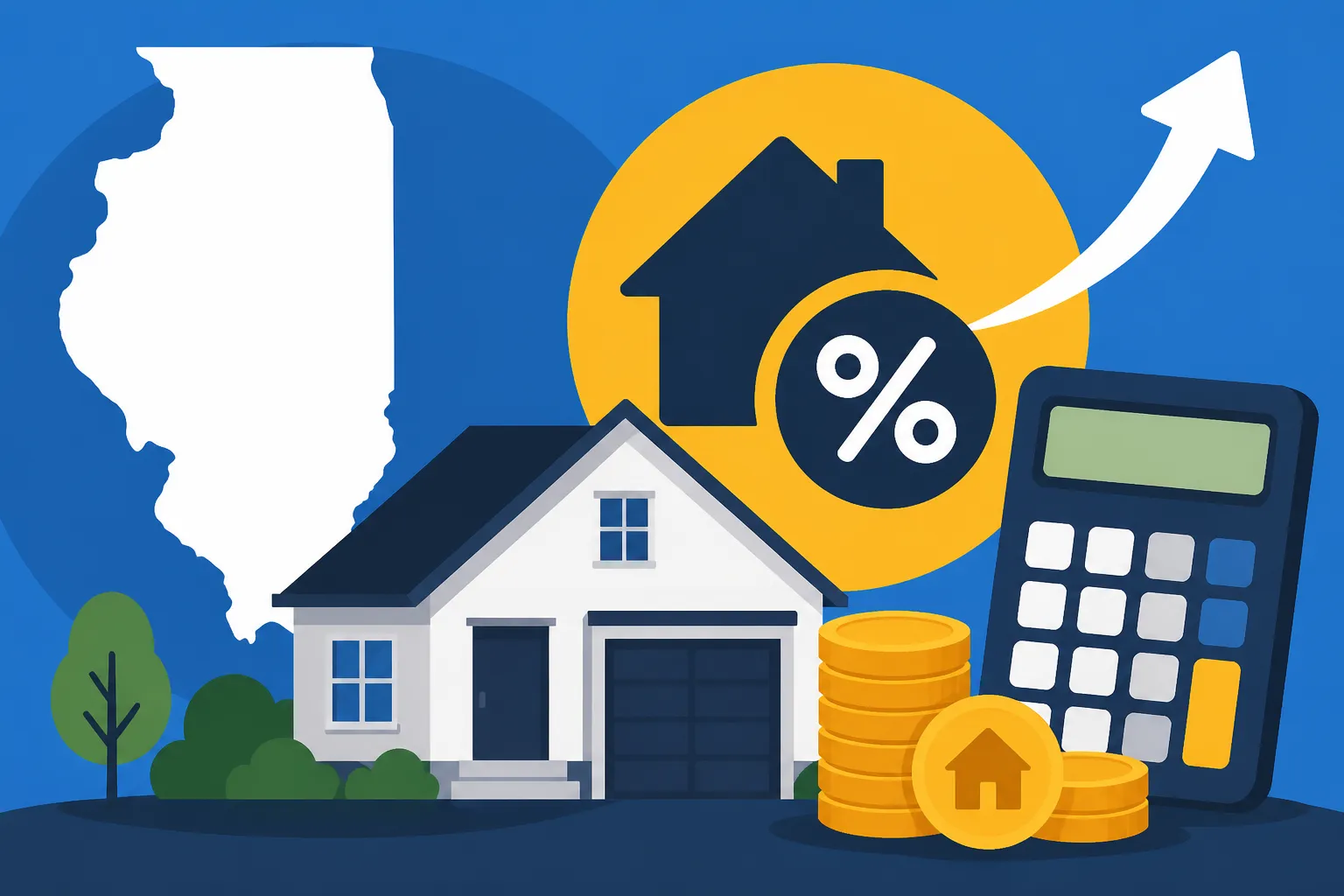
Illinois Property Tax Rate 2026
It’s no secret that Illinois homeowners often feel the sting of some of the highest property taxes in the nation. The sheer complexity and the annual dread of that assessment notice hitting your mailbox can be overwhelming, leaving many of us wondering if we’ll ever truly understand what drives our bill. This comprehensive guide is here to demystify the Illinois property tax rate for 2026, breaking down how these taxes are calculated, why they’re so high, and what factors truly influence the amount you pay.
Understanding Illinois Property Tax Rates: Why the Sticker Shock?
When you live in Illinois, the conversation about property taxes inevitably comes up, and usually not in a lighthearted way. Illinois consistently ranks among the states with the highest property tax rates in the U.S., often vying for the top spot. It's not just a feeling; it's a reality backed by data. For instance, in 2023, the average effective property tax rate across Illinois hovered around 2.08%, which is significantly higher than the national average of about 0.99%. While it’s impossible to predict the exact nominal rate for 2026 for every single taxing district, these averages give us a strong indication of the burden homeowners can expect. The underlying mechanisms that contribute to this high rate are deeply embedded in how the state funds its local services.
The Heavy Reliance on Property Taxes for Local Services
One of the primary reasons Illinois homeowners face such steep property tax bills is the state's heavy reliance on these taxes to fund local government services, particularly public education. Unlike some other states that use a significant portion of income or sales taxes to fund schools, Illinois places a substantial burden on local property owners. Think about your community: the quality of your local schools, the maintenance of your parks, the efficiency of your fire and police departments, and even your public library – a large chunk of their operational budgets comes directly from property taxes.
This decentralization means that while you might live in a town with relatively low spending, if your neighboring school district is well-funded, your tax bill can still reflect the collective need. It creates a direct link between local expenditures and your personal finances, a link that can feel incredibly tight when budgets swell. When school districts face rising costs, or local governments need to fund new infrastructure projects, the easiest and most direct lever they have is often the property tax levy, which then translates into higher rates for homeowners.
The Proliferation of Taxing Bodies
Beyond funding local services, another significant contributor to Illinois's high property tax rates is the sheer number of overlapping taxing bodies. Illinois has one of the highest numbers of local governmental units in the entire country – think thousands of individual entities. You don't just pay taxes to your county and city; you might also pay to a park district, a library district, a fire protection district, a sanitary district, a community college district, and, of course, a school district. Each of these entities has the authority to levy its own portion of property tax.
Imagine your property sitting within the boundaries of a village, a township, a county, a specific school district, a park district, and maybe even a special drainage district. Each one determines its own budget and, subsequently, its own portion of the property tax levy. When you receive your property tax bill, it's not just one number; it's an aggregation of all these individual levies. This fragmented system means that even small increases from multiple entities can add up to a substantial jump in your overall tax bill. Understanding this intricate web of taxing bodies is crucial to grasping why your bill can feel so high, and it's a key reason why you might feel like you're paying an exorbitant amount even if your local government seems fiscally responsible.
How Property Taxes Are Calculated in Illinois
The Illinois property tax calculation process is, shall we say, unique. It’s not as straightforward as simply multiplying your home's market value by a percentage. There are multiple layers of assessment, equalization, and exemption that culminate in your final bill. Understanding these steps can help homeowners feel more in control and less blindsided when that annual statement arrives. If you've ever wondered, "How Are Property Taxes Calculated?", Illinois adds a few extra steps to the mix.
The Assessment Process: Fair Market Value to Equalized Assessed Value
It all starts with your local assessor. Every few years, or sometimes annually in larger counties like Cook County, your property undergoes a valuation process. The assessor's job is to determine the "fair market value" of your home – essentially, what it would likely sell for on the open market. This is where your property's characteristics, like square footage, number of bedrooms, age, and recent sales of comparable properties in your neighborhood, come into play.
Once the fair market value is established, Illinois law mandates that residential property is assessed at 33.33% of its fair cash value. This 33.33% figure is known as the assessed value. So, if your home is valued at $300,000, its assessed value would be $100,000. However, the journey to your taxable value doesn't end there. Next comes the equalization factor, a critical and often confusing step for many homeowners. This is very different from simply looking at the "Assessed Value vs Market Value vs Taxable Value" in other states.
The Equalization Factor (Multiplier) Explained
This is where Illinois truly stands out. To ensure uniformity of assessments across all counties, the Illinois Department of Revenue applies an "equalization factor," often called the "multiplier." The goal here is to make sure that the median level of assessment in each county is precisely 33.33% of fair market value. If a county's assessments are, on average, lower than 33.33%, a multiplier greater than 1.0 will be applied to bring them up to standard. Conversely, if a county's assessments are too high, the multiplier will be less than 1.0.
For example, if your county's assessments are averaging 30% of market value, the Department of Revenue might apply a multiplier of 1.111 to bring that up (30% * 1.111 ≈ 33.33%). This multiplier is then applied to your individual assessed value. So, going back to our $300,000 home example: if your assessed value is $100,000, and the county multiplier is 1.05, your Equalized Assessed Value (EAV) becomes $105,000. This EAV is the figure that your property tax rate will ultimately be applied to. It's a layer of complexity that often frustrates homeowners, as their initial assessment might seem reasonable until the multiplier is applied, dramatically increasing their EAV. This process makes understanding your specific local mill rate even more critical.
The Tax Rate and Final Bill Calculation
Finally, once your Equalized Assessed Value (EAV) is determined and any eligible exemptions are applied, the local tax rate comes into play. As mentioned earlier, your overall tax rate is a composite of rates from all the different taxing bodies that serve your property – the school district, city, county, park district, library, and so on. Each of these bodies calculates its own "levy," which is the total amount of money it needs to collect from property taxes. This levy is then divided by the total EAV of all taxable property within that district to determine that body's specific tax rate.
These individual rates are then added together to form your total composite tax rate. This rate is often expressed as a percentage or in "mills" (where a mill is $1 per $1,000 of EAV, or 0.1%). So, if your total composite tax rate is 10%, and your EAV (after exemptions) is $105,000, your property tax bill would be $10,500 ($105,000 * 0.10). It's a formula that combines local needs with state-mandated uniformity, resulting in a number that can feel like a significant portion of your annual household budget. This complex calculation explains why understanding your specific local tax rate, often expressed as a mill rate, is so important.
Key Factors Influencing Your Illinois Property Tax Bill
Beyond the general calculations, several specific elements can significantly swing your property tax bill higher or lower. These are the things you, as a homeowner, often have some control over or should at least be acutely aware of.
Local Taxing Bodies and Their Spending
We touched on this already, but it's worth emphasizing just how impactful the individual taxing bodies are on your final bill. The sheer number of units of government in Illinois means that you're paying not one, but many distinct taxes bundled into a single bill. The biggest piece of the pie almost always goes to local schools. School districts often account for 60% to 70% or even more of a property tax bill in Illinois. So, if your local school district passes a bond referendum or increases its budget, you will directly feel that impact in your property taxes.
Consider a property owner in DuPage County versus one in downstate Illinois. While the assessment methodology is the same, the local levies can be drastically different. A vibrant, growing suburb might have higher demands for services and better-funded schools, leading to higher rates. Conversely, a rural area might have fewer services but still rely heavily on property taxes for basic infrastructure. This is why when you look up the Illinois Property Tax Rate (2nd Highest) overall, it's really an average of thousands of tiny rates that combine to create that high figure. Monitoring local elections and referendums, especially those pertaining to school funding, is a critical way to understand potential shifts in your future tax obligations.
The Role of Home Value and Neighborhood Trends
It might seem obvious, but your home's market value is a foundational component of your property tax bill. A higher home value directly translates to a higher assessed value, and subsequently, a higher equalized assessed value (EAV). In a robust housing market, property values tend to rise, and while this is great for your equity, it often means an increased property tax assessment. Assessors regularly review sales data in your area to determine market value, so if homes similar to yours are selling for more, your assessment will likely follow suit.
Neighborhood trends, therefore, play a huge role. If your area is experiencing significant development, improvements, or an influx of buyers, you can expect your property values – and thus your taxes – to climb. Conversely, if values decline, property taxes can go down, but the process is not always immediate or proportionate. It's not uncommon for property taxes to lag behind market shifts, especially during a downturn. This is why it's so important to be aware of the market activity around you and understand how it impacts your Property Tax Assessment & Reassessment Explained.
Crucial Property Tax Exemptions Available in Illinois
While Illinois property taxes can be high, the state does offer several exemptions that can significantly reduce your taxable value and, consequently, your tax bill. Failing to apply for these can cost you hundreds or even thousands of dollars annually.
- Homestead Exemption: The General Homestead Exemption is available for owner-occupied residential properties. It reduces the equalized assessed value (EAV) of your primary residence by a fixed amount, which can vary by county. For example, in Cook County, it's typically $10,000, while in other counties, it might be $6,000. It's designed to provide relief specifically for your primary residence. To learn more, check out our guide on the Homestead Exemption: Complete State-by-State Guide.
- Senior Citizen Homestead Exemption: This exemption provides an additional EAV reduction for homeowners aged 65 or older. The amount also varies by county but provides extra relief for seniors.
- Senior Citizens Assessment Freeze Exemption: This is a fantastic benefit for eligible low-income seniors. It "freezes" the EAV of their property at a base year level, preventing increases due to rising market values, as long as income and occupancy criteria are met. This can provide significant long-term savings. You can find more details in our article on Senior & Over-65 Property Tax Exemptions and Freezes.
- Disabled Persons Homestead Exemption: Offers an EAV reduction for properties owned and occupied by a disabled person.
- Disabled Veterans' Homestead Exemption: Provides substantial EAV reductions for veterans with service-connected disabilities, with the amount of exemption varying based on the percentage of disability.
It's absolutely vital to ensure you apply for all exemptions you qualify for. They are not automatically granted in most cases and usually require an annual application or confirmation, depending on the exemption and county. This is one of the most direct ways homeowners can actively lower their property tax burden.
Navigating Property Tax Relief and Appeals in Illinois
Feeling like your property taxes are too high isn't just a hunch for many Illinois homeowners; it's a call to action. While the system can seem daunting, there are established processes for seeking relief and challenging an assessment you believe is unfair or inaccurate. Don't just pay the bill if you think something is off – investigate your options. Our guide on How to Appeal Property Taxes: Complete Guide offers a broader look, but here's the Illinois-specific breakdown.
Understanding Your Assessment Notice and Deadlines
The first step in any appeal process is understanding your Annual Assessment Notice. This document, typically mailed in late summer or early fall, details your property's assessed value. It's crucial to review this notice carefully, checking for inaccuracies in your property's characteristics (e.g., incorrect square footage, number of bathrooms, lot size). More importantly, it will include the deadline to appeal your assessment. These deadlines are strict and vary by county and township, so missing it means you likely forfeit your right to appeal for that year.
Many homeowners find the language on these notices confusing, especially with terms like "assessed value" and "equalized assessed value" flying around. Take the time to understand How to Read Your Property Tax Bill in detail. If you have questions, your local assessor's office is often the best first point of contact. They can clarify the figures and explain the process, which is far better than simply guessing.
The Informal Review and Formal Appeal Process
If you believe your assessment is too high, Illinois offers a multi-tiered appeal process:
- Informal Review: Often, your first stop should be an informal discussion with your local township assessor or county assessment office. Many counties offer opportunities for an informal review shortly after assessment notices are mailed. You can present evidence that your property's assessed value is higher than its true market value or that it's unequally assessed compared to similar properties. This often involves providing comparable sales data (comps) for homes in your neighborhood that are similar in size, age, and condition but sold for less than your assessed market value.
- Appeal to the County Board of Review: If an informal review doesn't yield satisfactory results, or if your county doesn't offer one, your next step is a formal appeal to the County Board of Review. This is a quasi-judicial body that reviews assessment complaints. You'll need to file a formal complaint, typically on a specific form, and provide substantial evidence. This evidence might include appraisal reports, recent sales of comparable properties, photographs showing the condition of your home compared to others, or even cost estimates for necessary repairs that might lower your property's value. The key here is data – the more solid, objective evidence you have, the stronger your case.
- Appeal to the Illinois Property Tax Appeal Board (PTAB): If you're still not satisfied with the Board of Review's decision, you can appeal to the state-level Illinois Property Tax Appeal Board (PTAB). This is a more formal process, essentially a hearing before an administrative judge. While you can represent yourself, many homeowners choose to engage legal counsel or a property tax consultant at this stage due to the complexity of the proceedings.
Gathering strong Evidence & Comps for a Property Tax Appeal is paramount at every stage. You're essentially arguing that the assessor's valuation is incorrect, and without concrete data, your appeal is unlikely to succeed. Companies like Ownwell specialize in assisting homeowners with these appeals, often working on a contingency basis, meaning they only get paid if they save you money. While there are no Property Tax Assessment Caps in Illinois like California's Prop 13 or Texas's 10% cap, the appeal process is your best avenue for challenging an unfair assessment.
When to Seek Professional Help
Navigating the Illinois property tax appeal system can be overwhelming, especially with the intricate equalization factors and the need for solid comparable sales data. For many homeowners, especially those dealing with complex properties or significant discrepancies, hiring a professional can be a worthwhile investment. Property tax consultants, real estate attorneys, or firms that specialize in property tax appeals can help you:
- Analyze your assessment and determine if an appeal is justified.
- Gather the necessary comparable sales data and other evidence.
- Prepare and file all the required paperwork within strict deadlines.
- Represent you during informal and formal hearings.
While there's a cost associated with these services, the potential savings on your annual property tax bill can often outweigh the fees, particularly if you're facing a substantially overvalued assessment. Ultimately, the decision to seek professional help depends on your comfort level with the process, the complexity of your case, and the potential savings at stake. Remember, staying informed and proactive is your best defense against feeling helpless when those high Illinois property tax bills arrive. Understanding Why Do Property Taxes Increase? is the first step; knowing how to act is the second.
Property Tax Rates in Key Illinois Counties (Estimated Average Effective Rate 2023-2024)
While precise 2026 rates aren't available, here's a look at recent average effective property tax rates in some prominent Illinois counties to give you a sense of the landscape. Please remember these are averages and your specific rate will depend on your local taxing districts.
County (Illinois) Approximate Average Effective Property Tax Rate (2023-2024) Notes B. King County (Seattle area) ~0.90% King County includes Seattle and its diverse surrounding areas. The rate is lower than Cook County but still significant. Home values play a major role here.
Cook County (Chicago area) ~2.11% Cook County has the highest population and some of the highest property taxes in Illinois, particularly within Chicago city limits. Rates vary significantly by specific taxing districts within the county. The average cost of living in Florida for 2026 is a big concern for many potential new residents and current homeowners alike. Understanding how expenses like housing, food, and transportation are trending can feel like trying to hit a moving target. This guide will thoroughly break down the anticipated costs, highlight key areas where prices are likely to shift, and provide practical tips for managing your budget in the Sunshine State.
Understanding the Cost of Living Landscape in Florida
Florida has long been a magnet for people seeking sunshine, warm weather, and a vibrant lifestyle. However, over the past few years, the "cost of living" conversation has become front and center. What once was considered an affordable paradise, particularly for retirees, has seen a significant shift, especially in its major metropolitan areas. For 2026, while specific figures are always subject to change, we can project trends based on current economic indicators and demographic shifts. Florida's cost of living is generally higher than the national average, a trend that is expected to continue and perhaps even intensify in certain sectors.
The Allure and the Reality: Why Florida's Costs are Rising
Florida's appeal is undeniable. The beautiful beaches, theme parks, lack of state income tax, and year-round outdoor activities draw millions of people. This constant influx of new residents, combined with a strong tourism industry, creates robust demand across various markets, from housing to services. When demand outpaces supply, prices naturally go up. This is a fundamental economic principle that has played out dramatically in Florida.
Furthermore, Florida's rapid growth necessitates significant investment in infrastructure, public services, and housing development. These costs are often passed on to consumers and taxpayers. While the absence of a state income tax is a huge draw, other taxes, like property taxes and sales taxes, often compensate for it. Understanding this dynamic is crucial. It's not just about what you don't pay in income tax, but what you do pay in other areas to support the state's burgeoning population and expansive needs. The benefits of living here are clear, but the price tag is certainly getting heavier for many.
Key Factors Driving Up Expenses in the Sunshine State
Several factors are converging to push Florida's cost of living upward, and these aren't likely to subside by 2026.
- Population Growth: Florida is one of the fastest-growing states in the U.S. People are flocking here, and this relentless demand for housing, goods, and services directly drives up prices. Every new resident needs a place to live, food to eat, and services to utilize, straining existing resources.
- Housing Market Dynamics: The housing market, in particular, has seen explosive growth. High demand, combined with limited inventory and rising construction costs, has led to significant increases in both home prices and rental rates. This isn't just a big city phenomenon; even smaller towns are feeling the squeeze.
- Inflationary Pressures: Broader national and global inflationary trends certainly impact Florida. The cost of everything from groceries to gasoline, utilities, and insurance has been on the rise. While inflation rates may cool, their cumulative effect means a higher baseline cost for everyday essentials.
- Insurance Costs: Florida faces unique challenges with property insurance, particularly for homeowners. The increasing frequency and intensity of hurricanes, along with rising reinsurance costs and litigation, have led to skyrocketing premiums. This is a significant and often unpredictable expense that disproportionately affects Florida residents.
- Tourism Impact: While tourism is a boon for the economy, it also contributes to higher prices. Hotels, restaurants, and attractions cater to visitors willing to pay premium prices, which can sometimes bleed into the broader consumer market for residents.
These factors create a complex web of influences that make managing a budget in Florida a continuous balancing act.
Breaking Down Average Costs in Florida for 2026
When we talk about the "cost of living," we're really talking about a basket of expenses. Let's dig into the major categories you can expect to encounter in Florida by 2026. Keep in mind that these are averages, and costs can vary wildly depending on whether you're in a bustling metropolis like Miami or a quieter, more rural community.
Housing: The Elephant in the Room
Housing is almost always the largest chunk of anyone's budget, and in Florida, it's become a major sticking point. For 2026, expect housing costs to remain high, possibly seeing moderate increases, especially in desirable areas.
- Median Home Prices: As of late 2023/early 2024, the median home price in Florida has been hovering around $400,000 to $420,000, significantly above the national median. By 2026, depending on market conditions, these figures could easily climb. Hot markets like Miami-Dade, Palm Beach, Sarasota, and Collier counties often see median prices well over $500,000, sometimes even nearing $700,000 in specific luxury enclaves. Areas around Orlando and Tampa, while slightly more affordable than South Florida, are still experiencing robust appreciation.
- Rental Market: The rental market has also seen dramatic increases. A typical 1-bedroom apartment in a major metro area could easily cost between $1,800 and $2,500 per month, with 2-bedroom units often exceeding $2,500-$3,500. Even less urban areas are seeing higher rents as demand spreads. This means finding truly affordable rental housing is a challenge for many Floridians.
- Property Taxes: While there's no state income tax, property taxes in Florida are still a significant expense, especially with rising home values. The statewide average effective property tax rate is around 0.83% of a home's assessed value, which is below the national average. However, with higher home values, the actual dollar amount paid can be substantial. For example, a $400,000 home at a 0.83% rate would still incur an annual property tax bill of approximately $3,320. Keep in mind that specific rates vary widely by county and local taxing districts. You can learn more about How Much Are Property Taxes in Florida? for a deeper dive. The Florida Homestead Exemption also provides some relief for primary residences, but it's not a complete solution to escalating values. Make sure you understand the Florida Homestead Exemption (March 1 Deadline).
Utilities: Keeping Cool and Connected
Florida's climate means air conditioning is a necessity for much of the year, and this will be reflected in your utility bills.
- Electricity: Expect to pay more for electricity, particularly during the hot summer months. A typical monthly bill for a single-family home can range from $150 to $300, depending on house size, insulation, and usage habits. Newer, more energy-efficient homes can help, but AC is non-negotiable.
- Water/Sewer/Trash: These costs vary significantly by municipality but are generally reasonable. Budget $70-$120 per month.
- Internet/Cable: Standard internet packages usually run $60-$90 per month, with bundles including cable TV increasing that figure.
Transportation: Getting Around the Sunshine State
Florida is a car-centric state, so owning a vehicle is almost a necessity for most residents, especially outside of downtown cores with public transit.
- Gasoline: Prices fluctuate with global oil markets, but expect to pay around the national average or slightly below. As of early 2024, this hovers around $3.00-$3.50 per gallon. For 2026, sustained inflation could push this higher.
- Car Insurance: This is another area where Florida tends to be more expensive than the national average, due to factors like uninsured drivers, dense traffic in urban areas, and a higher risk of accidents. Expect annual premiums to be in the $2,000-$3,000+ range, depending on your vehicle, driving record, and location.
- Public Transportation: Options exist in major cities like Miami (Metromover, Metrobus, Metrorail), Orlando (Lynx), and Tampa (Hart), but they are generally less comprehensive than in older, denser cities up north. A monthly pass can cost around $50-$100, but public transit may not serve all your daily needs.
Groceries and Food: Daily Sustenance
Food costs in Florida are generally on par with or slightly above the national average.
- Groceries: A single person might spend $350-$500 per month on groceries, while a family of four could easily spend $800-$1,200+. Prices for fresh produce can vary seasonally, but overall, expect a similar experience to other states, perhaps with slightly higher prices for imported or specialized goods. Major chains like Publix, Winn-Dixie, and Albertsons are common, along with budget-friendly options like Aldi and Walmart.
- Dining Out: Like anywhere, dining out can range from affordable to high-end. A casual meal for two might cost $40-$60, while a nicer restaurant can easily run $80-$150+.
Healthcare: Staying Healthy
Healthcare costs in Florida are generally close to the national average.
- Insurance Premiums: These depend heavily on your plan, age, and health status.
- Doctor Visits/Prescriptions: Co-pays and prescription costs are standard, aligning with national trends. For retirees, access to specialized care and Medicare options are important considerations.
Miscellaneous Expenses: Entertainment, Clothing, and More
- Entertainment: Florida offers a huge array of entertainment options, from free beaches and parks to world-class theme parks (Disney World, Universal Studios), concerts, and sporting events. Budget accordingly; theme park passes can be a significant expense if you plan to visit regularly.
- Clothing: Generally similar to national averages, with plenty of retail options.
- Personal Care: Standard costs for haircuts, toiletries, etc.
Florida vs. Other States: A Quick Comparison
It's helpful to see how Florida stacks up against other popular states, especially regarding housing and taxes. While the raw Property Tax by State 2026: All 50 States Ranked shows Florida generally lower on effective rates, the high home values can make the dollar amount similar to states with higher rates but lower values.
Here's a quick, simplified comparison:
| Expense Category | Florida (Avg.) | Texas (Avg.) | California (Avg.) | New York (Avg.) |
|---|---|---|---|---|
| Housing | High (Rising) | Moderate-High | Very High | Very High |
| Property Tax | Moderate (Avg. 0.83% effective rate, but high values) | High (Avg. 1.69% effective rate) | Low (Avg. 0.73% effective rate, but extreme values) | High (Avg. 1.39% effective rate) |
| State Income Tax | 0% | 0% | Yes (High) | Yes (High) |
| Sales Tax | 6% (state) + local | 6.25% (state) + local | 7.25% (state) + local | 4% (state) + local |
| Car Insurance | High | Moderate-High | Moderate | Moderate-High |
| Utilities (AC) | High | High | Moderate | Moderate |
| Home Insurance | Very High (Hurricanes) | Moderate-High (Hail/Tornadoes) | High (Wildfires/Earthquakes) | Moderate |
As you can see, Florida offers the benefit of no state income tax, similar to Texas, which can be a huge win for high earners. However, this is offset by often higher home insurance premiums due to hurricane risks, and competitive housing markets push property values higher, resulting in larger property tax bills even with a lower effective rate. For more detailed comparisons, you can look at articles like Property Taxes: Florida vs Texas Compared.
Practical Tips for Managing Your Budget in Florida
Living affordably in Florida, especially as costs continue to climb, requires smart budgeting and strategic choices.
Location, Location, Location
The biggest factor in your Florida cost of living will be your choice of city or region. South Florida (Miami-Dade, Broward, Palm Beach counties) and the Sarasota/Naples areas are generally the most expensive. The Orlando and Tampa Bay areas offer a slightly better balance, while North Florida (Jacksonville area) or more rural, inland communities tend to be more affordable.
- Research Specific Neighborhoods: Even within a city, prices can vary dramatically. Research specific zip codes and neighborhoods to find areas that align with your budget.
- Consider Up-and-Coming Areas: Look for communities that are still developing but show promise. You might find better housing values before they fully boom.
- Don't Dismiss Smaller Towns: If you don't need to be in a major metropolitan hub, Florida has many charming smaller towns with a lower cost of living and slower pace.
Be Smart About Housing Choices
Since housing is such a large expense, optimizing it is key.
- Rent vs. Buy: Carefully weigh the pros and cons. While renting offers flexibility, owning can build equity. Factor in Property Tax Reassessment After Buying a Home, rising insurance, and potential HOA fees if buying.
- Size Matters: A smaller home or apartment will have lower utility bills, property taxes, and potentially lower insurance.
- Energy Efficiency: When buying or renting, prioritize energy-efficient homes. Newer construction often includes better insulation, windows, and HVAC systems that can significantly reduce electricity costs.
- Explore Exemptions: If you buy a primary residence, make sure you apply for the Florida Homestead Exemption. This can save you a chunk of money on your property taxes annually. Also, investigate any Senior & Over-65 Property Tax Exemptions and Freezes if applicable.
Budgeting for Rising Insurance Costs
This is a critical, unique Florida challenge.
- Shop Around Annually: Don't let your homeowners' or car insurance renew automatically without checking other providers. Rates can change dramatically, and a new quote might save you hundreds.
- Increase Deductibles (with caution): A higher deductible on your homeowners' insurance can lower your premium, but ensure you have enough savings to cover that deductible if you need to file a claim.
- Bundle Policies: Many insurers offer discounts for bundling home and auto policies.
- Mitigation Efforts: Some insurers offer discounts for hurricane-resistant features like impact windows, hurricane shutters, or a newer roof. Getting a wind mitigation inspection can also reveal potential savings.
Embrace Florida's Free Amenities
While theme parks are expensive, Florida offers an incredible array of free or low-cost activities.
- Beaches and Parks: Take advantage of the state's beautiful coastline and numerous state parks. Many offer hiking, biking, swimming, and picnicking at minimal cost.
- Local Events: Many towns host free festivals, concerts, and farmers' markets.
- Outdoor Lifestyle: Instead of expensive indoor entertainment, embrace the outdoor lifestyle: walking, cycling, fishing, kayaking, and exploring nature preserves.
Smart Shopping and Energy Usage
- Grocery Store Choices: Mix your shopping between major chains and discount stores like Aldi or specialty ethnic markets for savings. Look for sales and plan your meals.
- Optimize AC Use: Set your thermostat strategically. Use smart thermostats to program temperatures, raise it when you're not home, and use ceiling fans to circulate air more efficiently. Regular AC maintenance is also crucial for efficiency.
- Consider Solar: While an upfront investment, solar panels can significantly reduce or eliminate your electricity bill over the long term, offering a hedge against rising utility costs.
By being mindful of these strategies and staying informed about local economic trends, you can better prepare for the cost of living in Florida and beyond, allowing you to enjoy the Sunshine State without breaking the bank.
Disclaimer
Please note that the information provided in this article is for general informational purposes only and does not constitute financial, tax, or legal advice. Property tax laws, assessment methods, and cost of living figures are subject to change and vary significantly by location and individual circumstances. We strongly recommend consulting with a qualified financial advisor, tax professional, or local property appraiser's office for advice tailored to your specific situation.