Property Tax by State 2026: All 50 States Ranked
Opening your mailbox to find a property tax bill can feel like a punch to the gut, especially when your home’s value has skyrocketed but your income has stayed the same. This guide breaks down the 2026 property tax rankings for all 50 states, helping you navigate the complex landscape of assessments and find potential relief in an increasingly expensive world.
Understanding Property Tax Rates in 2026
The first thing we need to clear up is that the number you see on your bill isn't just a random percentage pulled out of thin air. When we talk about how states rank, we are looking at the "effective property tax rate." This is the percentage of your home's total value that you actually pay in taxes each year. It’s a much more honest way to compare states than looking at millage rates or nominal rates, which can be incredibly deceptive depending on how a local assessor views your property.
For example, a state might claim to have a very low tax rate, but if they assess your home at 100% of its sky-high market value, you could end up paying more than you would in a state with a higher rate but lower assessments. This is where many homeowners get confused. It is essential to understand Effective vs Nominal Property Tax Rate Explained if you want to know why your cousin in another state is paying half of what you are for a similar-sized house. These differences are becoming even more pronounced as states adjust their budgets to deal with shifting economic realities.
Local assessments also play a massive role that often goes overlooked in national rankings. In some states, property is reassessed every year, meaning your tax bill climbs right alongside the local real estate market. In others, you might go a decade without a change. This creates a "sticker shock" effect when a reassessment finally happens. If you’ve ever wondered why your bill suddenly jumped by 20% despite no new levies being passed, you’ll want to look into Property Tax Assessment & Reassessment Explained to see how the timing of these evaluations impacts your wallet.
Finally, we have to talk about the "trade-off" reality. Many people look at the rankings and think they should move to a state like Hawaii or Alabama immediately to save money. However, those states often make up for low property taxes with higher sales taxes, income taxes, or lower levels of public services. As a veteran blogger in this space, I’ve seen countless people move for the tax breaks only to realize their overall cost of living didn't budge. Understanding the full picture of How Are Property Taxes Calculated? is the only way to make a truly informed decision about where to live.
The 2026 Ranking: States with the Highest Property Taxes
It’s no surprise to anyone living in the Northeast or the Midwest that they are at the top of this list. New Jersey continues to hold the crown for the highest property taxes in the nation. It is a tough pill to swallow for residents who are often paying upwards of $10,000 a year for a modest suburban home. The reason behind this isn't just "big government"; it’s the way the state is structured. New Jersey has a massive number of small, independent school districts and municipal governments, each with its own administrative costs and police forces.
When you dive into the New Jersey Property Tax Rate (Highest in US), you start to see the granular details of why the burden is so heavy. The state relies heavily on local property taxes to fund its public schools, which are consistently ranked among the best in the country. For families, this is a trade-off they might be willing to make, but for retirees on a fixed income, it can feel like being priced out of the home they’ve owned for forty years. It’s a recurring theme in the Garden State, where the high cost of entry is the price of high-quality local services.
Illinois follows closely behind, often swapping the number two and three spots with places like New Hampshire or Connecticut. In Illinois, the issue is often tied to legacy costs, including significant pension obligations that local governments must fund through property levies. This has led to a situation where the Illinois Property Tax Rate (2nd Highest) has become a major political flashpoint. Homeowners in the Chicago suburbs, particularly in places like Cook or Lake County, often feel the pinch the hardest, as they face high rates on properties that have also seen significant value appreciation.
The Northeast corridor, including New Hampshire, Connecticut, and New York, rounds out the top of the list. These states often lack a broad-based income tax (in the case of New Hampshire) or have high-value real estate that keeps the tax revenue flowing. It creates a high-pressure environment for middle-class homeowners. When your tax bill is essentially a second mortgage payment, it changes how you save for retirement and how you maintain your property. These states are beautiful and offer incredible amenities, but you certainly pay for the privilege of calling them home.
The 2026 Ranking: States with the Lowest Property Taxes
On the other end of the spectrum, we have the states that offer a sanctuary for those looking to minimize their annual tax burden. Hawaii consistently ranks as the state with the lowest effective property tax rate, often hovering around 0.30%. This sounds like a dream, but there is a major catch: property values in Hawaii are astronomical. Even with a tiny tax rate, a median-priced home can still result in a significant bill. However, the state’s heavy reliance on tourism taxes helps keep the direct burden on homeowners much lower than in the mainland U.S.
Alabama is another perennial favorite for low-tax hunters. The state has some of the lowest assessments in the country, and the constitutional limits on how much local governments can tax property are very strict. For a retiree looking to maximize their pension, moving to a rural part of Alabama can be a game-changer. The Lowest Property Tax States 2027 list usually includes several Southern states like South Carolina and West Virginia, where the "cost of government" is kept low, often at the expense of infrastructure and school funding.
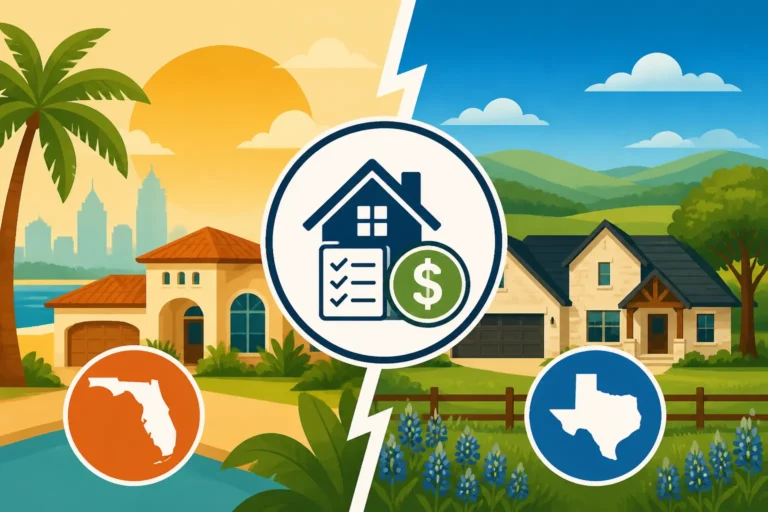
However, we need to be realistic about what low property taxes actually mean. In states like Nevada or Florida, which also boast relatively low or capped property taxes, the revenue has to come from somewhere else. In Florida, it's the millions of tourists who pay sales and occupancy taxes that keep the lights on. In Nevada, it’s the gaming industry. If you live in a low-tax state, you might find that while your property bill is low, your car registration fees, gas taxes, or utility rates are surprisingly high.
Low-tax states also tend to have a "pay-for-play" model for services. You might pay less in property tax, but you’ll pay a premium for private school tuition or gated community fees to get the level of service you’d expect as a "standard" in a high-tax state. It’s all about what you value. If you are a DIY enthusiast who doesn't mind a few potholes and doesn't have kids in school, these low-rate states are a paradise. If you want pristine parks and top-tier public libraries, you might find the low-tax lifestyle a bit frustrating.
Key Factors Influencing Your Property Tax Bill
One of the most emotional parts of the property tax conversation is where the money actually goes. For the vast majority of Americans, about 60% to 70% of their property tax bill goes directly to local school districts. This is why you can see a massive difference in taxes between two towns that are right next to each other. If one town decides to build a new high-tech high school or a massive football stadium, the homeowners in that specific district are the ones who foot the bill. Understanding How Do School Taxes Affect Property Taxes? is crucial when you are house hunting.
Public infrastructure is another big one. If your city is expanding—putting in new sewer lines, repaving roads, or adding street lighting—those "special assessments" often show up on your property tax bill. Many older cities are facing the reality of crumbling infrastructure, leading to a rise in local levies to pay for much-needed repairs. It’s a catch-22: you want your property value to go up, which requires good roads and utilities, but those very things are what drive your tax bill higher.
We also have to consider the state-level tax structure. Some states, like Texas and Washington, have no state income tax. To fund the state government and local services, they rely much more heavily on property taxes. This is why many people are shocked to find that Texas Property Tax Rate Explained reveals a much higher burden than they expected, despite the state's "low-tax" reputation. You aren't paying the state a portion of your paycheck, but you are paying the county a larger portion of your home's value every December.
Finally, inflation has been a silent killer for property owners. As the cost of labor and materials goes up, the cost of running a city or a school district goes up too. Even if a city doesn't raise the "rate," they might need more total revenue just to provide the same level of service they did three years ago. This often leads to "automatic" increases in your bill as assessments catch up to the inflated market values of homes. It’s a cycle that feels impossible to break, but understanding the underlying mechanics can help you at least anticipate the changes.
Understanding Property Tax Caps and Protections
Thankfully, many states have realized that unlimited property tax growth can lead to people losing their homes. This has led to the creation of "caps" or "freezes" that limit how much your bill can go up in a single year, regardless of how much your home’s value has increased. The most famous example is in California. Under California Prop 13 Explained (2% Cap), the assessed value of a home can only increase by a maximum of 2% per year as long as the owner keeps the property. This has created a massive incentive for people to stay in their homes for decades, as their tax bill remains tied to a value from years ago.
Florida has a similar protection known as the "Save Our Homes" amendment. This cap limits the increase in assessed value for homesteaded properties to 3% or the change in the Consumer Price Index, whichever is lower. If you are moving to the Sunshine State, understanding Florida Save Our Homes Explained (3% Cap) is the most important thing you can do. It prevents the "gentrification tax" where a sudden influx of wealthy buyers in your neighborhood would otherwise cause your taxes to triple overnight.
In the Lone Star State, homeowners get a bit of a break through the Texas Homestead 10% Cap Explained. While 10% sounds like a lot compared to California’s 2%, it still provides a vital ceiling during periods of rapid growth. Without it, many residents in cities like Austin or Dallas would have seen their taxes double in just a few short years. These caps are essentially a "thank you" for being a long-term resident, but they do create a disparity where a new neighbor might be paying three times as much in taxes as the person who has lived there since the 1990s.
These protections aren't automatic in every state, and they often require you to file specific paperwork, usually called a "Homestead Exemption." If you forget to file this when you buy a house, you are essentially leaving thousands of dollars on the table. It is one of those "boring" administrative tasks that has a massive impact on your long-term financial health. Always check with your local county tax assessor the moment you close on a new home to ensure you are protected by whatever caps your state offers.
Full 50-State Property Tax Ranking 2026
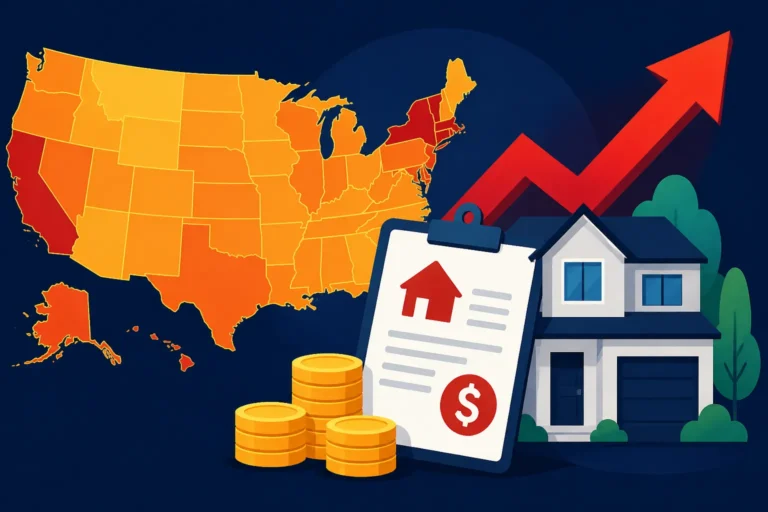
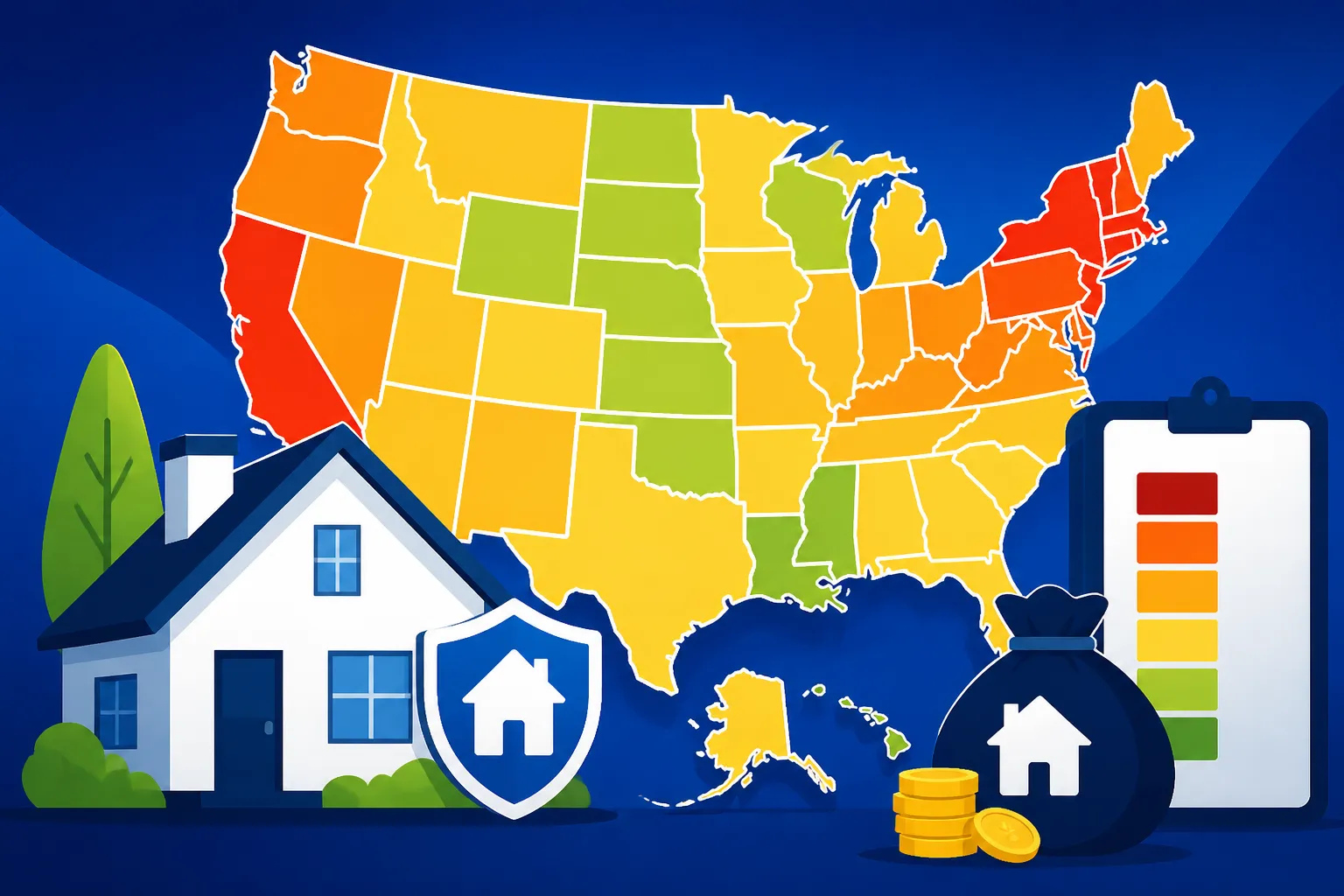
Below is a comprehensive ranking of all 50 states and the District of Columbia, based on the projected effective property tax rates for the 2026 tax year. These figures represent the percentage of a home's market value paid in taxes annually.
| Rank | State | Effective Tax Rate (Projected 2026) |
|---|---|---|
| 1 | New Jersey | 2.45% |
| 2 | Illinois | 2.22% |
| 3 | New Hampshire | 1.91% |
| 4 | Connecticut | 1.84% |
| 5 | Vermont | 1.82% |
| 6 | Texas | 1.74% |
| 7 | Nebraska | 1.65% |
| 8 | Wisconsin | 1.61% |
| 9 | Ohio | 1.55% |
| 10 | Iowa | 1.52% |
| 11 | Pennsylvania | 1.48% |
| 12 | Michigan | 1.42% |
| 13 | Rhode Island | 1.39% |
| 14 | New York | 1.37% |
| 15 | Kansas | 1.34% |
| 16 | Alaska | 1.22% |
| 17 | Maryland | 1.08% |
| 18 | Massachusetts | 1.06% |
| 19 | South Dakota | 1.05% |
| 20 | Oregon | 0.99% |
| 21 | Maine | 0.98% |
| 22 | Missouri | 0.96% |
| 23 | Minnesota | 0.95% |
| 24 | North Dakota | 0.94% |
| 25 | Washington | 0.89% |
| 26 | Indiana | 0.84% |
| 27 | Georgia | 0.82% |
| 28 | Oklahoma | 0.81% |
| 29 | Florida | 0.79% |
| 30 | Kentucky | 0.78% |
| 31 | California | 0.73% |
| 32 | North Carolina | 0.72% |
| 33 | Virginia | 0.71% |
| 34 | Montana | 0.70% |
| 35 | New Mexico | 0.69% |
| 36 | Mississippi | 0.68% |
| 37 | Idaho | 0.65% |
| 38 | Tennessee | 0.62% |
| 39 | Arizona | 0.60% |
| 40 | Arkansas | 0.59% |
| 41 | Delaware | 0.58% |
| 42 | Nevada | 0.55% |
| 43 | Wyoming | 0.54% |
| 44 | West Virginia | 0.53% |
| 45 | Utah | 0.51% |
| 46 | South Carolina | 0.50% |
| 47 | District of Columbia | 0.49% |
| 48 | Colorado | 0.48% |
| 49 | Louisiana | 0.47% |
| 50 | Alabama | 0.39% |
| 51 | Hawaii | 0.29% |
Strategies to Manage and Lower Your Tax Burden
If you find yourself in one of the high-tax states—or even if you’re in a low-tax state and your bill just feels too high—don't lose hope. There are several tools at your disposal to fight back. The most common is the exemption. Most states offer specific breaks for certain groups of people. For example, Senior & Over-65 Property Tax Exemptions and Freezes can significantly reduce the taxable value of your home or even "freeze" your bill so it never goes up again as long as you live there. These programs are designed to keep seniors in their homes, but you usually have to meet certain income requirements to qualify.
Veterans also have access to incredible benefits that many don't fully utilize. Every state offers some form of property tax relief for those who served, with many states providing a 100% exemption for 100% disabled veterans. If you or a loved one has served, checking into Veteran & Disabled Veteran Property Tax Exemptions should be your top priority. It’s not just a "thank you"; it’s a substantial financial benefit that can save you tens of thousands of dollars over the life of your homeownership.
If you believe your home has been valued unfairly, you have the right to protest. The assessment process is not perfect. Thousands of homes are valued using automated algorithms that don't know your kitchen is from 1975 or that your basement floods every time it rains. By filing an appeal, you are asking the county to take a second look. This is a formal process, but it is one that many homeowners win every year. You’ll need to provide "comparables"—similar homes in your area that sold for less than your assessed value—to prove your case.
Finally, be aware of what triggers a reassessment. In many places, simply pulling a permit for a renovation can alert the tax man that your home is now worth more. While adding a new deck or finishing the basement increases your home’s value, it also increases your annual tax liability. It’s a bit of a double-edged sword. Before you start a major project, it’s worth doing a quick calculation to see how much that "dream kitchen" is going to cost you in extra taxes every year for the next decade.
The Future of Property Taxes: 2026 and Beyond
As we move through 2026, the trend we are seeing is one of "taxpayer revolt." In many states, voters are pushing for more stringent caps on property tax growth. We are seeing more legislative sessions focused on "property tax relief packages," where states use surplus sales or income tax revenue to buy down local property tax rates. This is a direct response to the housing affordability crisis. When people can’t afford the "rent" on a home they already own, the political pressure becomes unbearable for local officials.
We are also seeing a shift in how schools are funded. Some states are looking at moving away from the property-tax-heavy model and instead using a statewide consumption tax or a higher income tax to ensure school funding is more equitable across different zip codes. This would be a massive shift in the American landscape, as it would decouple your home value from the quality of your local school. However, these changes move slowly and face significant opposition from wealthy districts that want to keep their tax dollars local.
Inflation will likely continue to be the biggest driver of property tax increases in the near term. As long as home values remain high and the cost of government services continues to rise, tax bills will follow. The best thing you can do as a homeowner is to stay engaged. Attend your local school board and city council meetings. These are the people who actually set the "levy"—the total amount of money they need to collect. If you want lower taxes, you have to be part of the conversation about local spending.
In the end, property tax is the price we pay for the communities we live in. Whether you choose a high-tax state with world-class amenities or a low-tax state with a more "rugged" approach to public services, knowing where you stand in the national rankings is the first step toward financial peace of mind. Stay vigilant, file your exemptions, and don't be afraid to question the assessor's office when the numbers don't add up.
Disclaimer
This guide is for informational purposes only and does not constitute legal, financial, or tax advice. Property tax laws, rates, and exemption eligibility vary significantly by jurisdiction and are subject to frequent legislative changes. Always consult with a qualified tax professional or your local county assessor's office to confirm the specific details of your property tax liability and any relief programs available to you.