Highest Property Taxes in the US (States, Counties, Cities)
Opening your mailbox to find a property tax bill that has jumped by twenty percent is a gut-punch that millions of American homeowners experience every year. It’s a specialized kind of stress that keeps you up at night, wondering if you can actually afford to stay in the home you’ve spent a decade maintaining. This guide dives deep into the regions currently carrying the highest property tax burdens in the US, explaining why these costs are skyrocketing and providing actionable insights for navigating these expensive markets.
The Emotional and Financial Weight of High Property Taxes
For most families, the mortgage payment is a fixed, predictable number—until the property tax assessment arrives. When you live in a high-tax jurisdiction, your tax bill can often rival or even exceed the principal and interest of your loan. This isn't just a line item on a budget; it’s a fundamental shift in how you live. People in high-tax states often have to delay home repairs, cut back on travel, or even reconsider their retirement timelines because a significant portion of their fixed income is being diverted to local government coffers.
The frustration often stems from the lack of control. Unlike a utility bill that you can lower by turning off the lights, property taxes are levied based on a perceived value that might not even reflect what you could get for your house in a quick sale. This is why understanding the Effective vs Nominal Property Tax Rate Explained is so vital. The nominal rate might look small on paper, but the effective rate—what you actually pay relative to your home's value—is the number that determines whether you can afford to keep your keys.
Beyond the immediate cash flow issues, high property taxes create a long-term barrier to wealth building. Every dollar spent on property taxes is a dollar that isn't being invested in a 401(k) or a 529 college savings plan. For seniors living on a fixed income, these rising costs can be devastating, leading many to search for Senior & Over-65 Property Tax Exemptions and Freezes just to keep their childhood homes from being sold at a tax auction. It's a high-stakes environment where the "tax man" is a constant, uninvited guest at the dinner table.
States with the Highest Property Taxes in 2026
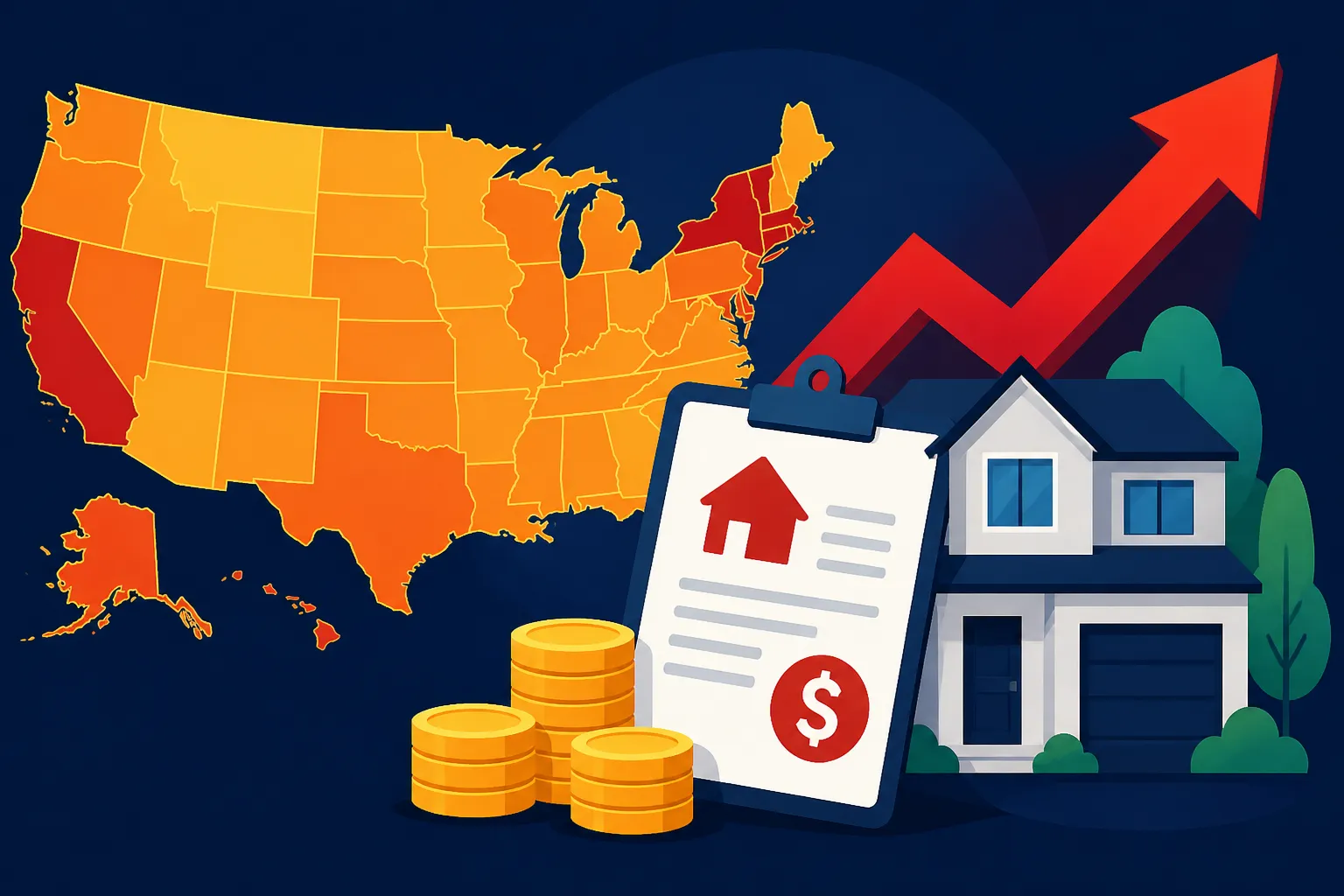
When we look at the national landscape, a few usual suspects consistently top the list. These states often provide high-quality public services, but the cost of those services is borne almost entirely by local homeowners. It’s a trade-off that many residents are beginning to question as the cost of living continues to outpace wage growth in the Northeast and Midwest.
New Jersey: The Perpetual Heavyweight champion
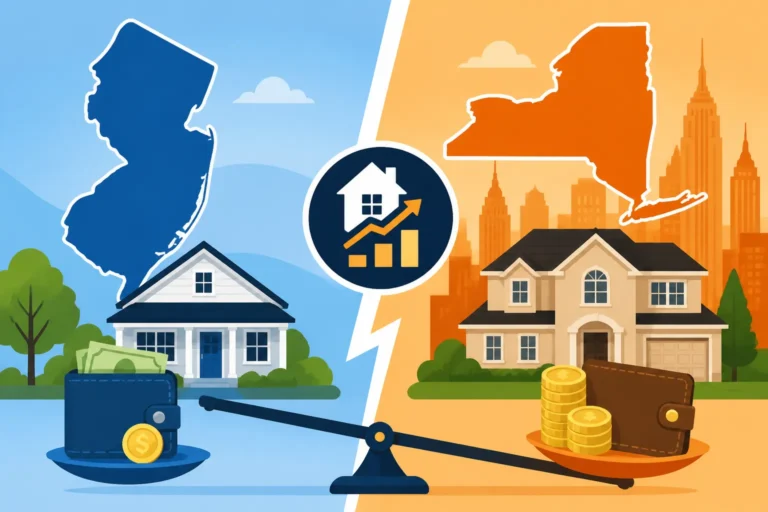
New Jersey has held the title of the state with the highest property taxes for years, and 2026 is no exception. The New Jersey Property Tax Rate (Highest in US) is driven by a complex web of over 500 small municipalities and nearly 600 school districts, each with its own administrative costs. In towns like Ridgewood or Montclair, it is not uncommon for a modest colonial-style home to carry a tax bill of $20,000 to $30,000 per year.
The "Garden State" burden is a result of a heavy reliance on property taxes to fund everything from police departments to local libraries, with relatively less support coming from the state’s general fund compared to other regions. This creates a hyper-local tax environment where your bill can vary wildly just by crossing a street into a different township. Homeowners here often feel they are paying for a premium lifestyle, but as the bills climb, the "exit tax" (the nickname for the high cost of selling and leaving) becomes a common topic at local barbecues.
Illinois: The Midwestern Squeeze
Coming in as a strong second is Illinois, where the property tax situation is particularly dire in the suburbs surrounding Chicago. The Illinois Property Tax Rate (2nd Highest) is a major point of contention for residents who see their home values stagnating while their tax bills continue to climb. Much of this is attributed to the state’s massive unfunded pension liabilities and a fragmented system of local government.
In places like Lake County or DuPage County, the tax burden can feel suffocating. Homeowners often find themselves in a "tax trap" where they cannot sell their homes because potential buyers are scared off by the five-figure annual tax bills. This has led to a significant push for reform, but for now, residents are left navigating a system where How Are Property Taxes Calculated in Illinois? remains one of the most searched topics by frustrated taxpayers looking for any shred of relief.
The High-Cost Northeast: Connecticut and New Hampshire
Connecticut and New Hampshire also rank near the top, though for different reasons. Connecticut’s high taxes are often tied to the high cost of its prestigious school districts and the wealth concentrated in Fairfield County. Residents frequently consult the Connecticut Property Tax & Mill Rates to see how their specific town compares to neighbors like Greenwich or Westport, where the sheer value of the real estate drives the total tax take to astronomical levels.
New Hampshire presents a unique case. It has no state income tax and no sales tax, which sounds like a dream until you see the property tax bill. Because the state has almost no other way to generate revenue, the local property tax is the primary engine for the entire government. This makes Lowest Property Tax States 2027 lists a bit misleading; you might not pay income tax in the Granite State, but your house is essentially your tax bill.
The Counties Carrying the Heaviest Tax Loads
While state averages give us a bird's-eye view, the real pain is felt at the county level. In certain parts of the country, the concentration of wealth and the demand for high-end public services create "pockets of pain" where property taxes are a significant percentage of the average household income.
New York's Suburban Ring: Westchester and Nassau
If you want to see the highest property tax bills in the nation, look no further than Westchester County, New York. It consistently ranks as one of the most expensive places to own a home in the world. The Westchester County Property Tax Rate is driven by elite school districts that residents are fiercely protective of, even as they grumble about the $25,000+ tax bills for a standard four-bedroom home in Scarsdale or Chappaqua.
Nassau County on Long Island is not far behind. The combination of high property values and a dense population requiring extensive infrastructure makes for a volatile tax environment. Many residents in these areas spend a significant portion of their year just working to pay the property tax portion of their Escrow & Impound Accounts Explained. It’s a prestige-heavy environment, but the financial toll is real, leading to a constant stream of tax grievances filed every spring.
The Texas No-Income-Tax Trade-off
Texas is often touted as a low-tax state, but that’s only if you aren't a homeowner. Without a state income tax, the burden shifts heavily to property owners. In counties like Harris (Houston), Dallas, and Travis (Austin), the tax rates are some of the highest in the southern United States. This is Why Are Texas Property Taxes So High? is such a common question for newcomers moving from California or New York.
In Austin, specifically, the rapid appreciation of home values has led to "tax shock" for long-term residents. Even with a Texas Homestead 10% Cap Explained, the annual increases can be enough to price families out of neighborhoods they’ve lived in for decades. The reliance on local property taxes to fund the "Robin Hood" school funding system means that property owners in wealthy districts are essentially subsidizing the rest of the state, a policy that remains a hot-button political issue in every election cycle.
Bergen and Essex Counties: New Jersey's Epicenter
Returning to New Jersey, Bergen and Essex Counties represent the pinnacle of property tax density. In Bergen County Property Tax Rate discussions, you'll hear about "Gold Coast" towns where the proximity to Manhattan drives property values—and tax assessments—into the stratosphere. Essex County, which includes high-tax enclaves like Millburn and Short Hills, often sees effective tax rates that make even wealthy executives wince. The infrastructure, the schools, and the services are top-tier, but the price of entry is a perpetual, high-stakes tax obligation.
| State | Avg. Effective Tax Rate | Highest Tax County | Typical Annual Bill (High-End) |
|---|---|---|---|
| New Jersey | 2.47% | Bergen / Essex | $15,000 – $35,000 |
| Illinois | 2.23% | Lake / Cook | $10,000 – $22,000 |
| New Hampshire | 2.09% | Rockingham | $8,000 – $18,000 |
| New York | 1.90% | Westchester / Nassau | $12,000 – $40,000 |
| Connecticut | 1.88% | Fairfield | $10,000 – $25,000 |
| Texas | 1.74% | Travis / Fort Bend | $7,000 – $18,000 |
Cities and Localities Where Property Taxes Peak
Cities often have their own additional layers of taxation that can make an already high county rate feel impossible. Between city-specific levies, library districts, and specialized infrastructure bonds, the "city tax" can be the straw that breaks the homeowner's back.
Chicago and the "Collar Counties"
Chicago is a fascinating case of high taxes meeting complex assessment politics. The What Is the Property Tax Rate in Chicago? is influenced by a massive city budget and a school system that is constantly in need of more funding. However, it’s often the suburban "collar counties" like Lake and Will where the rates actually peak, as these areas lack the massive commercial tax base of downtown Chicago and must rely almost entirely on residential rooftops to fund their local governments.
Residents in these areas often feel the sting of Why Do Property Taxes Increase? more than most, as every new city project or school renovation project seems to result in a direct line-item increase on their next bill. The lack of corporate tax revenue in the suburbs means that the homeowners are the primary "ATM" for local municipalities.
The Impact of Special Taxing Districts
In many high-growth areas, particularly in states like Texas and Florida, you aren't just paying city and county taxes. You might also be in a Municipal Utility District (MUD) or a Public Improvement District (PID). These are What Is a Taxing District? examples that can add hundreds or even thousands of dollars to your annual bill to pay for the roads, sewers, and parks in a new subdivision.
For a homeowner in a suburban Houston neighborhood, the MUD tax can sometimes double the base property tax rate. It’s a hidden cost that many buyers don't fully realize until their first full year of ownership. These districts often have their own boards and their own debt, making them a "government within a government" that is largely invisible to the average resident until the bill arrives.
High-Tax Enclaves in "Low-Tax" States
Even in states with generally lower tax rates, specific cities can be outliers. For example, in Ohio, the Ohio Property Tax Rate Explained varies significantly, but cities like Shaker Heights or Cleveland Heights have famously high rates to support their historic infrastructure and highly-regarded schools. Similarly, in Pennsylvania, the Pennsylvania Property Tax Rate Explained can feel quite reasonable until you look at the school district taxes in the wealthy suburbs of Philadelphia, such as the Main Line area. These enclaves operate on a different financial plane than the rest of their states, often priding themselves on the services that those high taxes provide.
Why Do Some Areas Have Such High Property Taxes?
It’s easy to blame "greedy politicians," but the reality of high property taxes is usually rooted in the fundamental way we fund our society in the United States. When you see a massive bill, it’s usually the result of three specific factors converging at once.
Reliance on Local Funding for Schools
In the US, education is primarily a local responsibility. If a community wants a state-of-the-art high school, a robust robotics program, and small class sizes, the money almost always comes from property taxes. This is why you’ll see How Do School Taxes Affect Property Taxes? listed as the largest portion of almost every bill. In high-tax states like New Jersey and New York, local school districts can account for 60% to 70% of the total property tax bill.
This creates a cycle where high-quality schools drive up property values, which in turn leads to higher assessments, which then funds even better schools. While this is great for education, it’s incredibly hard on homeowners who no longer have children in the school system but are still required to fund the rising costs of local education.
Lack of Alternative Revenue Sources
As mentioned with New Hampshire and Texas, property taxes are often high because other taxes are low or non-existent. If a state doesn't have an income tax, it still needs to pave roads and pay firemen. The Texas Property Tax Rate Explained is high because the state has made a conscious choice to tax property rather than labor.
This "shift" in the tax burden can be beneficial for high-earning individuals who save more on income tax than they pay in property tax, but it is often regressive for middle-class families or retirees whose primary asset is their home. It’s a matter of picking your poison: do you want a smaller paycheck every month (income tax) or a massive bill once or twice a year (property tax)?
Infrastructure, Pensions, and Debt
Older states in the Northeast and Midwest face a unique challenge: crumbling infrastructure and legacy pension costs. When a city has to maintain 100-year-old sewer lines while also paying out retirement benefits for thousands of former employees, the property tax is often the only lever they have left to pull. This is a major factor in the Why Are New Jersey Property Taxes So High? debate. It’s not just about current services; it’s about paying for the decisions—and the infrastructure—of the last fifty years.
Strategies to Manage and Mitigate High Property Tax Bills
Living in a high-tax area doesn't mean you are completely powerless. There are several tools available to homeowners to ensure they aren't paying more than their fair share, though they require a proactive approach and a bit of "tax homework."
Navigating the Appeal Process
Most homeowners simply accept their assessment as gospel, but the truth is that assessors make mistakes. Learning How to Appeal Property Taxes: Complete Guide is the single most effective way to lower your bill. By providing Evidence & Comps for a Property Tax Appeal, you can prove that your home is valued higher than similar houses in your neighborhood.
In high-stakes counties like Cook County, IL, or Harris County, TX, protesting your taxes is practically a local sport. Many residents hire professional consultants, but it is entirely possible to do it yourself if you are organized and persistent. The goal isn't to say "taxes are too high" (the board doesn't care); the goal is to say "my value is incorrect compared to my neighbor's," which is a legal argument the board must address.
Maximizing Exemptions and Credits
Every state offers some form of property tax relief, but they rarely apply them automatically. You have to ask for them. The Homestead Exemption: Complete State-by-State Guide is the first place every primary homeowner should look. In some states, this exemption can shave thousands of dollars off your assessed value.
Beyond the standard homestead, there are specific programs for veterans, disabled individuals, and the elderly. If you are a veteran, you should check for a Veteran & Disabled Veteran Property Tax Exemptions in your area, as some states offer a total exemption for 100% disabled veterans. These programs are designed to keep vulnerable populations in their homes, but the paperwork must be filed by the deadline—usually in the early spring.
Understanding Assessment Caps
Some states have realized that rapid property value growth can "tax people out of their homes" and have implemented caps. The most famous is California Prop 13 Explained (2% Cap), which limits how much an assessment can rise each year regardless of how much the market value increases.
Florida has a similar program called "Save Our Homes," and Texas has a 10% cap on homesteaded properties. Knowing how a Homestead Assessed Value Cap? works in your state can help you predict your future tax liability. If you are moving to a high-tax state, buying a home that has been under a cap for a long time can lead to a Property Tax Reassessment After Buying a Home that results in a massive jump in taxes, so always calculate your "post-purchase" tax bill rather than relying on what the current owner is paying.
Disclaimer
This guide is for informational purposes only and does not constitute legal, financial, or tax advice. Property tax laws, rates, and exemption eligibility vary significantly by jurisdiction and are subject to frequent changes by local and state authorities. Always consult with a qualified tax professional or your local assessor's office to confirm specific details regarding your property and tax obligations.