How Often Is Property Reassessed?
Opening your mailbox to find a notice of reassessment can feel like a punch to the gut, especially when you have worked hard to balance your monthly budget. Many homeowners live in a state of constant anxiety, wondering when the local tax assessor will decide their property is worth significantly more, leading to a spike in their annual tax bill. This guide clarifies the confusing schedules of property revaluation and provides actionable steps to handle the financial impact.
The Standard Reassessment Cycle: Why It Varies by State
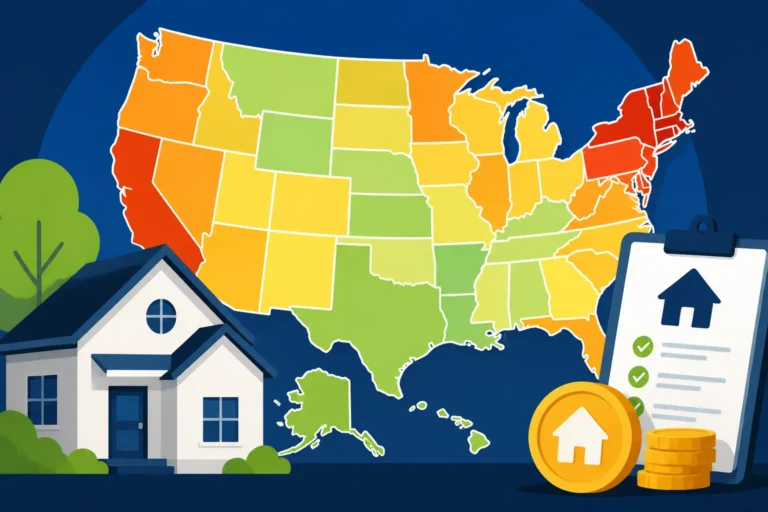
The frequency with which your home is reassessed depends almost entirely on where you live. In the United States, there is no federal standard for how often local governments must update property values. Instead, each state sets its own rules, and within those states, individual counties or municipalities often have the leeway to decide their own schedules. This creates a patchwork of regulations that can leave homeowners in the dark if they don't know the local statutes.
Annual Reassessments: Staying Current with the Market
In states like Texas and Florida, the reassessment process happens every single year. This approach is designed to keep property values as close to the current market reality as possible. When the market is booming, your Assessed Value vs Market Value vs Taxable Value might climb rapidly year over year. The logic behind annual reassessments is that smaller, frequent increases are easier for a community to digest than a massive, 20% jump that occurs once every decade.
However, for a homeowner, an annual cycle means you are never truly "safe" from a tax increase. Every January, the appraisal district begins its work, looking at sales data from the previous year. If your neighbors sold their homes for record prices, your assessment will likely reflect that trend. Understanding How Often Is Property Reassessed? is vital here because it reminds you that your tax planning must be an annual event, not a "set it and forget it" chore.
Periodic Reassessments: The Multi-Year Waiting Game
Other states prefer a periodic approach, where reassessments happen every three, four, or even ten years. For example, in Maryland, properties are reassessed on a three-year cycle, but the state is divided into three groups so that one-third of the properties are updated each year. In parts of the Northeast, such as New Jersey or Pennsylvania, some municipalities may go a decade or longer without a town-wide revaluation.
The danger of a long waiting period is the "revaluation shock." If your town hasn't updated values since 2014 and suddenly decides to conduct a full reassessment in 2026, you might see your home’s value double or triple overnight. While the tax rate (the millage) often drops to compensate for higher values, the redistribution of the tax burden usually hits long-term homeowners the hardest. This is a primary reason Why Do Property Taxes Increase? so drastically in certain regions compared to others.
Event-Driven Reassessments: When Ownership Changes Hands
A few states, most notably California, operate on an "acquisition-based" system. Under the famous Proposition 13, a property is only fully reassessed to its current market value when it is sold or when significant new construction occurs. Between sales, the assessed value can only increase by a maximum of 2% per year. This creates a massive disparity between a person who has owned their home since the 1970s and a young family who just bought the house next door.
This system provides incredible stability for long-term residents, but it makes Property Tax Reassessment After Buying a Home a major financial milestone for buyers. If you are moving to a state with event-driven reassessment, you cannot look at the seller’s current tax bill to estimate your own; you must calculate your taxes based on your purchase price, as that will be the new "base year" value for the property.
Triggers That Spark an Immediate Revaluation
Even if you live in an area that only reassesses every five years, certain actions can trigger an "interim assessment." Local government offices keep a close eye on building permits and real estate records to ensure they aren't missing out on tax revenue generated by property improvements or transfers.
New Construction and Major Renovations
Adding a bedroom, finishing a basement, or installing a luxury swimming pool are all seen as value-adding activities. In most jurisdictions, the building department shares permit data with the assessor’s office. Once the work is completed—and sometimes even while it is in progress—an appraiser may visit the property or use the permit data to increase your home’s value.
Many people ask, Does Renovating Increase Property Taxes? and the answer is almost always yes if the renovation increases the square footage or significantly improves the "grade" of the home. Replacing a leaky roof usually won't trigger a hike, as that is considered maintenance. However, turning a dusty attic into a master suite definitely will. The assessor views this as a change in the physical description of the property, which warrants an immediate adjustment regardless of where the county is in its standard reassessment cycle.
Change of Use or Zoning
If a property changes from residential to commercial use, or if a large plot of land is subdivided into smaller lots for a housing development, a reassessment is virtually guaranteed. Zoning changes indicate a "highest and best use" that is often much more valuable than the previous state. For instance, a small farmhouse on 10 acres is valued as a single residence, but if that land is rezoned for a 20-unit townhouse complex, the land value alone will skyrocket.
Even for smaller homeowners, if you start running a full-scale business out of a converted garage, you might find your property being classified differently. This can lead to a higher tax rate or the loss of certain residential exemptions. It is essential to understand How Are Property Taxes Calculated? in your specific county to see how usage classifications affect the final bill you receive in the mail.
Sales and Transfers of Ownership
As mentioned earlier, a sale is the most common trigger for a revaluation. In many states, the "market value" is legally defined as what a willing buyer pays a willing seller. Therefore, the sales price is the most concrete evidence of value available to the assessor. When the deed is recorded at the county clerk’s office, a notification is sent to the assessor.
It is a common misconception that transferring a home to a family member or a trust will avoid reassessment. While some states have "parent-to-child" exclusions, many do not. If you are planning a transfer, you need to research Property Tax Assessment & Reassessment Explained for your specific state to see if the transfer will trigger a "step-up" in taxes. In some cases, a simple quitclaim deed can result in a massive tax hike for the person receiving the property.
The Role of the County Assessor’s Office
The assessor is not the person who sets your tax rate; their only job is to determine the value of every property in their jurisdiction. To do this for thousands of homes, they cannot possibly visit every house every year. Instead, they rely on data-driven methods that, while efficient, are often prone to error.
Mass Appraisal Techniques vs. Physical Inspections
Most counties use "mass appraisal." This involves using computer models to analyze recent sales of similar homes in your neighborhood. The model looks at factors like square footage, lot size, age of the home, and the number of bathrooms. It then applies a formula to your home to estimate what it would sell for on the open market.
The problem with mass appraisal is that it doesn't know if your kitchen is from 1960 or if your basement floods every time it rains. It assumes your home is in "average" condition for its age and neighborhood. This is where How Is Assessed Value Determined? becomes a point of contention for many homeowners. If the computer thinks your house is a renovated gem but it’s actually a "fixer-upper," your assessment will be unfairly high.
Market Adjustments and Ratio Studies
Assessors also perform ratio studies to see how close their values are to actual sale prices. If they find that homes are selling for 20% more than the values on the tax rolls, they may apply a "market adjustment factor" to the entire neighborhood. This means your value could go up by 20% even if you haven't touched a hammer or seen an appraiser in years.
These adjustments are purely mathematical and often fail to account for hyper-local issues, such as a new highway being built behind a specific row of houses or a local factory closing down. Because the assessor's office is often understaffed, these broad strokes are the only way they can keep up with the workload. This is why knowing How to Appeal Property Taxes: Complete Guide is the most powerful tool a homeowner has to ensure their individual circumstances are being considered.
How Reassessment Impacts Your Monthly Budget
The most painful part of a reassessment isn't the number on the paper; it’s the change in your monthly mortgage payment. For those who pay their taxes through an escrow account, a reassessment can lead to a double-whammy of financial stress.
The Escrow Shortage Trap
Most lenders collect one-twelfth of your annual property taxes each month as part of your mortgage payment. When your property is reassessed and your tax bill jumps, the lender suddenly realizes they haven't been collecting enough money. This creates an "escrow shortage."
Not only will your monthly payment increase to cover the new, higher tax rate, but the lender will also add an extra "catch-up" fee to cover the money they already paid out on your behalf for the previous bill. This can result in a monthly payment increase of several hundred dollars. Understanding Escrow & Impound Accounts Explained is critical for avoiding the panic that sets in when your mortgage servicer sends you a letter demanding an immediate lump-sum payment or a drastically higher monthly check.
Tax Caps and Protective Legislation
Thankfully, many states have recognized the danger of rapid reassessments and have implemented "caps" to protect homeowners—specifically those living in their primary residence. These caps limit how much your assessed value can grow each year, regardless of how much the market value increases.
| State | Assessment Cap Type | Annual Limit | Key Requirement |
|---|---|---|---|
| Florida | Save Our Homes | 3% or CPI | Must have Homestead Exemption |
| Texas | Homestead Cap | 10% | Primary residence only |
| California | Proposition 13 | 2% | Base year resets upon sale |
| New York | Assessment Caps | Varies | Mostly applies to 1-3 unit homes |
For example, Property Tax Assessment Caps (Prop 13, Save Our Homes, Texas 10%) are the only things standing between some homeowners and tax-induced foreclosure. If you live in a "hot" market where prices are doubling every few years, these caps ensure that your taxes only grow at a predictable, manageable rate. However, the moment you sell that house or lose your homestead status, the "reset" to full market value can be staggering for the next owner.
Geographic Deep Dive: How Often It Happens in Key States
To give you a better idea of the "real world" application of these rules, let’s look at how a few major states handle their reassessment schedules. This helps illustrate just how different the experience can be depending on your zip code.
Texas and Florida: The Annual Grind
In Texas, the appraisal districts are required to reassess every year. You will typically receive your "Notice of Appraised Value" in April or May. This gives you a short window to protest before the final tax rates are set by school districts and cities in the fall. Because it happens every year, Texas homeowners have become very adept at the protest process, often hiring consultants to fight their values annually.
Florida also operates on an annual cycle, with the "TRIM" (Truth in Millage) notices being sent out in August. Florida’s system is heavily influenced by the Save Our Homes cap, which creates a significant "portability" benefit. This allows long-term residents to move their tax savings from one home to another, which is a unique feature you can learn more about in the Florida Save Our Homes Explained (3% Cap) guide.
New Jersey and New York: The Complex Northeast
New Jersey is infamous for having the Highest Property Taxes in the US (States, Counties, Cities). Here, the frequency of reassessment is managed at the municipal level. Some towns perform "revaluations" (full inspections) while others perform "reassessments" (data-driven updates). It is not uncommon for a New Jersey town to go 15 years without a full revaluation, leading to a massive "catch-up" year that causes chaos in the local real estate market.
New York is even more complex. In New York City and Nassau County, the rules are different from the rest of the state. Nassau County has struggled for years with its reassessment cycle, often freezing values for long periods before attempting to fix the system. This inconsistency makes it very difficult for homeowners to predict their long-term costs. If you are a senior in this region, you definitely need to check if you qualify for the Senior & Over-65 Property Tax Exemptions and Freezes to protect yourself from these unpredictable jumps.
Preparing for a Reassessment Notice
Knowledge is your best defense against an unfair tax hike. You shouldn't wait until the notice arrives to start thinking about your home's value. Being proactive can save you thousands of dollars over the life of your homeownership.
Reviewing Your Property Card for Errors
Every assessor’s office maintains a "property card" or "record card" for your home. This document lists the data they are using to value your property: the number of bedrooms, the square footage, the type of heating system, and any "extras" like porches or sheds. I have seen countless cases where a home is listed as having a "finished basement" when it’s actually just a crawl space, or where the square footage is off by several hundred feet.
If there is an error on your property card, the reassessment will be wrong from the start. You can usually view this card online through your county’s appraisal district website. If you find a mistake, call the office immediately. Often, they can fix a factual error without you even having to file a formal appeal. This is a crucial step in How Is Assessed Value Determined? because it ensures the data entering the computer is actually accurate.
Gathering Evidence for a Potential Protest
If your reassessment arrives and the value seems way too high, you have the legal right to protest. However, you cannot just say "my taxes are too high." You need evidence. This evidence usually falls into two categories: market data and equity data.
Market data involves finding Evidence & Comps for a Property Tax Appeal that prove similar homes in your area are selling for less than your assessed value. Equity data involves looking at your neighbors' assessments—if their identical house is valued at $400,000 and yours is $450,000, you have a strong case for an "unequal appraisal" argument. Keep a file of photos showing any damage or dated features in your home that might make it less valuable than the "renovated" homes the assessor is using for comparison.
Summary Table of Reassessment Frequencies
| State Type | Reassessment Frequency | Example States | Key Risk |
|---|---|---|---|
| Annual | Every 12 Months | TX, FL, AZ | Frequent small increases |
| Periodic | 2 to 10 Years | MD, VA, NJ, PA | Large "catch-up" jumps |
| Acquisition-Based | Only Upon Sale | CA | High taxes for new buyers |
| Mixed/Local | Set by Town/County | GA, NY, IL | Unpredictability |
By understanding these cycles, you can take the "surprise" out of the property tax process. Whether you are living in an annual reassessment state like Texas or a sale-driven state like California, staying informed about your local assessor's habits is the best way to keep your housing costs under control.
Disclaimer
This guide is provided for informational purposes only and does not constitute legal, financial, or tax advice. Property tax laws and reassessment schedules are subject to change by local and state legislative bodies. Always consult with a qualified tax professional or your local county assessor's office to confirm the specific rules and deadlines applicable to your property.