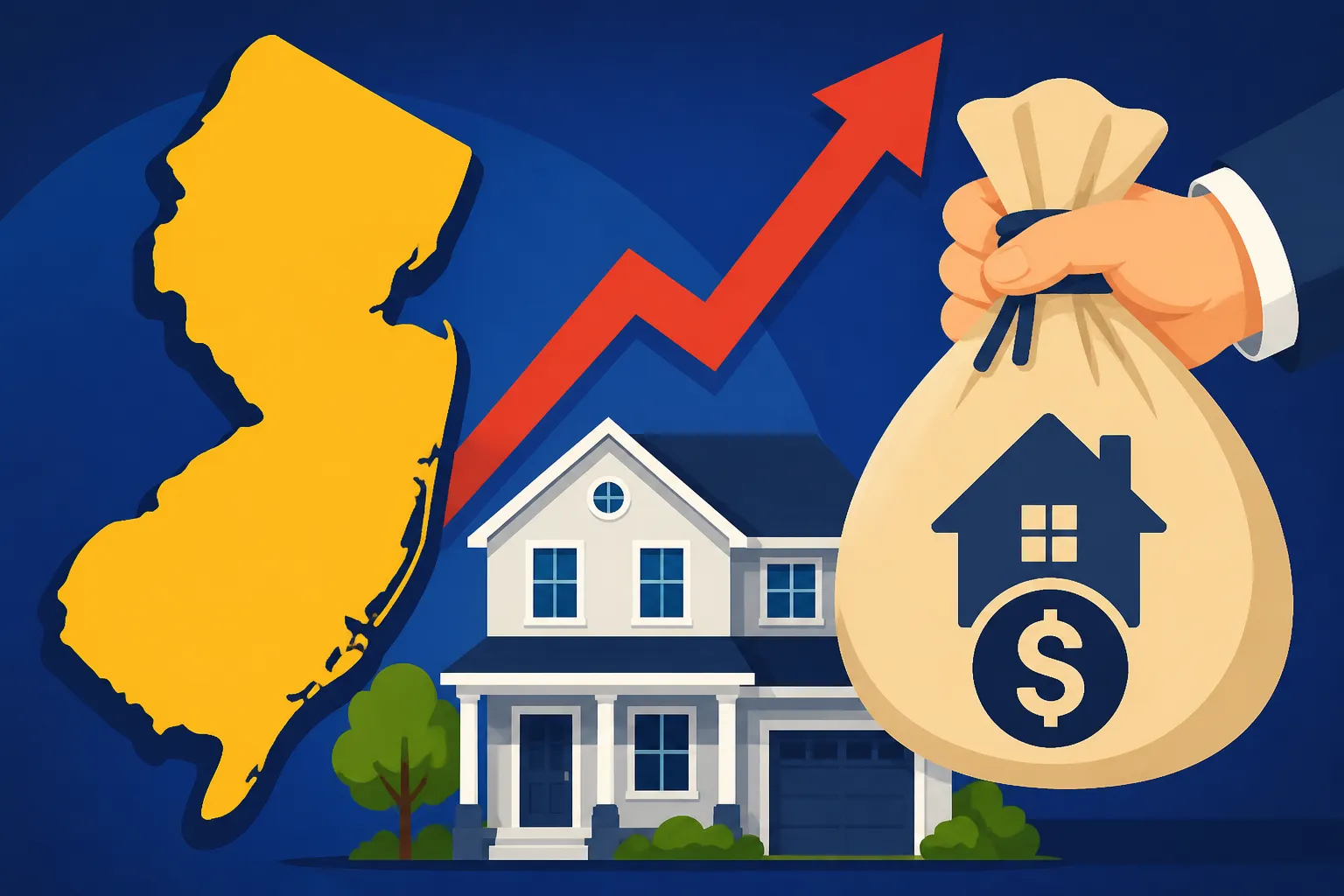
Why Are New Jersey Property Taxes So High?
Opening your mail to find a property tax bill that looks more like a college tuition statement is a uniquely painful New Jersey tradition. Many homeowners feel trapped by escalating costs that seem to defy logic, especially when compared to neighboring states. This guide meticulously breaks down the systemic, historical, and local factors driving these costs and explores the relief programs available to help you stay in your home.
The Foundation of New Jersey High Property Taxes
When you talk to anyone who has lived in the Garden State for more than five minutes, the conversation eventually turns to the "exit tax" or the sheer impossibility of the tax bill. But why is it like this? It isn’t just one bad policy or a single greedy administration; it is a complex web of deep-seated traditions and high expectations for public services.
The Concept of Home Rule and Local Control
New Jersey is famous—or perhaps infamous—for its dedication to "Home Rule." We have 564 municipalities, and each one of them largely functions as its own little kingdom. This means that nearly every town, no matter how small, insists on having its own police department, its own fire department, its own public works crew, and its own administrative staff. While this provides a high level of personalized service and a sense of community identity, it is incredibly expensive to maintain.
Imagine a five-mile stretch of road that passes through three different towns. In New Jersey, that might mean three different police chiefs, three different sets of municipal buildings, and three different payroll departments. The lack of shared services is a massive contributor to why the New Jersey Property Tax Rate (Highest in US) remains at the top of the national charts. Efforts to consolidate services are often met with fierce local resistance because residents don't want to lose "their" local identity, even if it means saving thousands of dollars a year.
The Cost of Public Education Funding
New Jersey consistently ranks at the very top of national lists for public school quality. Whether it is graduation rates, test scores, or college readiness, our schools are elite. However, that quality comes with a staggering price tag. In most New Jersey towns, the school portion of the property tax bill accounts for 50% to 60% of the total amount due.
Unlike many other states that rely more heavily on state-level income or sales taxes to fund education, New Jersey places the lion's share of the burden on local property owners. This creates a massive disparity between wealthy districts and those with lower property values. While the state does provide "State Aid," the formula for distributing it is a constant source of political warfare. If you live in a "non-Abbott" or middle-class district, you are likely footing almost the entire bill for your local schools through your quarterly tax payments. Understanding How Do School Taxes Affect Property Taxes is essential for any homeowner trying to decipher their bill.
Administrative Bloat and Overlapping Jurisdictions
Beyond the municipal and school layers, New Jersey homeowners also pay for county-level government and various special districts. You might be paying into a county open space fund, a regional sewerage authority, or a local lighting district. Each of these layers has its own board, its own administrative costs, and its own taxing authority.
When you look at the Highest Property Taxes in New Jersey by County, you see that areas like Bergen, Essex, and Union often lead the pack. This is partly due to the sheer density of these areas. High density requires more infrastructure, more frequent road repairs, and more complex emergency services. The administrative cost of managing a million people across dozens of tiny municipalities in a single county is significantly higher than managing a single large city with a unified government.
Comparing New Jersey to the Rest of the Country
It is one thing to know your taxes are high; it is another to see how we stack up against everyone else. For years, New Jersey has held the title of having the highest effective property tax rate in the nation. This means that relative to the value of the homes, New Jerseyans pay more than anyone else.
New Jersey Property Tax Rate vs the National Average
To put things in perspective, the national average effective property tax rate often hovers around 1% of a home's value. In New Jersey, many residents are paying an effective rate of 2.2% to 3% or even higher. On a $500,000 home—which is increasingly becoming the "entry-level" price in many NJ suburbs—a 2.5% tax rate results in a $12,500 annual bill.
In other parts of the country, that same $12,500 might be the tax bill for a $1.2 million mansion. This disparity is why so many people look toward the Lowest Property Tax States 2027 when they reach retirement age. The reality is that the New Jersey Property Tax Rate 2026 shows no signs of dropping significantly, as the costs of labor, healthcare for public employees, and infrastructure maintenance continue to outpace inflation.
Comparative Analysis: New York and Pennsylvania
Many New Jersey residents work in Manhattan or Philadelphia and often wonder if they would be better off moving across the border. When looking at Property Taxes: New Jersey vs New York Compared, the results are surprisingly close in the immediate suburbs. Westchester County and Long Island have tax bills that rival Bergen and Monmouth. However, New York offers more diverse housing options and different state-level tax credits that can sometimes offset the property tax burden.
On the other hand, moving to Pennsylvania often provides immediate relief on the property tax front, but it comes with a trade-off. PA residents might face local earn-income taxes (EIT) that don't exist in New Jersey. Still, the raw property tax bill in a place like Bucks County is usually significantly lower than across the river in Hunterdon or Mercer. It is a constant balancing act of "which tax do I want to pay?"
Effective vs Nominal Rates in the Garden State
It is important to understand the difference between the nominal tax rate (the number the town publishes) and the effective tax rate (what you actually pay based on market value). New Jersey uses a complex system of "equalization" to make sure that taxes are fair across different counties.
If your town hasn't done a revaluation in ten years, your "assessed value" might be $300,000, but you could sell the house for $600,000. In this case, the town will have a very high "nominal" rate to make up for the outdated assessments. You can learn more about this by reading Effective vs Nominal Property Tax Rate Explained. This confusion often leads homeowners to believe their taxes are "lower" than they are until a revaluation hits and their assessed value jumps to meet the current market reality.
Factors That Influence Your Specific Tax Bill
While the state and the town set the rules, there are specific things about your property and your neighborhood that dictate the exact number on your bill. Understanding these can help you identify if you are being overcharged.
Property Tax Assessment and Reassessment Explained
In New Jersey, your tax bill is the result of your home's assessed value multiplied by the local tax rate. The assessment is supposed to reflect the fair market value of your property. However, assessments are not performed every year. Many towns go a decade or more without a town-wide revaluation.
When a town finally does a revaluation, it often leads to "tax shock." If your neighborhood has become trendy and home values have skyrocketed, your assessment will catch up to that reality, and your bill could jump by 30% or 40% in a single year. This is why it’s crucial to understand Property Tax Assessment & Reassessment Explained so you can anticipate these shifts before they happen.
The Role of Municipal and County Levies
Your property tax bill isn't just one number; it’s a collection of "levies." When you look at your bill, you will see a breakdown for the municipality, the county, and the school district. Each of these entities goes through a budget process every year.
If the county decides to build a new park or the municipality decides to buy new snowplows, those costs are passed directly to you through the levy. The "mill rate" is the tool used to calculate this. If you’ve ever wondered What Is a Mill Rate? (Millage Explained), it is essentially the amount of tax payable per thousand dollars of the assessed value of a property. Even if your home value stays the same, if the town budget goes up, the mill rate goes up, and your bill follows.
How Often Is Property Reassessed?
There is a common misconception that property is reassessed every time it is sold. In New Jersey, that is generally not true. This practice, known as "spot-reassessment," is actually illegal in the state. Assessments are usually only changed during a town-wide revaluation or if you make a significant change to the property, like adding a deck or finishing a basement.
However, some towns are moving toward "annual reassessment" programs to keep values more current and prevent the massive "tax shock" associated with 10-year cycles. If you are wondering How Often Is Property Reassessed?, the answer in New Jersey is "it depends on your town council," but the trend is moving toward more frequent, smaller adjustments.
Relief Programs and How to Lower the Burden
The state of New Jersey is well aware that property taxes are a primary reason why residents—especially seniors—flee the state. To combat this, several programs have been established to provide direct relief or "freeze" the tax burden for vulnerable populations.
New Jersey Senior Freeze, ANCHOR & Stay NJ
The most well-known program currently is ANCHOR (Affordable New Jersey Communities for Homeowners and Renters). This replaced the old Homestead Rebate and provides direct payments to homeowners and renters who meet certain income requirements. For many, this results in a check for $1,000 to $1,500, which acts as a "refund" on a portion of their property taxes.
For older residents, the Senior Freeze (Property Tax Reimbursement) is a lifesaver. This program literally "freezes" your property taxes at the amount you paid in the year you became eligible. If your taxes go up from $10,000 to $12,000 over five years, the state sends you a check for the $2,000 difference. You can find more details in our guide on New Jersey Senior Freeze, ANCHOR & Stay NJ. There is also a newer program called Stay NJ currently in development, which aims to cut property taxes in half for seniors, though its full implementation remains a subject of legislative debate.
Homestead Exemption in New Jersey
While some states have a "homestead exemption" that automatically knocks a certain amount off your assessed value, New Jersey’s version is primarily baked into the ANCHOR program. However, there are still specific Property Tax Relief Programs in New Jersey for disabled veterans and surviving spouses of veterans.
In fact, New Jersey offers a 100% property tax exemption for veterans who are 100% service-connected disabled. This is one of the most generous veteran benefits in the country and provides a massive incentive for disabled veterans to remain in the state. For everyone else, the Homestead Exemption in New Jersey mostly functions as an income-based credit rather than a flat deduction on the assessment.
How to Lower Property Taxes in New Jersey
If you aren't a senior or a veteran, your main path to a lower bill is a property tax appeal. You have the right to challenge your assessment every year, usually between February and April 1st. To win, you must prove that your home's assessed value is higher than its actual market value.
This involves finding "comparable sales" in your neighborhood that show your home wouldn't sell for what the tax man says it's worth. Many residents find this process intimidating, but it is often the only way to keep a runaway assessment in check. We have created a How to Appeal Property Taxes: Complete Guide to help walk you through the paperwork and the hearing process. Many people also find success by hiring a professional. If you’re curious about the pros and cons, check out Are Property Tax Appeal Companies Worth It?.
| Relief Program | Eligibility Requirement | Typical Benefit |
|---|---|---|
| ANCHOR Program | Homeowners & Renters (Income < $250k) | $450 – $1,500 direct payment |
| Senior Freeze | Seniors 65+ / Disabled (Income limits apply) | Reimbursement of any tax increases |
| Veteran Exemption | 100% Service-connected Disabled Veterans | 100% property tax waiver |
| Veteran Deduction | Honorable discharge / Active service | $250 annual deduction |
| Senior/Disabled Deduction | Age 65+ / Disabled (Income < $10k excluding SS) | $250 annual deduction |
The Future of Property Taxes in New Jersey
Looking ahead to the rest of the decade, the conversation around New Jersey property taxes is shifting from "how did they get so high?" to "how can we stop them from going higher?" The state is at a crossroads regarding how it funds its schools and manages its local governments.
Property Tax Trends 2026
We are seeing a massive push toward "shared services." Towns that once insisted on having their own dispatch centers or trash collection are now signing inter-municipal agreements to save money. This is the only realistic way to curb the "Home Rule" costs without forcing towns to merge entirely.
Furthermore, Property Tax Trends 2026 suggest that as property values in the suburbs continue to rise due to the "work from home" shift, assessments will follow. If you live in a town that hasn't reassessed since 2019, be prepared for a major update soon. The days of "hidden value" in your assessment are quickly disappearing as counties push for more accurate, digital-based tracking of market prices.
Legislative Efforts and Reform Debates
There is constant talk in Trenton about a "circuit breaker" tax credit. This would cap a person’s property tax bill at a certain percentage of their income. For example, if you make $50,000 a year, your property tax might be capped at 5% of that income ($2,500), and the state would cover the rest.
While this sounds like a dream for those on a fixed income, the question is always: where does the state get the money to pay for it? Usually, it means higher income taxes for top earners. The battle between property tax relief and income tax hikes is the central theme of New Jersey politics. If you’re considering moving, it’s worth looking at Why Do Property Taxes Increase? to understand the underlying economic pressures.
Impact of Infrastructure and Density
New Jersey is the most densely populated state in the country. This density is both a blessing and a curse. It provides a massive tax base, but it also means our roads, bridges, and sewers wear out faster than they do in rural states.
As climate change leads to more frequent flooding in parts of the state, many municipalities are being forced to invest millions in "resilience" infrastructure. These costs are almost always passed on to the local property owner. Whether it's raising roads in the Meadowlands or upgrading drainage in Princeton, these "hidden" costs are a major factor in why New Jersey Property Tax Rate (Highest in US) stays so high. We aren't just paying for schools and police; we are paying to keep a very old, very crowded state functioning in a modern world.
Comparison of New Jersey and Neighboring States
To help you visualize why so many people feel the "Jersey Tax" so heavily, here is a breakdown of how the effective rates and median bills compare to our closest neighbors.
| State | Avg. Effective Tax Rate | Median Property Tax Bill | Primary Funding Source |
|---|---|---|---|
| New Jersey | ~2.47% | $9,500+ | Local Property Tax |
| New York | ~1.73% | $6,000 – $8,000 | Property + High Income Tax |
| Pennsylvania | ~1.58% | $3,000 – $5,000 | Property + Local Income Tax |
| Delaware | ~0.58% | $1,500 – $2,500 | Income + Corporate Fees |
As the table shows, New Jersey is an outlier even in a high-cost region. While New York has high taxes, they are spread across different categories. Pennsylvania uses local income taxes to keep property taxes lower. New Jersey's reliance on the home as the primary "piggy bank" for the government is what creates the unique burden we all feel every quarter.
If you are struggling to keep up, remember to check Property Tax Due Dates & Payment in New Jersey to avoid late fees, which are notoriously high in the Garden State. And if you’re a senior wondering when you get a break, the answer to At What Age Do Seniors Stop Paying Property Taxes? is unfortunately "never" in New Jersey, but the relief programs can make it much more manageable.
Property Tax Disclaimer
The information provided in this guide is for educational and informational purposes only and does not constitute legal, financial, or tax advice. Property tax laws, exemption eligibility, and appeal deadlines in New Jersey are subject to change based on state legislation and municipal ordinances. Always consult with a qualified tax professional, an attorney, or your local municipal tax assessor's office to confirm your specific tax obligations or eligibility for relief programs. Information regarding programs like ANCHOR and Senior Freeze may vary based on annual state budget allocations.