Commercial Property Tax Rates by State
If you're a commercial property owner or investor, you know that property taxes can feel like a never-ending saga, especially when you're looking across different states. The rates, the rules, the assessment methods – it's a patchwork quilt that can seriously impact your bottom line. This guide is designed to demystify commercial property tax rates across the U.S., helping you understand the nuances, major influencing factors, and what to expect state by state.
Understanding Commercial Property Tax: Beyond Residential Nuances
Let's be real, commercial property taxes aren't just a bigger version of what homeowners pay. There are fundamental differences in how these properties are valued, taxed, and the sheer impact they have on a business's operational costs. It's not just about a roof over your head; it's about income generation, economic activity, and community services.
What Differentiates Commercial Property Taxes?
One of the biggest distinctions between residential and commercial property taxes lies in the assessment methodology and the entities involved. For your personal home, the assessment is often straightforward, primarily focusing on comparable sales. But for a commercial building, especially one generating income, the valuation process becomes far more complex. Assessors often use an income capitalization approach, looking at the potential revenue a property can generate, its operating expenses, and market cap rates. This is a very different beast from simply looking at what your neighbor's house sold for.
Furthermore, commercial properties are often owned by corporations, LLCs, or investment groups, which means their tax implications are part of a larger financial strategy, rather than just a personal household budget item. The sheer scale can also be different; a single commercial property might be worth millions, leading to a much higher tax bill. These differences mean that understanding Commercial Property Tax Explained requires a different lens than standard residential property taxes.
The Multifaceted Purpose of Commercial Property Taxes
Just like residential taxes, commercial property taxes are a critical funding source for local governments. But the scale and type of services they support often align with the needs of a business-centric community. Think about it: a bustling downtown district with numerous commercial properties requires robust infrastructure. These taxes contribute to maintaining roads and bridges that employees and customers use, funding police and fire departments that protect businesses, and supporting local utilities like water and sewer systems.
Beyond the basics, commercial property taxes also fund public education, often making up a significant portion of a school district's budget. This means your business's tax contribution directly impacts the quality of local schools, which in turn can influence the attractiveness of the area for employees and future residents. Understanding what these taxes support can sometimes help contextualize the burden, though it doesn't make the payments any easier.
Key Factors Influencing Commercial Property Tax Rates
Commercial property tax rates aren't pulled out of thin air. They're a mosaic built from various local, state, and property-specific factors. It's a system designed to fund public services, but it's also influenced by local economic conditions, political decisions, and property market dynamics.
Local Jurisdictions and Their Levy Powers
The biggest misconception about property taxes, especially commercial ones, is that there's a single "state rate." In reality, property taxes are almost entirely a local affair. While a state might have overarching laws and guidelines, it's the individual counties, cities, towns, and a myriad of special taxing districts (like school districts, utility districts, or even library districts) that set their own specific levies. This means that two identical commercial properties just a few miles apart, but in different taxing jurisdictions, could face vastly different tax bills.
For instance, a commercial building in downtown Dallas will have a different combination of county, city, and school district rates than a similar property in Plano, even though both are in Texas. This hyper-local control means that understanding Who Sets Property Tax Rates? (County, School, City Levies) is paramount. Each of these entities determines its budget needs and then calculates a tax rate, often expressed as a mill rate, to generate that revenue from the total assessed value within its boundaries.
Assessment Practices and Valuation Methodologies
How a commercial property is valued for tax purposes is perhaps the most critical factor influencing its tax bill. Unlike residential properties, which often rely heavily on comparable sales, commercial property assessments frequently employ more sophisticated methods. The primary approaches include:
- Income Capitalization Approach: This is often used for income-generating properties like apartment complexes, retail centers, or office buildings. The assessor estimates the property's potential gross income, subtracts operating expenses to arrive at net operating income (NOI), and then divides the NOI by a market-derived capitalization rate to determine value. This directly ties the property's profitability to its assessed value.
- Cost Approach: This method estimates the cost to replace the property new, minus depreciation, plus the value of the land. It's often used for newer properties or those with unique uses where comparable sales or income data are scarce (e.g., a specialized manufacturing plant).
- Sales Comparison Approach: While less dominant than for residential properties, this approach is still used, especially for smaller, more standardized commercial properties (e.g., small retail units in a strip mall). It involves comparing the property to recently sold similar commercial properties.
The choice of method, the data used, and the expertise of the assessor all play a huge role. Knowing your local assessor's primary methodology can be a powerful tool when you need to understand Property Tax Assessment & Reassessment Explained or even consider an appeal.
Property Classifications and Their Impact
Many states and local jurisdictions classify properties differently for tax purposes, and these classifications can directly impact the tax rate applied or the assessment ratio used. Common commercial classifications might include:
- Industrial Property: Warehouses, factories, manufacturing plants.
- Retail Property: Shopping centers, standalone stores, restaurants.
- Office Property: High-rise office buildings, medical offices, business parks.
- Multi-family Residential (Commercial): Large apartment complexes, often treated as commercial due to their income-generating nature.
- Vacant Commercial Land: Often taxed differently than developed land or agricultural land.
Some states apply a different Property Tax Assessment Ratio by State to different property classes. For example, in some areas, commercial or industrial properties might be assessed at a higher percentage of their market value than residential properties. This means even if two properties have the same market value, the one classified as commercial might end up with a higher taxable value. Understanding your property's specific classification is essential because it dictates which rules and rates apply.
Commercial Property Tax Rates: A State-by-State Overview
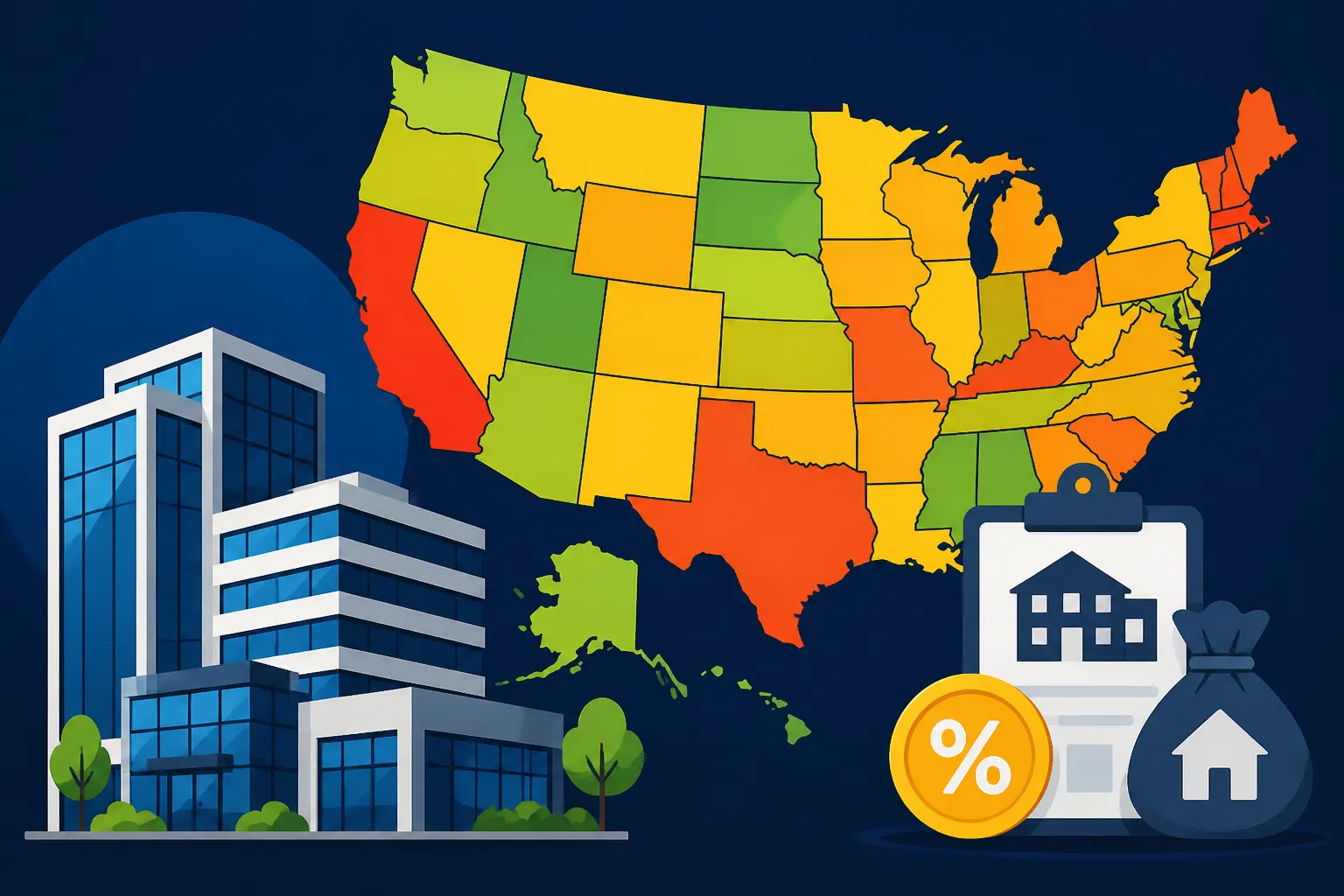
Diving into state-specific commercial property tax rates is where things get really interesting – and sometimes, a little dizzying. While there isn't one single "commercial property tax rate" for an entire state, we can look at general trends and effective rates that give us a sense of the landscape. Remember, these are averages, and your specific bill will depend heavily on your local jurisdiction and property type.
States with Generally Higher Commercial Property Taxes
Some states consistently rank among those with the highest overall property tax burdens, and commercial properties often bear a significant portion of this. These states typically rely heavily on property taxes to fund local services, sometimes due to a lack of a state income tax or other broad-based taxes.
- New Jersey: Known for having some of the highest property taxes in the nation, New Jersey's commercial rates follow suit. Municipalities here rely heavily on property taxes, leading to high millage rates that impact everything from small businesses to large corporations. The average effective commercial property tax rate can be significantly higher than the residential average. If you're looking at property in places like Bergen County or Essex County, you'll feel the pinch. Learning more about New Jersey Property Tax Rate (Highest in US) is crucial for anyone investing there.
- Illinois: Illinois also consistently ranks high. In major metropolitan areas like Cook County, commercial property taxes can be particularly burdensome. The state's complex assessment system, which historically assessed commercial properties at a higher percentage of market value than residential ones, combined with numerous overlapping taxing districts, contributes to the high bills. Property owners in Chicago, for example, face substantial tax obligations. This is often a hot topic when discussing Illinois Property Tax Rate (2nd Highest).
- Texas: While Texas boasts no state income tax, it makes up for it with substantial property taxes. Commercial property owners in major metropolitan areas like Houston (Harris County), Dallas (Dallas County), or Austin (Travis County) often face some of the highest commercial property tax bills in the country. The reliance on local property taxes for school funding is a major driver here. It’s why so many property owners find themselves needing to understand Texas Property Tax Rate Explained and the protest process.
States with More Moderate Commercial Property Taxes
In the middle ground, you'll find states where commercial property taxes are still a significant cost but might be balanced by other revenue sources or more diversified tax structures.
- Florida: Florida's commercial property taxes are generally considered moderate compared to the national average. While there's no state income tax, property taxes are an important local revenue source. Major counties like Miami-Dade, Broward, and Orange County see substantial commercial activity, and their tax rates reflect the demand for local services. The state does have a relatively robust tourism industry, which helps diversify revenue sources somewhat. For those considering investments, understanding Florida Property Tax Rate Explained is a good starting point.
- Pennsylvania: Pennsylvania's property tax system is famously complex, with significant variations across its thousands of municipalities and school districts. Commercial property taxes can range from moderate to high, depending on the specific location. Large cities like Philadelphia and Pittsburgh have their own assessment methods, and school districts often drive a large portion of the tax bill. The state does have an income tax, which can help offset some of the reliance on property taxes compared to states without one.
- Ohio: Ohio tends to fall into the moderate category for commercial property taxes. Again, local levies play a huge role, with significant variation between urban centers like Columbus (Franklin County) or Cleveland (Cuyahoga County) and more rural areas. The state does have an income tax, which is another revenue stream for the state, allowing local property taxes to be somewhat more manageable in many areas. Understanding the dynamics of Ohio Property Tax Rate Explained is key for local investors.
States with Relatively Lower Commercial Property Taxes
At the other end of the spectrum are states that tend to have lower overall commercial property tax burdens. This can be due to a variety of factors, including lower demand for public services, other strong revenue streams (like tourism or mineral extraction), or state constitutional limits on tax increases.
- Colorado: While property values have surged in recent years, Colorado has a relatively low effective property tax rate, including for commercial properties. This is due in part to the Gallagher Amendment, which historically limited the residential assessment rate. Although the Gallagher Amendment was repealed in 2020, reforms aimed at providing property tax relief remain a focus. Cities like Denver and Boulder, while growing, still tend to see lower effective commercial rates than many East Coast states.
- Arizona: Arizona is known for its relatively low property taxes overall. For commercial properties, rates are generally quite competitive. This is partly due to the state's reliance on sales tax and tourism revenue. In major areas like Phoenix (Maricopa County) or Tucson (Pima County), commercial property taxes are a factor but often less impactful than in high-tax states.
- Delaware: Delaware stands out with very low property taxes, for both residential and commercial properties, partly because the state has no sales tax. The local governments raise revenue through a combination of property taxes and other fees, but the overall burden remains among the lowest in the nation. This makes it an attractive state for businesses looking to minimize their overhead costs related to property taxes.
- Nevada: Another state with no state income tax, Nevada also boasts relatively low property taxes for commercial properties. The robust tourism and gaming industries provide significant state revenue, lessening the burden on property owners. Key commercial hubs like Las Vegas (Clark County) still have their tax structures, but the overall effective rates are generally favorable.
This table provides a generalized snapshot of commercial property tax landscapes in a selection of states. Keep in mind that "average effective rate" can vary wildly within a state based on specific counties, cities, and property types.
| State | Typical Effective Commercial Rate (Approx.) | Primary Assessment Method | Average Reassessment Frequency | Key Contributing Factor to Rate |
|---|---|---|---|---|
| New Jersey | 2.5% – 3.5% | Market Value, Income | Annual to Every 3 Years | Heavy reliance on property tax |
| Illinois | 2.0% – 3.0% | Market Value, Income | Every 3-4 Years (Cook County) | High local government needs |
| Texas | 1.8% – 2.5% | Market Value, Income | Annually | No state income tax |
| Florida | 1.5% – 2.0% | Market Value, Income | Annually | Balanced revenue streams |
| Pennsylvania | 1.5% – 2.5% | Market Value, Cost | Varies widely | Fragmented local governance |
| Ohio | 1.5% – 2.2% | Market Value, Income | Every 3 or 6 Years | State income tax diversifies |
| Colorado | 0.5% – 1.0% | Market Value | Every 2 Years | Historical assessment limits |
| Arizona | 0.7% – 1.2% | Market Value | Annually | Reliance on sales tax |
| Nevada | 0.6% – 1.0% | Market Value | Annually | Tourism revenue |
| Delaware | 0.4% – 0.7% | Market Value | Varies widely | No sales tax, other revenues |
Navigating Your Commercial Property Tax Bill and Assessments
Getting your commercial property tax bill can sometimes feel like opening a mystery novel. The numbers are there, but how they were derived often feels opaque. Taking the time to understand your assessment and knowing when and how to challenge it can literally save you thousands, if not tens of thousands, of dollars.
Deciphering Your Assessment Notice and Understanding Market vs. Assessed Value
When that assessment notice lands in your mailbox, don't just glance at the bottom line. It's a goldmine of information – and potential errors. You'll typically see three important figures:
- Market Value (or Appraised Value): This is what the assessor believes your property would sell for on the open market. For commercial properties, this often involves the income capitalization, cost, or sales comparison approaches we discussed earlier.
- Assessed Value: This is the portion of the market value that is subject to taxation. In some states, commercial properties are assessed at 100% of their market value. In others, a specific assessment ratio is applied (e.g., 50% or 33.33%).
- Taxable Value: This is the assessed value minus any exemptions you might qualify for (though commercial exemptions are rarer than residential ones). This is the number that your local tax rate (or millage rate) is applied to.
The key takeaway here is to ensure that the market value accurately reflects your property's true value, as this is the foundation for everything else. Regularly reviewing How to Read Your Property Tax Bill is a skill every commercial property owner needs to master. Don't assume the assessor always gets it right; mistakes happen, or market conditions might have shifted quickly.
Strategies for Managing and Potentially Lowering Your Tax Burden
You're not powerless in the face of a high tax bill. There are proactive steps you can take to manage and potentially reduce your commercial property tax liability.
- Review Your Assessment Annually: Make it a habit. Check the details: square footage, age, condition, zoning, and any income figures if they're used. Even a small error in the property's characteristics can lead to an inflated assessment.
- Understand the Assessment Methodology: As discussed, commercial properties are valued using specific approaches. If your property is income-producing, is the assessor using appropriate income and expense figures? Is the capitalization rate accurate for your market? Sometimes, the assessor might not have the most up-to-date income and expense data, especially if you haven't provided it.
- Gather Your Own Evidence (Comps): If you believe your assessment is too high, you'll need to make a case. For commercial properties, this means looking for comparable sales or income-producing properties that have similar characteristics but were assessed or sold for less. Document any issues with your property, such as deferred maintenance, vacancies, or recent expenses that might negatively impact its value. Data from tools like Stessa can be incredibly helpful here, as it centralizes all your income and expense data, allowing you to easily provide accurate figures to the assessor. This kind of detailed record-keeping is crucial when it's time for Evidence & Comps for a Property Tax Appeal.
- Appeal Your Property Taxes: If you have a strong case, don't hesitate to appeal. Most jurisdictions have an established process, starting with an informal review and potentially moving to a formal hearing before an appraisal review board or tax court. Deadlines are strict, so mark your calendar as soon as you receive your assessment notice. Understanding How to Appeal Property Taxes: Complete Guide is a powerful way to protect your investment.
- Explore Exemptions and Abatements: While less common for general commercial properties, some states offer exemptions or abatements for specific types of commercial development, such as historic preservation, properties in economic development zones, or properties used for specific industries (e.g., manufacturing job creation). Research what's available in your local area.
Tools and Resources for Commercial Property Owners
Managing a commercial property is a complex endeavor, and navigating its financial aspects, especially property taxes, can feel like a full-time job. Thankfully, there are tools and professionals available to help streamline the process and ensure you're not paying more than your fair share.
Utilizing Property Management Software
In the past, keeping track of every income stream, expense, and property detail for a commercial asset meant mountains of spreadsheets and receipts. Now, modern property management software can centralize all this crucial financial information, making tax season, and even property tax appeals, significantly less painful.
Platforms like Stessa are designed to give property owners a clear, real-time financial snapshot of their portfolios. For commercial properties, where income and expenses directly influence assessed value, having meticulously organized data is invaluable. Stessa can help you track rent payments, operating costs, capital expenditures, and even asset value. This isn't just about day-to-day management; it's about having the raw data at your fingertips when an assessor comes knocking or when you need to file an appeal. Imagine being able to quickly pull up detailed profit and loss statements, tenant histories, or expense reports to support your claim that your property's income potential isn't what the assessor thinks it is. This level of organization can make a huge difference in demonstrating the true financial performance and, therefore, the market value of your commercial asset. With platforms like Stessa, you're not just managing; you're strategizing with data.
Professional Guidance: When to Call in the Experts
While DIY is great for many things, commercial property tax appeals can be incredibly intricate. Knowing when to bring in professional help can be the best investment you make.
- Property Tax Consultants: These specialized professionals focus solely on property tax assessments and appeals. They have in-depth knowledge of local assessment methodologies, access to proprietary data, and experience with the appeals process. They can analyze your assessment, identify discrepancies, gather evidence, and represent you in hearings. Many work on a contingency basis, meaning they only get paid a percentage of your tax savings, making it a low-risk option. Companies like Ownwell or O'Connor (Cut My Taxes) are examples of firms that specialize in this. They understand the nuances of How to Win a Property Tax Appeal and can identify factors like unequal appraisal or overvaluation.
- Real Estate Attorneys: For more complex cases, or if your appeal progresses beyond the initial administrative stages to a higher court, a real estate attorney specializing in property tax law can be essential. They provide legal expertise and can navigate intricate legal arguments that consultants might not be equipped to handle.
- Commercial Appraisers: If you strongly dispute the assessor's market value, hiring an independent, certified commercial appraiser can provide a robust, third-party valuation report. This report serves as powerful evidence during an appeal and can offer an unbiased view of your property's worth based on professional standards.
Choosing the right professional depends on the complexity of your situation and the potential tax savings involved. Sometimes, a combination of tools like Stessa for data management and a property tax consultant for the appeal itself can provide the most comprehensive approach to managing your commercial property tax burden. Staying informed about Property Tax Trends 2026 and leveraging expert knowledge can help safeguard your investments.
Disclaimer
The information provided in this guide is for general informational purposes only and does not constitute financial, legal, or tax advice. Property tax laws and regulations are complex and vary significantly by state and local jurisdiction. You should consult with a qualified financial advisor, tax professional, or legal expert for advice tailored to your specific situation. We do not endorse any specific financial products or services.