Highest Property Taxes in New Jersey by County
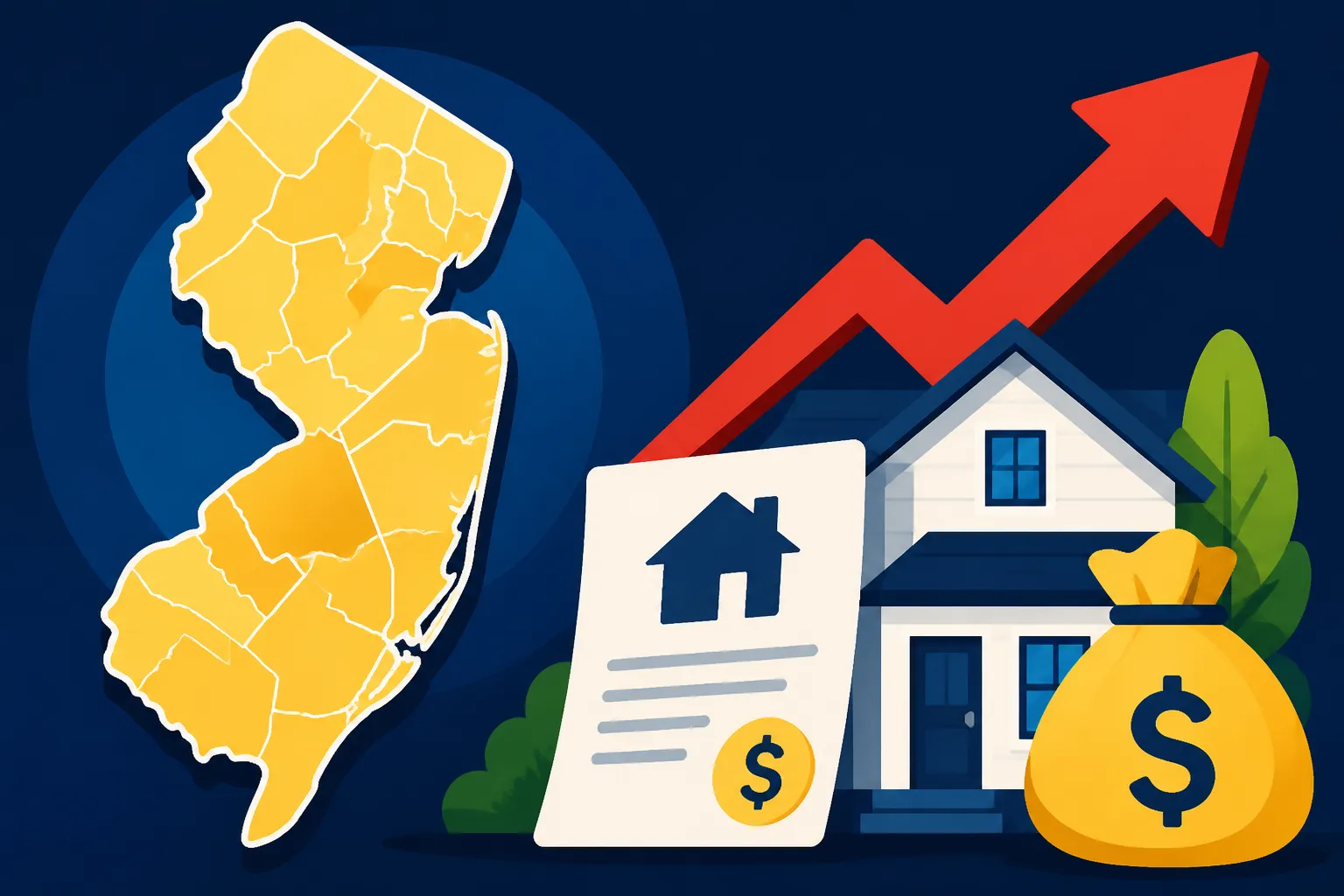
Owning a home in New Jersey often feels like having a second mortgage that never gets paid off. If you have ever opened your mailbox only to find a tax bill that makes your jaw drop, you are definitely not alone in that frustration. This guide breaks down exactly which New Jersey counties carry the heaviest tax burdens in 2026 and provides a realistic look at why these costs continue to climb.
The Heavy Hitters: Counties with the Highest Average Bills
If you live in the northern or central part of the state, you already know that the "Garden State" could easily be nicknamed the "Tax State." While the state as a whole leads the nation in property levies, certain counties stand out as the undisputed heavyweights. These areas often feature a combination of high property values and massive local school budgets, creating a perfect storm for homeowners.
Essex County: The Urban Tax Giant
Essex County consistently sits at or near the very top of the list when it comes to the highest property tax bills in the state. If you are living in a town like Montclair, Millburn, or Glen Ridge, it is not uncommon to see annual tax bills that exceed $20,000 or even $30,000 for a standard family home. The frustration here is multifaceted. On one hand, you have incredible access to New York City and beautiful historic architecture; on the other, the municipal and school costs are staggering.
The Essex County Property Tax Rate is driven by a dense population that requires extensive public services and a school system that often ranks among the most expensive to operate. Even in the less affluent areas of the county, the effective tax rate can be punishing because property values may be lower, but the need for social services and infrastructure remains high. It is a balancing act that many residents feel is tipped heavily against them.
Bergen County: Luxury and Levies
Bergen County is a different kind of beast. It is one of the wealthiest counties in the United States, and the property tax bills reflect that prestige. In towns like Alpine or Saddle River, the sheer Assessed Value vs Market Value vs Taxable Value can lead to tax bills that look like phone numbers. However, even for the average suburban homeowner in Paramus or Ridgewood, the costs are intense.
In Bergen, you aren't just paying for a roof over your head; you are paying for some of the highest-rated school districts in the country. Many residents stay in Bergen specifically for the education system, justifying the Bergen County Property Tax Rate as an "investment" in their children’s future. But as many retirees will tell you, once the kids are gone, that investment starts to feel a lot more like a liability. The county's proximity to Manhattan keeps demand high, which in turn keeps property values—and the resulting taxes—climbing year after year.
Union County: A Middle-Class Burden
Union County often gets overlooked in the shadow of Essex and Bergen, but its residents feel the pinch just as sharply. Towns like Westfield and Summit are notorious for high levies. What makes Union County particularly difficult is that it serves as a primary hub for middle-class families who are trying to balance a commute with a quality suburban life.
The Union County Property Tax Rate is a frequent topic of conversation at local diners and town halls. The infrastructure here is aging, and the cost of maintaining rail lines, roads, and public safety in such a densely packed area is a constant drain on the budget. When you combine this with the local school levies, it is easy to see why so many people in Union County are constantly looking for ways to lower their assessments.
Understanding the Calculation: Why These Counties Rank High
It is easy to get angry at the total number on your bill, but understanding the "why" behind it is the first step toward feeling less like a victim of the system. New Jersey’s tax structure is unique, and much of the burden falls on property owners because the state relies less on other forms of revenue compared to its neighbors.
School District Funding and Local Demands
In New Jersey, the lion’s share of your property tax bill—usually between 50% and 60%—goes directly to your local school district. In high-tax counties, residents often demand top-tier educational facilities, small class sizes, and extensive extracurricular programs. While these features make a town desirable, they are incredibly expensive to maintain.
When you look at Why Are New Jersey Property Taxes So High?, the answer almost always circles back to the sheer number of school districts. Unlike other states that have county-wide districts, New Jersey has hundreds of small, independent districts, each with its own superintendent, administrative staff, and overhead. This "home rule" mentality gives residents more control, but it also removes the "economies of scale" that could otherwise lower costs.
The Impact of High Property Valuations
Another factor is the actual value of the land. In the counties bordering New York City, land is a finite and precious resource. As market values rise, the tax office eventually catches up. If you haven't had a visit from an assessor lately, you might be living on a "ticking time bomb" of reassessment.
Understanding Property Tax Assessment & Reassessment Explained is vital for anyone in a high-growth county. When the local government decides to do a town-wide revaluation, your bill could jump significantly if your home’s value has increased faster than the town average. This is a common pain point in gentrifying areas of Essex or Hudson counties, where long-term residents suddenly find themselves "house rich but cash poor," unable to keep up with the taxes on a home they have owned for decades.
Municipal Services and Infrastructure Costs
New Jersey is the most densely populated state in the union. This density requires a massive amount of infrastructure—sewer systems, professional fire departments, 24/7 police coverage, and complex waste management. In counties like Passaic County Property Tax Rate, the cost of maintaining these services in an older, urbanized environment is much higher than in a sprawling rural area where services might be more decentralized or handled by volunteers.
| County | Average Property Tax Bill (Projected 2026) | Effective Tax Rate (Approximate) |
|---|---|---|
| Essex | $13,450 | 2.51% |
| Bergen | $12,900 | 2.18% |
| Union | $12,200 | 2.45% |
| Morris | $11,500 | 1.95% |
| Passaic | $11,100 | 2.82% |
| Hunterdon | $10,950 | 2.38% |
Comparative Analysis: High Tax vs. Lower Tax Areas in NJ
While the northern counties often steal the headlines for the highest bills, the story of New Jersey property taxes is really a story of two different states. The "North-South Divide" is a real phenomenon that affects everything from your monthly mortgage payment to where you might choose to retire.
The North vs. South Divide
If you travel down the Garden State Parkway into South Jersey, the numbers start to look a little different. While no part of New Jersey is "cheap" by national standards, counties like Burlington, Ocean, and Atlantic generally have lower average bills than their northern counterparts. However, there is a catch.
Even though the total dollar amount might be lower, the Effective vs Nominal Property Tax Rate Explained reveals a different struggle. In places like Camden County, the property values are often lower, but the tax rate is actually higher. This means that while a homeowner in Cherry Hill might pay $9,000 compared to a Montclair resident's $18,000, the Cherry Hill resident might actually be paying a higher percentage of their home's total value. This is why the Camden County Property Tax Rate is often cited as one of the most burdensome in the state relative to income levels.
Rural vs. Suburban Tax Dynamics
Then you have the more rural areas like Sussex, Warren, or parts of Hunterdon. These areas often lack the massive commercial tax bases found in Bergen or Middlesex. When a town doesn't have a large mall, an office park, or a warehouse district to help shoulder the tax burden, the weight falls almost entirely on the residential homeowners.
In these "bedroom communities," a single school referendum can cause taxes to spike. This is where understanding What Is a Mill Rate? becomes essential. The mill rate in a rural town might be quite high because there simply aren't enough properties to spread the costs around. Residents in these areas often feel they are paying "city taxes" without getting "city services," such as public water, sewers, or a professional police force.
Strategies for Managing the High Cost of Living
Living in one of the highest-taxed counties in the country requires a proactive approach. You cannot simply set your taxes on "autopilot" and hope for the best. If you want to survive the New Jersey Property Tax Rate (Highest in US), you need to use every tool in the shed.
Tax Relief Programs and Exemptions
New Jersey does offer some relief, though it often feels like a drop in the bucket. The ANCHOR program and the "Senior Freeze" (Property Tax Reimbursement) are the two biggest lifelines for residents. If you are a senior citizen or a person with a disability, you must stay on top of these deadlines.
Many people also overlook the Property Tax Assessment & Reassessment Explained process when they first buy a home. They assume the previous owner's tax bill will be their tax bill, but that is rarely the case. New construction or recent renovations can trigger a massive jump in your assessment. Always check to see if you qualify for any veteran exemptions or surviving spouse benefits, as these can shave a few hundred—or even thousands—of dollars off your annual bill.
The Importance of Yearly Appeals
One of the biggest mistakes New Jersey homeowners make is accepting their assessment as "gospel." The tax assessor’s office is often working with outdated data or bulk algorithms that don't account for the specific condition of your home. If your neighbor’s house—which is identical to yours—sold for $50,000 less than your assessed value, you have a case.
Learning How to Appeal Property Taxes: Complete Guide is practically a required skill for NJ residents. In counties like Essex or Union, a successful appeal can save you $1,000 to $2,000 a year. Over a decade, that is $20,000 that stays in your pocket instead of going to the municipal building. Most appeals must be filed by April 1st, so you have to be ready to act early in the year.
Looking Ahead: The State of NJ Property Taxes in 2026
As we move forward, the landscape of New Jersey property taxes continues to evolve. While there is always talk in Trenton about "tax reform," the reality on the ground is that local costs continue to rise due to inflation, rising teacher salaries, and the cost of public employee benefits.
Legislative Trends and Future Outlook
There have been recent pushes to increase state aid to schools in an effort to lower the local property tax burden. However, as any veteran Jerseyan knows, when the state "gives" with one hand, the local municipality often "takes" with the other. The Property Tax by State 2026: All 50 States Ranked still shows New Jersey at the top of the list, and it is unlikely that position will change anytime soon.
What we are seeing is a trend toward more frequent revaluations. Towns are trying to keep their assessments closer to market value to avoid the massive "sticker shock" that comes when a town goes 20 years without a reassessment. While this creates more stability, it also means that your tax bill is likely to creep up every single year rather than staying flat for a decade.
Reassessments and Market Shifts
The post-pandemic real estate market has also thrown a wrench into the works. Property values in suburban NJ exploded, and many towns are only now finishing the reassessments that reflect those new, higher values. If you live in a county where home prices doubled over the last five years, you should be bracing for a significant tax adjustment.
Being aware of How Are Property Taxes Calculated? will help you understand that even if your rate stays the same, your bill will go up if your home's value has increased. It is a frustrating cycle where "winning" in the real estate market by having your home value increase feels like "losing" when the tax bill arrives. Stay vigilant, watch your local school board meetings, and never be afraid to challenge an assessment that feels unfair.
Disclaimer
This guide is provided for informational purposes only and does not constitute legal, financial, or tax advice. Property tax laws, rates, and exemption eligibility are subject to change and vary significantly by municipality and individual circumstances. Always consult with a qualified tax professional or attorney before making decisions regarding property tax appeals or exemptions.