Which States Have Personal Property Tax on Vehicles?
It can be incredibly frustrating to think you've settled all your annual taxes, only to be hit with an unexpected bill for your car or truck. Many people assume "property tax" only applies to their home or land, so getting a separate assessment for their vehicle can feel like a curveball. This guide is here to untangle the complexities of personal property tax on vehicles, shedding light on which states levy this often-confusing charge, how it works, and what you can expect as a vehicle owner.
Understanding Personal Property Tax on Vehicles
Let's start by demystifying what this tax actually is. When we talk about "property tax," most of us immediately think of our houses and the land they sit on. That's real property tax. But in many parts of the country, local governments also levy a tax on certain movable assets, known as personal property. And yes, for many of us, our vehicles fall squarely into that category.
What Makes a Vehicle "Personal Property" for Tax Purposes?
Think of your car, truck, motorcycle, or even your RV as a valuable asset that contributes to your personal wealth, similar to your furniture or jewelry – though those typically aren't taxed annually by local governments. However, vehicles are different because they're often registered and titled, making them easily identifiable and assessable by local authorities. This tax isn't a one-time fee like sales tax when you buy the car, nor is it the annual registration fee you pay to your Department of Motor Vehicles. Instead, it's a recurring tax based on the vehicle's assessed value, much like how your home's value dictates its property tax bill.
The rationale behind these taxes is usually to fund local services. Just like your home's property taxes contribute to schools, roads, and emergency services in your community, the revenue from vehicle personal property taxes often goes to similar local budgets. It’s important to distinguish this from other fees. For instance, in Texas, you don't pay a specific annual personal property tax on your car. Instead, they have a one-time motor vehicle sales tax and annual registration fees. But in a state like Virginia, you'll pay both the annual registration and an annual personal property tax that can vary wildly depending on which city or county you live in.
The Difference Between Real Property and Personal Property
It's easy to conflate all taxes, but the distinction between real property and personal property is crucial here. Real property refers to land and anything permanently attached to it, like your house. This is what most people typically refer to when discussing property taxes. Personal property, on the other hand, is generally movable. While we’re focusing on vehicles, this can also include things like business equipment or even certain types of boats in some jurisdictions.
The key difference lies in how these assets are assessed and who collects the tax. Real property tax is almost universally applied and collected by local municipalities or counties. Personal property tax, specifically on vehicles, is much less common across the United States. When it does exist, it's typically a local tax, meaning the rates and how they're applied can vary significantly even within the same state. This local variation is one of the main reasons it's so challenging to get a clear, nationwide picture of this particular tax. Understanding the nuances of "What Is a Mill Rate? (Millage Explained)" can be particularly helpful here, as vehicle personal property taxes are often calculated using mill rates at the local level.
States That Impose Vehicle Personal Property Tax
It might surprise you how many states still levy this annual tax on vehicles. It’s not a universal practice, but if you live in one of these states, it can be a significant line item in your annual budget. This isn't just a small fee; it can add hundreds, sometimes even thousands, of dollars to your cost of vehicle ownership each year, depending on the value of your car and where you reside.
The Usual Suspects: Where Vehicle Property Tax is Common
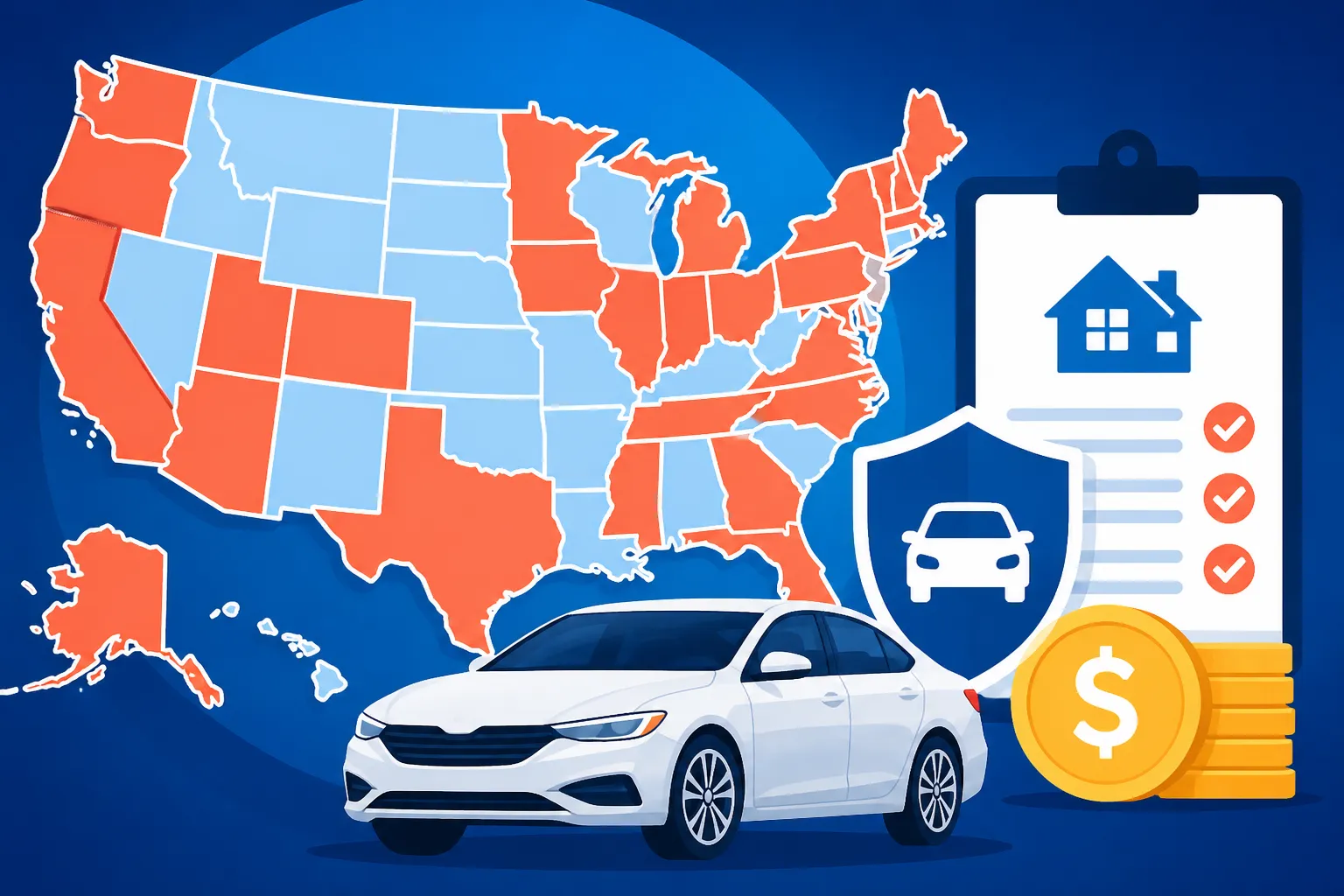
Many states primarily in the South, Midwest, and parts of the Northeast have some form of personal property tax on vehicles. The exact calculation, assessment methods, and local rates can vary dramatically, but here's a rundown of the states where you're most likely to encounter it:
- Virginia: This is often cited as the poster child for vehicle personal property tax. Rates and assessment methods are set at the county and city level, leading to huge disparities. For example, the rate in Fairfax County might be different from Loudoun County, both populous areas of northern Virginia. Some localities offer tax relief for certain vehicles, but it's largely up to the local government. You can delve deeper into this topic with our guide on Virginia Car Tax (Personal Property) Explained.
- Missouri: In Missouri, personal property tax on vehicles is assessed and collected at the county level. You'll need to pay this tax before you can renew your vehicle registration. The assessment is usually based on the vehicle's clean trade-in value, often using valuation guides like the NADA book. Our article on Missouri Personal Property Tax (Car Tax) provides more specific details.
- Connecticut: Known for its often-high property taxes, Connecticut also includes motor vehicles in its personal property tax system. The tax is assessed annually by individual towns and cities. The assessed value is typically 70% of the vehicle's clean retail value, with rates (mill rates) varying by municipality.
- North Carolina: Vehicle personal property taxes are collected by counties in North Carolina. This tax is usually billed at the same time as your vehicle registration renewal, often combined into one statement to simplify the process.
- South Carolina: Similar to North Carolina, South Carolina counties levy personal property tax on vehicles. This tax needs to be paid before you can renew your vehicle's registration.
- Mississippi: Mississippi counties impose a motor vehicle privilege tax, which is essentially a personal property tax. It's calculated based on a percentage of the manufacturer's suggested retail price (MSRP) and adjusted for depreciation.
- Arkansas: Vehicle property tax is assessed at the county level in Arkansas. You must pay your personal property taxes, including those on your vehicle, before you can renew your annual vehicle tags.
- Kentucky: Counties in Kentucky assess and collect property tax on motor vehicles. The state uses a uniform valuation system, typically based on average trade-in value, and then local tax rates are applied.
- Massachusetts: Many towns and cities in Massachusetts levy an excise tax on motor vehicles, which functions very similarly to a personal property tax. It’s an annual tax based on the vehicle's value, which depreciates each year.
- Maine: Maine has a "personal property tax" that includes vehicles. This tax is administered by local municipalities, and the rates can vary.
- Rhode Island: While some reforms have been made, Rhode Island still has local motor vehicle excise taxes in many municipalities, which are a form of personal property tax.
- West Virginia: Counties in West Virginia assess and collect personal property tax on motor vehicles annually. This tax is due before you can register or renew your vehicle.
It's worth noting that some states might have specific carve-outs or exemptions. For example, some states might offer a partial exemption for certain veterans or seniors. Always check with your local tax assessor's office for the most accurate and up-to-date information for your specific situation.
How Vehicle Value is Assessed for Tax Purposes
The core of a personal property tax bill is the vehicle's assessed value. This isn't necessarily what you think your car is worth or what you paid for it. Local assessors use specific methodologies to determine this value. Common approaches include:
- NADA Guides or Kelley Blue Book: These industry-standard valuation guides are frequently used by tax assessors to determine a vehicle's clean retail or trade-in value. They'll typically look up your vehicle's make, model, year, and often mileage, to arrive at an initial value.
- Manufacturer's Suggested Retail Price (MSRP) with Depreciation: Some jurisdictions start with the original MSRP and then apply a depreciation schedule over several years. The older your car, the less its assessed value, and consequently, the lower your tax bill.
- Percentage of Market Value: In many states, the assessed value isn't 100% of the determined market value. Instead, an assessment ratio is applied. For instance, if a vehicle is valued at $20,000 and the assessment ratio is 70%, you'll be taxed on $14,000. This is similar to how real estate property taxes are often calculated using an assessment ratio. Our guide on Property Tax Assessment Ratio by State can offer a broader understanding of this concept.
Once the assessed value is determined, the local tax rate (often expressed as a mill rate or a dollar amount per $100 of assessed value) is applied to calculate your actual tax bill. These local rates are set by your county, city, or town, and they can change year to year based on local budget needs. This can be confusing, making it essential to understand How to Read Your Property Tax Bill when it arrives.
| State | Type of Vehicle Tax | Assessment Method (Common) | Local Variation | Payment Impact (General) |
|---|---|---|---|---|
| Virginia | Personal Property Tax ("Car Tax") | Fair Market Value (NADA, KBB); some localities offer relief | High | Annual bill, significant, varies widely by city/county |
| Missouri | Personal Property Tax | Clean Trade-in Value (NADA Guide) | High | Annual bill, required for registration renewal |
| Connecticut | Personal Property Tax | 70% of Clean Retail Value (NADA); depreciation applied | High | Annual bill, based on town's mill rate |
| North Carolina | Vehicle Personal Property Tax | County-specific valuation; often combined with registration bill | Moderate | Annual bill, often paid with registration renewal |
| South Carolina | Vehicle Personal Property Tax | County-specific valuation; based on fair market value | Moderate | Annual bill, required for registration renewal |
| Mississippi | Motor Vehicle Privilege Tax (Personal Property Tax) | Percentage of MSRP adjusted for depreciation | Low/Moderate | Annual bill, varies by vehicle age and MSRP |
| Arkansas | Personal Property Tax | County-specific assessment; typically fair market value | High | Annual bill, required for tag renewal |
| Kentucky | Property Tax on Motor Vehicles | Uniform valuation (average trade-in); local rates applied | Moderate | Annual bill, required for registration renewal |
| Massachusetts | Motor Vehicle Excise Tax | Value depreciates by state schedule; local rates applied | High | Annual bill, based on city/town excise rate |
| Maine | Personal Property Tax (includes vehicles) | Local valuation methods; often based on age/value | High | Annual bill, local municipality sets rates |
| Rhode Island | Motor Vehicle Excise Tax (being phased out/reformed) | Varies by municipality; historical value-based | High | Annual bill, decreasing impact due to state reforms (check local) |
| West Virginia | Personal Property Tax | County-specific valuation; must be paid for registration | High | Annual bill, required for registration |
Note: This table provides a general overview. Specific rules, assessment percentages, and exemptions can vary within states and change over time. Always verify with your local tax authority.
States That Do Not Have Vehicle Personal Property Tax
For many Americans, the idea of an annual tax on their car separate from registration or sales tax is completely foreign. That's because the majority of states do not levy a personal property tax specifically on vehicles. This can be a significant difference in the total cost of vehicle ownership when comparing different states.
The Majority Rule: No Separate Vehicle Property Tax
Most states, particularly those in the Western US, the Mountain West, and many in the Northeast and Midwest, have opted not to impose an annual personal property tax on vehicles. This doesn't mean you get off scot-free on all vehicle-related taxes, of course! You'll still typically pay:
- Sales Tax: This is usually a one-time tax paid when you purchase the vehicle, whether new or used, and it varies by state.
- Registration Fees: These are annual fees paid to your state's Department of Motor Vehicles (DMV) or equivalent agency. These fees are for the privilege of operating your vehicle on public roads and maintaining its legal status. They often vary based on vehicle weight, age, or type, and contribute to state road maintenance and administrative costs.
- License Plate Fees: Sometimes separate, sometimes bundled with registration, these cover the cost of your license plates and renewal decals.
So, while these states don't have a personal property tax on vehicles, they recoup revenue through other means. The lack of this specific tax simplifies things for many residents, as they don't have to worry about a separate assessment and annual bill based on their car's depreciating value.
States that generally do not have a separate annual personal property tax on vehicles include, but are not limited to:
- Alabama (though some counties have an ad valorem tax)
- Alaska
- Arizona (vehicle license tax is paid at registration)
- California
- Colorado (specific ownership tax at registration)
- Delaware
- Florida
- Georgia (annual ad valorem tax, but with a different structure, often TAVT – Title Ad Valorem Tax at purchase)
- Hawaii
- Idaho
- Illinois
- Indiana (excise tax is paid at registration)
- Iowa
- Kansas (personal property tax is assessed and collected at the local level on a wide range of personal property, including vehicles. Similar to Missouri, it's typically required for registration renewal, so it sits in a bit of a gray area, sometimes considered a 'personal property tax' but integrated differently than Virginia)
- Louisiana (no specific annual vehicle personal property tax, but parish/local taxes can apply)
- Maryland (some counties have a vehicle excise tax)
- Michigan
- Minnesota
- Montana
- Nebraska (motor vehicle tax is part of registration)
- Nevada
- New Hampshire (some localities charge a motor vehicle registration tax)
- New Jersey
- New Mexico
- New York
- North Dakota
- Ohio (no annual personal property tax on vehicles)
- Oklahoma
- Oregon
- Pennsylvania
- South Dakota
- Tennessee (no annual personal property tax on vehicles, though a "wheel tax" or privilege tax may apply at the local level)
- Texas
- Utah (uniform fee is paid at registration)
- Vermont
- Washington
- Wisconsin
- Wyoming
Keep in mind that while these states don't have a personal property tax on vehicles, they may have other fees or taxes related to vehicle ownership that are collected at the state or local level, often rolled into your annual registration. These could include things like emission testing fees, specific regional transit taxes, or even local "wheel taxes" that are flat fees rather than value-based taxes. This means the overall cost of owning a vehicle can still vary significantly from state to state, even among those without a dedicated personal property tax. Our comprehensive guide on Property Tax by State 2026: All 50 States Ranked offers a broader perspective on overall property tax burdens, which can sometimes influence where a state places its tax focus.
The Shifting Sands of Tax Policy: Why Things Change
Tax laws are rarely static. States and local municipalities constantly evaluate their revenue streams, budget needs, and tax burdens on residents. What might be true one year could change the next. For instance, some states have phased out their vehicle personal property taxes over time, or introduced caps and exemptions to reduce the burden on taxpayers. Rhode Island, for example, has been in the process of phasing out its municipal motor vehicle excise tax.
Legislative changes can be driven by public outcry over high taxes, economic shifts, or a desire to make a state more attractive to residents and businesses. This is why staying informed about Property Tax Trends 2026 and local policy changes is so important. What's more, for those interested in financial organization, particularly with multiple assets, services like Stessa can be incredibly helpful for keeping track of your broader financial picture, even if your vehicle taxes are handled by a different system. While Stessa is primarily designed for real estate investors to track income and expenses, the underlying principle of meticulous record-keeping for all valuable assets—including understanding any associated taxes—is a habit worth cultivating for everyone.
Navigating Your Vehicle's Personal Property Tax Bill
Receiving a property tax bill for your vehicle can be confusing, especially if you've moved from a state that doesn't have this tax. It's crucial to understand what you're looking at and what your options are. Being prepared can save you stress and potentially money.
Decoding Your Assessment and Bill
When that notice arrives in the mail, don't just glance at the total. Take a moment to understand the components:
- Assessed Value: This is the value your local tax assessor has assigned to your vehicle for tax purposes. As we discussed, this might be based on NADA guides, MSRP with depreciation, or another method. If you believe this value is too high, it's the first place to challenge the bill.
- Tax Rate/Millage Rate: This is the rate applied to your assessed value. It's usually expressed as a dollar amount per $100 or $1,000 of assessed value. For example, a mill rate of 25 means you pay $25 for every $1,000 of assessed value. Knowing "What Is a Mill Rate? (Millage Explained)" will help you interpret this figure accurately.
- Taxing Authorities: Your bill might show how the total tax is distributed among different local entities – the county, the city/town, school districts, fire departments, or other special taxing districts. This explains "Who Sets Property Tax Rates? (County, School, City Levies)" and why your rates might differ from a neighboring jurisdiction.
- Due Dates and Penalties: Pay close attention to these! Missing a deadline can result in late fees, interest, or even more severe consequences. Many states have specific deadlines, such as the Florida Homestead Exemption (March 1 Deadline) for real estate, but vehicle taxes have their own separate deadlines.
If anything on your bill looks incorrect, or if you simply don't understand how the numbers were derived, contact your local tax assessor's office immediately. They are there to explain the assessment and calculation process.
Opportunities for Exemptions and Relief
Just like with real estate property taxes, some states and local jurisdictions offer exemptions or relief programs for personal property tax on vehicles. These aren't universal, but they're worth investigating:
- Homestead Exemptions: While primarily for real estate, some states or counties might have broader homestead or personal property exemptions that could reduce the taxable value of a primary vehicle. For more on real estate homestead exemptions, see our Homestead Exemption: Complete State-by-State Guide.
- Senior Citizen Exemptions: Many states offer property tax relief for older residents, and in states with vehicle personal property tax, this might extend to their cars. These often have age and/or income requirements. Our guide on Senior & Over-65 Property Tax Exemptions and Freezes provides valuable context.
- Veteran and Disabled Veteran Exemptions: Veterans, especially those with a certain percentage of service-connected disability, are frequently eligible for property tax breaks. This can include full or partial exemptions on their vehicles. The Veteran & Disabled Veteran Property Tax Exemptions article has more details.
- Disability Exemptions: Beyond veterans, some states offer exemptions for individuals with other qualifying disabilities. Explore Property Tax Disability Exemptions to see if you might qualify.
- Low-Income or Circuit Breaker Programs: These programs provide relief based on a homeowner's income relative to their property tax burden. While typically for real estate, some states might have broader applications or similar programs for personal property.
To find out if you qualify for any exemptions, you'll need to contact your local tax assessor or the county's commissioner of the revenue. They can provide specific forms and guidance on how to apply. Remember, you usually have to apply for these exemptions; they typically aren't automatically granted.
Appealing Your Vehicle's Assessed Value
If you believe your vehicle's assessed value is too high, you often have the right to appeal it, just like you would with your home's assessment. This process can vary by jurisdiction, but generally involves:
- Gathering Evidence: Your goal is to prove your car is worth less than the assessor claims. This might involve:
- Printouts from online valuation tools (like Kelley Blue Book, Edmunds, or NADA guides) showing a lower value for your specific make, model, year, and mileage.
- Documentation of significant damage or mechanical issues that would reduce its market value.
- Comparable sales of similar vehicles in your area that sold for less.
- Contacting the Assessor: Often, an informal discussion with the assessor's office can resolve the issue. Be prepared to present your evidence clearly and respectfully.
- Formal Appeal: If the informal discussion doesn't yield results, you may need to file a formal appeal. This typically involves submitting an appeal form and possibly attending a hearing before a local review board. The processes outlined in "How to Appeal Property Taxes: Complete Guide" or even specific state guides like "How to Protest Property Taxes in Texas" (though specific to Texas real estate) can offer general principles applicable to personal property appeals.
While property tax can feel like a burden, understanding why you pay it, how it's calculated, and what your options are for relief or appeal can empower you as a taxpayer. Staying organized and proactive is key to managing these annual expenses effectively.
Disclaimer
The information provided in this guide is for general informational purposes only and does not constitute financial, legal, or tax advice. Property tax laws, assessment methods, and exemption programs are complex and vary significantly by state and local jurisdiction. They are also subject to change. Always consult with a qualified tax professional, financial advisor, or your local tax assessment office for advice tailored to your specific situation.